
Southern California’s Ocean Turns Record-Warm as San Diego’s La Jolla Hits 71°F and Category 3–4 Marine Heatwave Intensifies Off the Coast
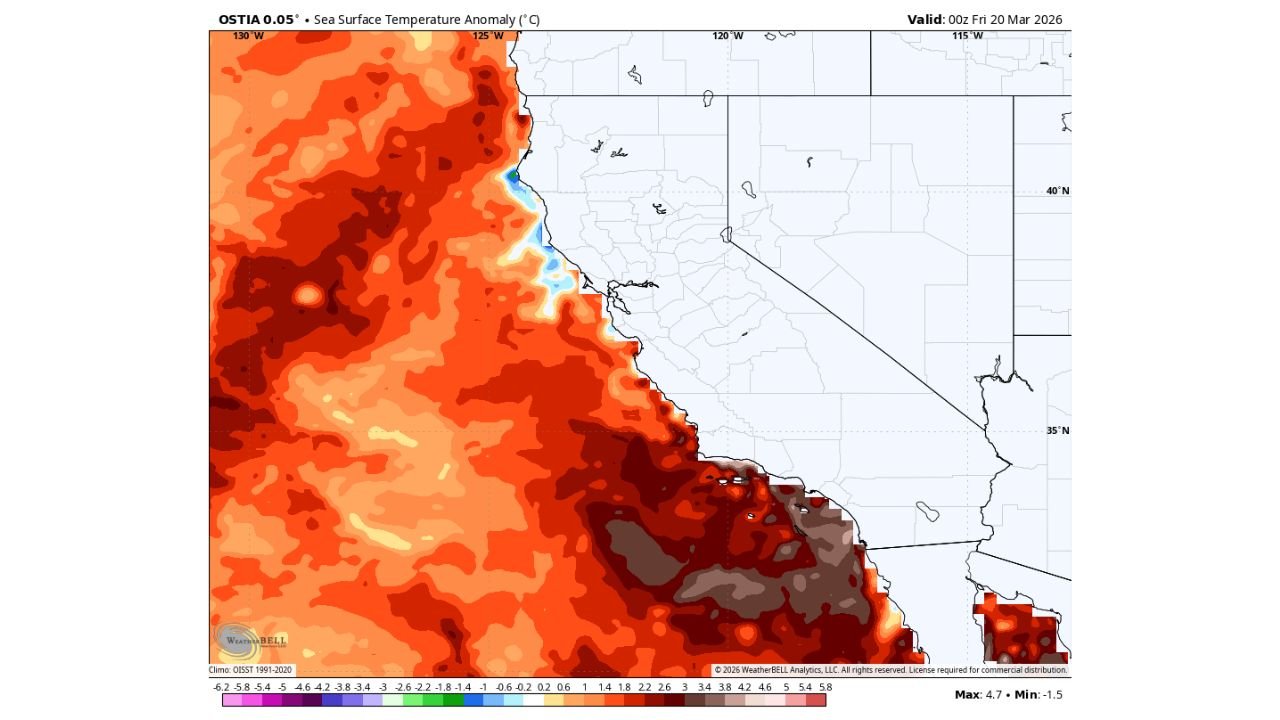
SAN DIEGO, CALIFORNIA — California is not only enduring unusual warmth on land — the Pacific Ocean off the Southern California coast is now in the grip of a powerful marine heatwave, classified as Category 3 and locally reaching Category 4 intensity.
New sea surface temperature anomaly data shows widespread ocean temperatures running dramatically above normal along the Southern California coastline, with some offshore waters registering anomalies approaching 4 to 5 degrees Celsius above average.
La Jolla Water Temperature Warmer Than August
In a striking example of the magnitude of this event, La Jolla in San Diego County recorded a water temperature of 71°F (21.7°C) on the final day of winter.
That reading is warmer than the average ocean temperature typically observed in August, which is normally the peak of Southern California’s coastal warmth.
Late March ocean temperatures along this stretch of coastline usually sit much cooler, making this reading highly unusual for the time of year.
Category 3 to Locally Category 4 Marine Heatwave
Marine heatwaves are ranked by intensity based on how far water temperatures deviate from long-term averages.
- Category 3 (Severe)
- Category 4 (Extreme)
Current data indicates that much of the waters off Southern California — from the waters west of Los Angeles down through San Diego and extending offshore into the eastern Pacific — are firmly within the severe range, with pockets approaching extreme classification.
The warmest anomalies appear concentrated off the Southern California Bight and farther offshore, where deep red and dark shading on the anomaly map indicates the highest departures from climatology.
Widespread Positive Anomalies Along the Coast
Sea surface temperature anomaly analysis shows:
- Strong positive departures stretching from Central California southward
- Particularly intense warmth off Southern California
- Broader warm pools extending well into the eastern Pacific
Nearshore waters directly along parts of the coast show slightly lower anomalies compared to offshore zones, but the broader pattern clearly supports an elevated and sustained warm event.
Impacts Could Extend Beyond the Beaches
Marine heatwaves of this magnitude can influence:
- Coastal marine ecosystems
- Fisheries and kelp forest health
- Local weather patterns
- Harmful algal bloom potential
Warmer-than-normal ocean waters can also affect coastal fog patterns and influence temperature moderation near the shoreline.
With water temperatures already rivaling peak summer averages in late March, this event is raising questions about how long the anomalous warmth may persist.
A Rare Early-Season Ocean Event
While Southern California is accustomed to seasonal ocean warming during summer and early fall, reaching 71°F in La Jolla on the last day of winter — during an active Category 3 to 4 marine heatwave — is a notable anomaly.
California’s heat story this year is not confined to land temperatures alone. The Pacific itself is running unusually hot, adding another layer to an already remarkable early-season climate pattern.
For continued updates on extreme weather and climate trends across the United States, stay with ChicagoMusicGuide.com.