
Storms Across Ohio and Pennsylvania Stay High-Based as Tornado Threat Near Pittsburgh Appears Lower Than Expected
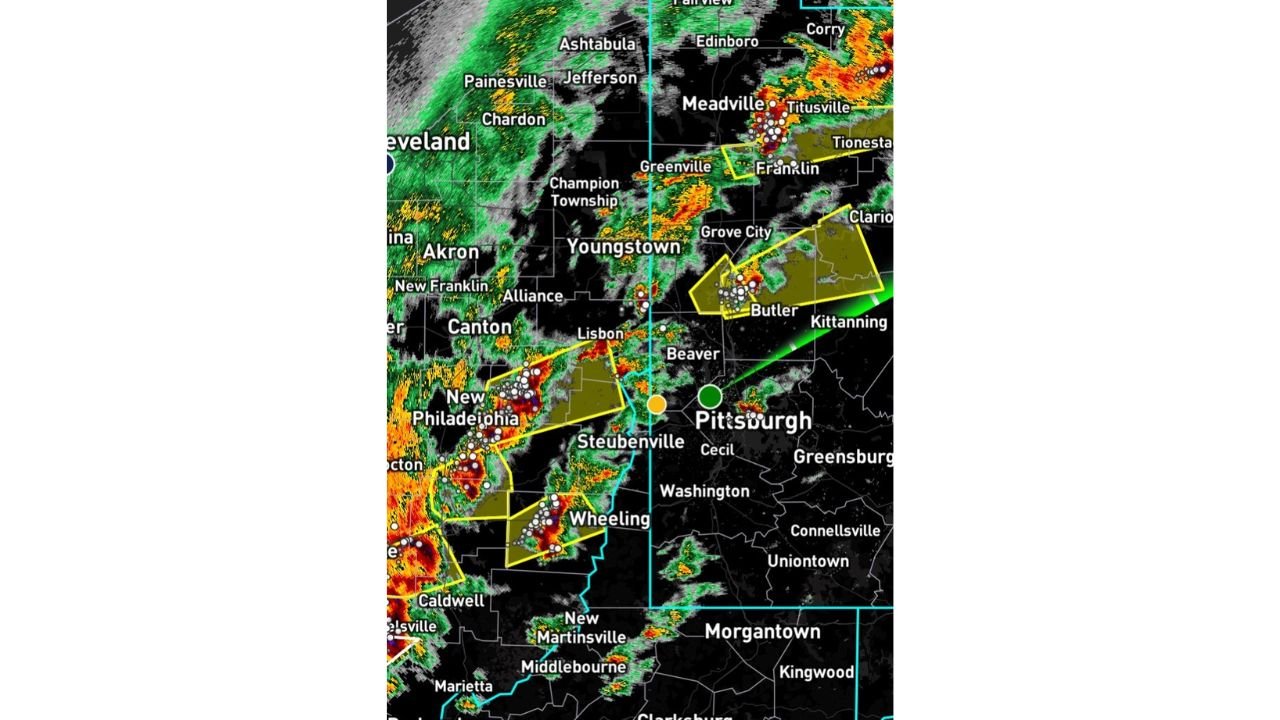
PITTSBURGH, PENNSYLVANIA — Thunderstorms moving across eastern Ohio and western Pennsylvania are drawing attention from meteorologists this evening as radar shows several strong storm cells producing lightning and heavy rain. However, forecasters say these storms appear to be high-based and elevated above the surface, which may limit their ability to produce tornadoes despite earlier concerns about severe weather in the region.
Storm clusters have been observed stretching from Canton, Akron, and Youngstown in Ohio toward Pittsburgh, Pennsylvania, with additional storm development occurring near Butler, Franklin, Meadville, and Titusville in western Pennsylvania. Radar imagery shows multiple lightning-producing storm cores moving through the area, while severe thunderstorm warnings remain active across parts of eastern Ohio and western Pennsylvania.
Storm Structure Across Eastern Ohio and Western Pennsylvania Explains Lower Tornado Threat
Meteorologists monitoring the storms say the surface wind pattern across eastern Ohio and western Pennsylvania is currently blowing out of the southwest, which has created a wind structure that is not ideal for strong tornado formation.
In addition, low-level wind shear appears to be largely unidirectional above the surface, meaning winds are moving in similar directions at different altitudes rather than turning sharply with height. This type of wind profile often supports linear storm structures or elevated thunderstorms instead of rotating supercells that can produce tornadoes.
Another important factor is drier air near the surface across parts of the region, which has widened the temperature and dew point spread. When the air near the ground is too dry compared to the air higher up in the atmosphere, storms can become elevated above the surface rather than rooted in it.
Because of this setup, storms may produce heavy rainfall, frequent lightning, and localized strong wind gusts, but the tornado risk appears lower than earlier forecasts suggested.
Strong Storm Cells Continue From Canton and Youngstown Toward Pittsburgh
Radar imagery shows a line of thunderstorms stretching across eastern Ohio, including areas near Canton, Akron, Lisbon, and Steubenville, before moving eastward toward Wheeling in West Virginia and Pittsburgh in Pennsylvania.
Additional storm cells are developing north of Pittsburgh near Greenville, Franklin, Meadville, and Titusville, where clusters of lightning strikes indicate strong storm activity.
Several warning polygons have been issued across western Pennsylvania counties, including areas around Butler and Clarion, where storms briefly intensified while moving through the region.
While these storms may still produce brief severe wind gusts or small hail, forecasters say the lack of strong surface-based instability means storms could take longer to mature into severe structures.
Weather Conditions Still Being Closely Monitored Across Ohio and Pennsylvania
Even though the tornado threat currently appears lower, meteorologists say conditions across Ohio and Pennsylvania will continue to be monitored closely as storms move through the region.
If storms can eventually tap into stronger surface instability later in the evening, their structure could change and become more organized. However, at this time, the combination of southwesterly surface winds, limited directional wind shear, and slightly drier surface air appears to be keeping storms elevated.
Residents in cities such as Pittsburgh, Youngstown, Akron, Canton, Wheeling, and surrounding communities should still remain aware of changing weather conditions, as thunderstorms may continue producing heavy rain, lightning, and isolated strong wind gusts while moving eastward across the region.
As weather conditions continue evolving across Ohio and Pennsylvania, ChicagoMusicGuide.com will keep tracking severe storm development, radar trends, and potential warnings affecting communities throughout the Midwest and the eastern United States.