
Texas, Arizona and New Mexico Facing Rare March Heat Surge as Southwest Braces for Record-Shattering 850mb Temperatures
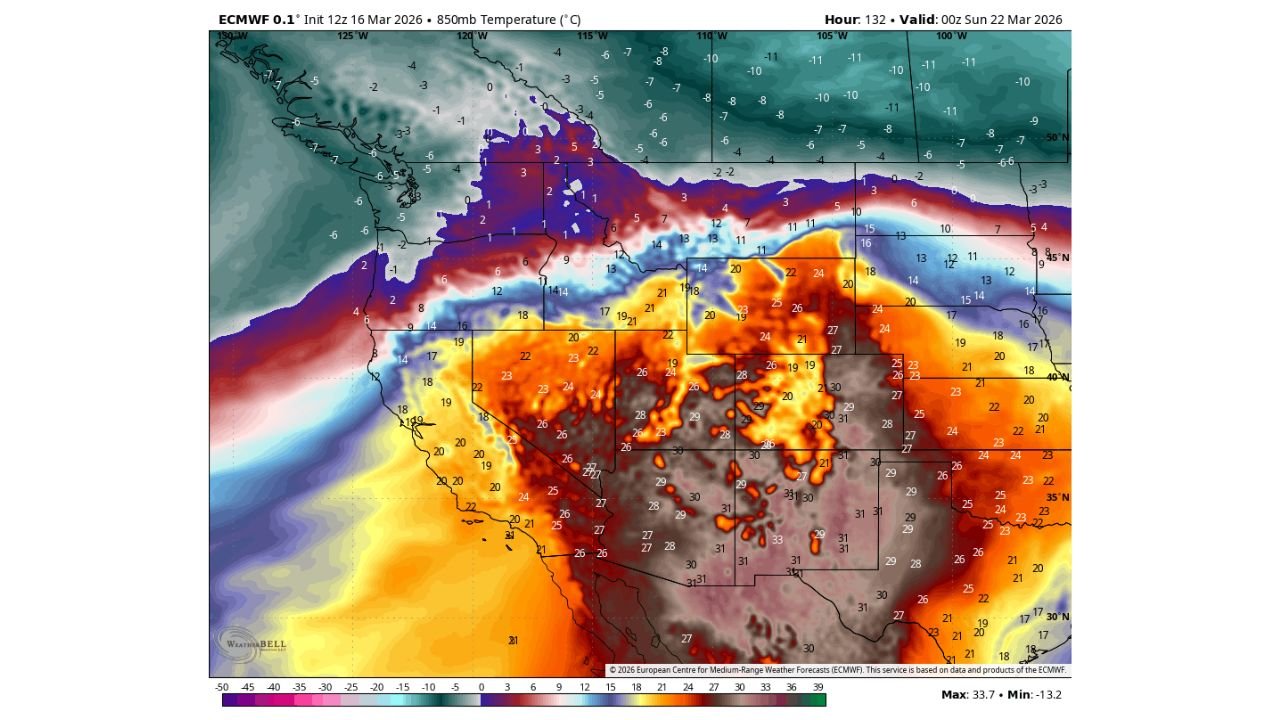
SOUTHWEST TEXAS — A powerful and highly unusual early-season heat surge is building across the Southwest United States, with new forecast data suggesting that parts of Texas and neighboring states could soon experience record-breaking atmospheric temperatures rarely seen in March.
Latest projections from the European weather model (ECMWF) indicate that 850mb temperatures—a key atmospheric level used by meteorologists to assess large-scale heat—could reach approximately 33.7°C (92.7°F) by late this week.
If verified, this would surpass the current March record of 31.3°C at 850mb, previously observed in Southwest Texas, by more than 2°C (around 4°F)—a significant margin in meteorological terms.
What Makes This Heat Event So Significant
Unlike surface temperatures, which can vary due to local conditions, 850mb temperatures reflect the broader air mass, making them a reliable indicator of how extreme a heat event truly is.
Forecast maps show an expansive dome of intense warmth spreading across:
- Texas
- New Mexico
- Arizona
- Northern Mexico
- Portions of California and the Southern Plains
Much of this region is expected to sit under a deep layer of exceptionally warm air, with widespread readings above 25°C to 30°C at 850mb, and localized peaks exceeding 33°C.
These values are considered extremely rare for March and are more typical of late spring or early summer.
Record-Breaking Potential Across Southwest Texas
Historical data from ERA-5 climate records shows that the previous March benchmark for 850mb temperatures stands at 31.3°C in Southwest Texas.
The current forecast not only meets that level but exceeds it by a notable margin, suggesting a strong likelihood of:
- New March records being set
- Unprecedented early-season atmospheric warmth
- A potentially historic heat event for the region
Meteorologists emphasize that breaking such records at the 850mb level often translates to significant surface heat, especially under clear skies and strong high-pressure systems.
Heat Dome Expanding Across the Western U.S.
The pattern driving this event is a large, persistent ridge of high pressure, commonly referred to as a heat dome, centered over the Southwest.
This setup allows warm air to:
- Sink and compress, increasing temperatures
- Suppress cloud formation
- Promote intense daytime heating
Forecast visuals show this heat dome expanding northward into parts of the Great Basin and Rockies, while remaining strongest across Texas and the desert Southwest.
What This Means for Surface Temperatures
While the data focuses on upper-level temperatures, conditions at the ground level are expected to respond accordingly.
Communities across Texas and the Southwest could see:
- Above-normal daytime highs
- Early-season heat resembling late spring conditions
- Increased risk of heat-related stress, especially with consecutive warm days
In some areas, temperatures may approach or exceed record daily highs, continuing the trend of unusual weather patterns already developing across the United States this month.
A Growing Trend of Extreme Early-Season Weather
This developing heat event comes amid a broader pattern of extreme and unseasonal weather across the country, including:
- Record warmth in the West and Southwest
- Severe storm systems across the Midwest and Southeast
- Rapid shifts between winter and summer-like conditions
The combination of these factors highlights an increasingly volatile atmospheric pattern as the country transitions from winter into spring.
What to Watch in the Coming Days
Forecasters will continue to monitor:
- Whether the projected 33.7°C 850mb temperature is reached or exceeded
- How this translates into surface temperature records
- The duration of the heat event across Texas and surrounding states
If current projections hold, this could become one of the most notable early-season heat events in recent history for the Southwest United States.
For ongoing coverage of major U.S. weather developments, including record-breaking heat and extreme conditions, stay connected with the latest updates on ChicagoMusicGuide.com.