
Texas, Oklahoma, Arkansas, Missouri, Tennessee, Kentucky, and Illinois Face Major January Winter Storm With Heavy Snow, Dangerous Ice, and Expanding Arctic Cold Through Early Next Week
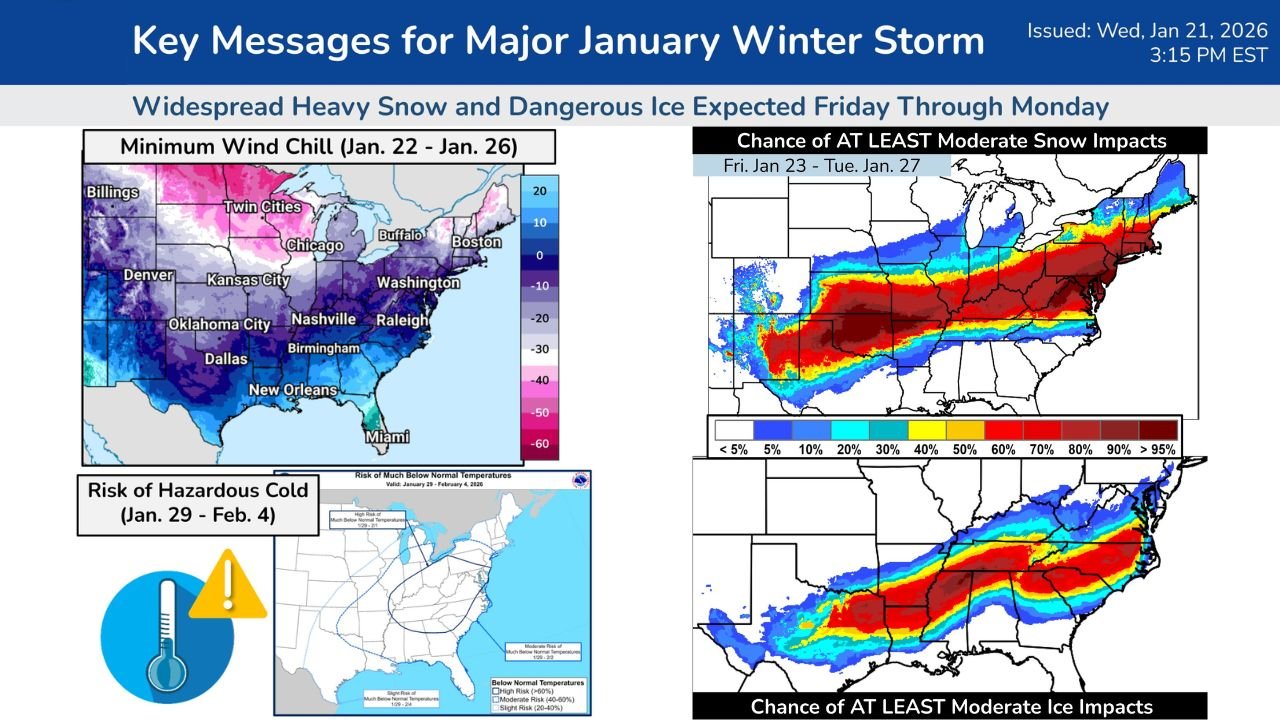
UNITED STATES — A large, multi-day January winter storm combined with an expanding Arctic cold outbreak is expected to impact Texas, Oklahoma, Arkansas, Missouri, Tennessee, Kentucky, and Illinois, with effects spreading across much of the country east of the Rockies beginning Friday and lasting into early next week. Forecast guidance and national outlooks show widespread snow, dangerous ice, and life-threatening cold, making this one of the most disruptive late-January weather patterns in years.
Nearly All Areas East of the Rockies Expected to See Winter Impacts
According to national forecast messaging, nearly everyone east of the Rocky Mountains is expected to experience snow, ice, and/or extreme cold as this system unfolds. The winter storm is forecast to develop across the Southern Plains, expand into the Mid-South and Midwest, and then shift eastward toward the Mid-Atlantic and Northeast.
The combination of widespread precipitation and intensifying Arctic air increases the risk for prolonged impacts, especially in areas that receive ice or heavy snow followed by persistently cold temperatures that limit melting.
Heavy Snow Corridor Extends From the Plains to the Ohio Valley and Northeast
Forecast probability maps show a broad swath of at least moderate snow impacts stretching from parts of Texas and Oklahoma, through Missouri and Illinois, and eastward into the Ohio Valley, Mid-Atlantic, and New England.
Within this corridor, localized snowfall totals exceeding 12 inches are becoming increasingly likely. Snow-covered roads, reduced visibility, and hazardous driving conditions are expected to create widespread travel disruptions, particularly along major interstate corridors.
Dangerous Ice Zone Targets the Southern Plains and Mid-South
South of the primary snow band, forecast guidance highlights a dangerous ice threat across Texas, Oklahoma, Arkansas, Tennessee, Kentucky, and portions of the Lower Mississippi Valley. These areas face the risk of freezing rain and sleet, which can quickly lead to treacherous travel conditions.
Ice accumulation on trees and power lines raises concerns for prolonged power outages, while untreated roads may become nearly impassable, especially overnight and during early morning hours.
Arctic Cold Expands South and East With Life-Threatening Wind Chills
Behind the storm system, an Arctic air mass is expected to surge southward, bringing dangerously cold temperatures to the eastern two-thirds of the United States. Sub-zero lows are forecast to spread from the Northern Plains into the Midwest and Northeast, with cold air reaching as far south as the Gulf Coast by early next week.
Forecast wind-chill maps indicate:
- Wind chills below −50°F in parts of the Northern Plains
- Sub-zero wind chills extending into the Mid-South and Ohio Valley
- Increased risk of hypothermia and frostbite for exposed skin
This cold outbreak is expected to linger into early February, particularly across the Ohio and Tennessee Valleys and portions of the Mid-Atlantic and Southeast.
Forecast Confidence High, but Exact Impacts Still Subject to Change
Forecasters emphasize that while confidence is high in a significant winter storm and cold outbreak, uncertainty remains regarding exact storm track, timing, and precipitation amounts. Even small shifts north or south could dramatically change whether locations see snow, ice, or rain.
Officials urge residents not to assume they are “out of the woods,” noting that major trend shifts can still occur, even as the system moves into the short-range forecast window.
Residents Urged to Prepare for Extended Winter Disruptions
Emergency planners recommend that residents across Texas, Oklahoma, Arkansas, Missouri, Tennessee, Kentucky, Illinois, and surrounding states prepare now for extended winter weather impacts. This includes reviewing travel plans, checking heating systems, preparing emergency supplies, and ensuring pets and livestock are protected from the cold.
With snow, ice, and extreme cold all possible, staying home and limiting travel may be the safest option for many communities during the peak of the storm.
As this major January winter storm and Arctic cold outbreak continues to evolve, staying informed will be critical. For continued updates on snow probabilities, ice risks, extreme cold, and regional impacts across the United States, visit ChicagoMusicGuide.com for the latest weather coverage and analysis from national forecast guidance provided by National Weather Service and the Weather Prediction Center.