
Utah Snowpack Crisis Deepens as Statewide Levels Drop to 8.4 Inches With Record Low Peak Threatening Water Supply
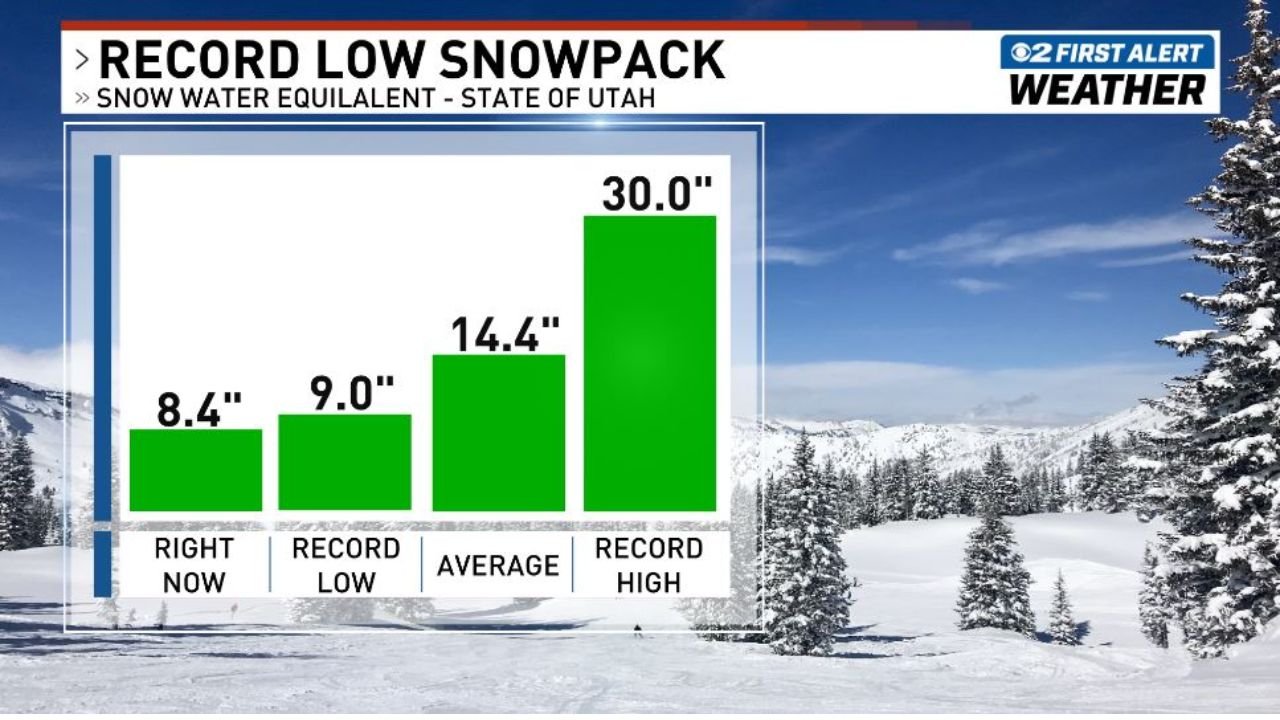
SALT LAKE CITY, UTAH — Utah’s mountain snowpack for the 2025–2026 winter season is approaching what could become the lowest peak on record, with statewide snow water equivalent levels currently measured at just 8.4 inches.
Data tracking the state’s seasonal snowpack shows that the current level is already below the previous record low of 9.0 inches, raising concerns that Utah could finish the season with the lowest snowpack peak ever recorded statewide.
Snowpack levels are typically a critical indicator for spring runoff, reservoir replenishment, and water supply across Utah, making this year’s numbers particularly significant.
Current Snowpack Levels Far Below Normal for Utah
Snow water equivalent measurements show a stark contrast between the current statewide snowpack and typical seasonal averages.
According to the latest data:
- Current statewide SWE: 8.4 inches
- Previous record low: 9.0 inches
- Average seasonal peak: 14.4 inches
- Record high: 30.0 inches
This means the current snowpack sits more than six inches below the normal seasonal average, highlighting just how unusually dry the winter season has been across the Utah mountain ranges.
The numbers also place the current level far below historic high snowpack years that delivered abundant water across the state.
Warm Weather Could Rapidly Reduce Remaining Snowpack
With warmer temperatures expected across Utah, snowpack levels may decline even further in the coming days.
Current projections indicate that more than two inches of snow water equivalent could melt by the upcoming weekend alone, reducing an already limited snowpack even further.
Rapid melting during warm weather periods can accelerate snowpack loss before the traditional spring runoff season begins.
In years with deeper snowpack, gradual melting allows mountain snow to replenish Utah’s reservoirs, rivers, and irrigation systems through late spring and early summer.
However, with this year’s already limited snowpack, even modest warming can significantly reduce the remaining mountain snow.
Snowpack Critical for Utah’s Water Supply
Utah relies heavily on mountain snowpack as a natural water storage system.
As snow accumulates during winter months, it stores water that slowly melts during the spring and early summer, feeding rivers and reservoirs across the state.
Low snowpack seasons can have widespread impacts, including:
- Reduced river flows
- Lower reservoir levels
- Increased drought concerns
- Challenges for agriculture and irrigation systems
The current snowpack levels suggest that spring runoff may be significantly reduced compared to typical years.
Statewide Conditions Reflect Dry Winter Across the West
The unusually low snowpack levels reflect a broader pattern of dry conditions across parts of the western United States this winter, including sections of Utah, Nevada, Arizona, and Colorado.
Without additional snowfall before the seasonal peak period, the 2025–2026 Utah snow season could officially set a new record for the lowest peak snowpack measured statewide.
The coming weeks will determine whether any late-season storms can improve conditions, but the current data already places the season near historic lows for Utah’s mountain snowpack.
Snowpack levels remain one of the most closely watched indicators of water availability across the western United States. For continued coverage of major weather developments and environmental conditions across the country, visit ChicagoMusicGuide.com for the latest updates.