
Washington, Oregon, and California Lead Record-Breaking December Heat as Western U.S. Faces Historic Warmth and Shrinking Snowpack
WASHINGTON — The Western United States is experiencing one of the hottest Decembers ever observed, with Washington, Oregon, and California emerging as the most heavily impacted states, according to temperature percentile and anomaly data covering the past two weeks.
Large areas shaded in dark red across the Pacific Northwest, West Coast, and Interior West indicate record-high mean daily temperatures, placing much of the region in the 99th to 100th percentile for mid-December warmth.
“All areas highlighted in dark red have reached record-warm temperatures over the last 15 days.”
Pacific Northwest Sees the Most Extreme Temperature Anomalies
Among all regions analyzed, the Pacific Northwest stands out as the epicenter of the heat anomaly.
- Washington and Oregon have recorded temperatures 15–20°F above normal
- Several locations reached record-high December daily temperature percentiles
- Persistent warmth has prevented cold air intrusions typical for mid-December
This prolonged pattern places the Pacific Northwest firmly in the most impacted category nationwide.
California and the Interior West Also Significantly Impacted
California, along with parts of Nevada, Idaho, Utah, and Arizona, has also experienced widespread above-normal to record-warm conditions.
Southern and Central California show sustained warmth extending inland, while Nevada and Utah remain locked in an anomalously warm air mass connected to the broader western ridge.
“This pattern reflects a prolonged and unusually strong warm dome across the western half of the country.”
Snowpack Drops to Historic Mid-December Lows
One of the most concerning consequences of this heat event is its impact on mountain snowpack.
- The Western U.S. snowpack is currently the smallest for mid-December in decades
- Snow-dependent regions have seen rain replace snow at higher elevations
- Long-term water supply concerns are beginning to emerge
Data suggests the snowpack deficit may be one of the worst observed for this point in the season, potentially exceeding previous records.
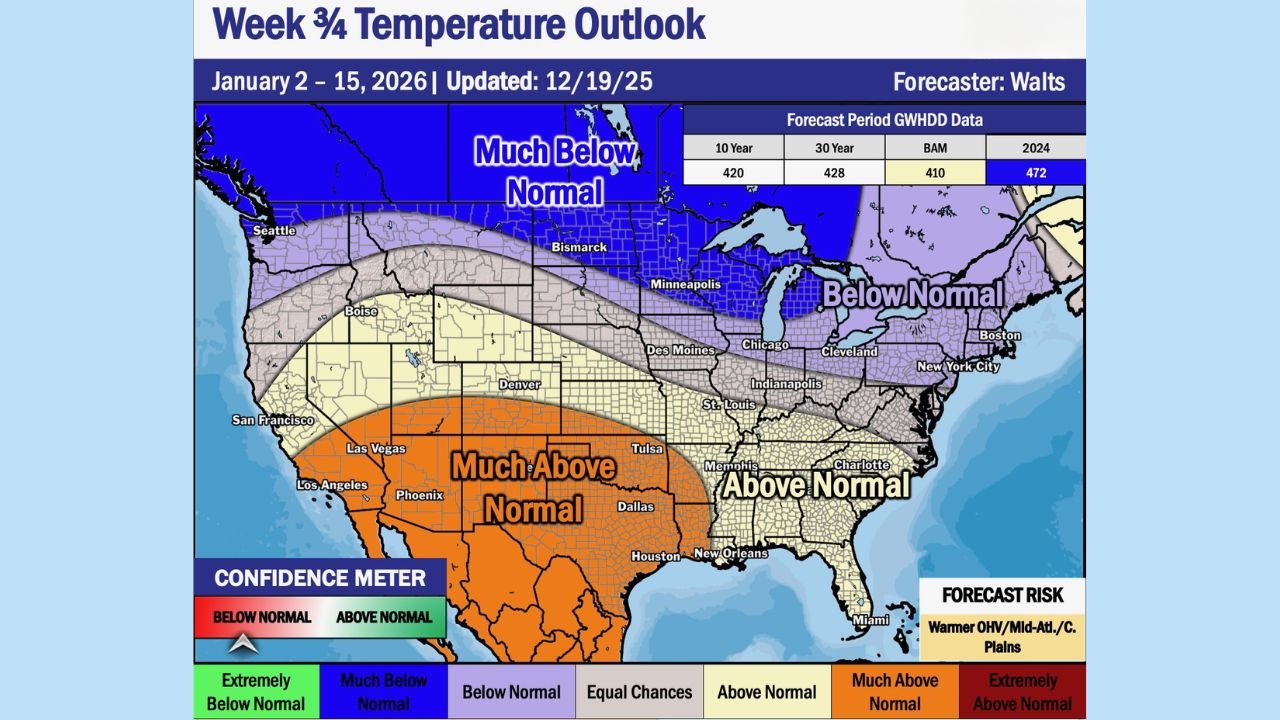
Temperature Outlook Shows Continued Regional Contrast Into January
Extended outlook data from late December through mid-January indicates a sharp temperature divide across the country:
Western and Southern States
- Much above normal temperatures expected
- Warmth centered on California, Nevada, Arizona, New Mexico, and Texas
Midwest and Northern Plains
- Much below normal temperatures
- Strong contrast developing east of the Rockies
Great Lakes and Northeast
- Sustained below-normal conditions, including colder-than-average air across Illinois, Michigan, Ohio, and New York
“The pattern favors continued warmth in the West while cold air dominates the central and eastern U.S.”
Why This Matters Beyond Weather Records
This historic warmth carries broader implications beyond temperature records:
- Reduced snowpack impacts water supply and hydroelectric planning
- Winter recreation industries may face shortened seasons
- The contrast between warm West and cold Midwest may intensify storm track volatility
For touring artists, outdoor venues, and winter event planners, these conditions could significantly affect travel logistics, scheduling, and regional attendance patterns.
What Comes Next
Forecasters will continue monitoring whether colder air can eventually penetrate the West later in winter. However, current guidance suggests warm anomalies may persist well into early January, keeping much of the Western U.S. on track for one of its warmest winters on record.
What do you think — is this winter warmth a welcome break or a growing concern for the months ahead?
Join the conversation and stay updated with weather impacts across touring routes and major cities at ChicagoMusicGuide.com.