Illinois, Indiana, Ohio, Michigan, Kentucky, Tennessee, Pennsylvania and New York Brace for January Heatwave Pushing Temperatures 30–40 Degrees Above Normal
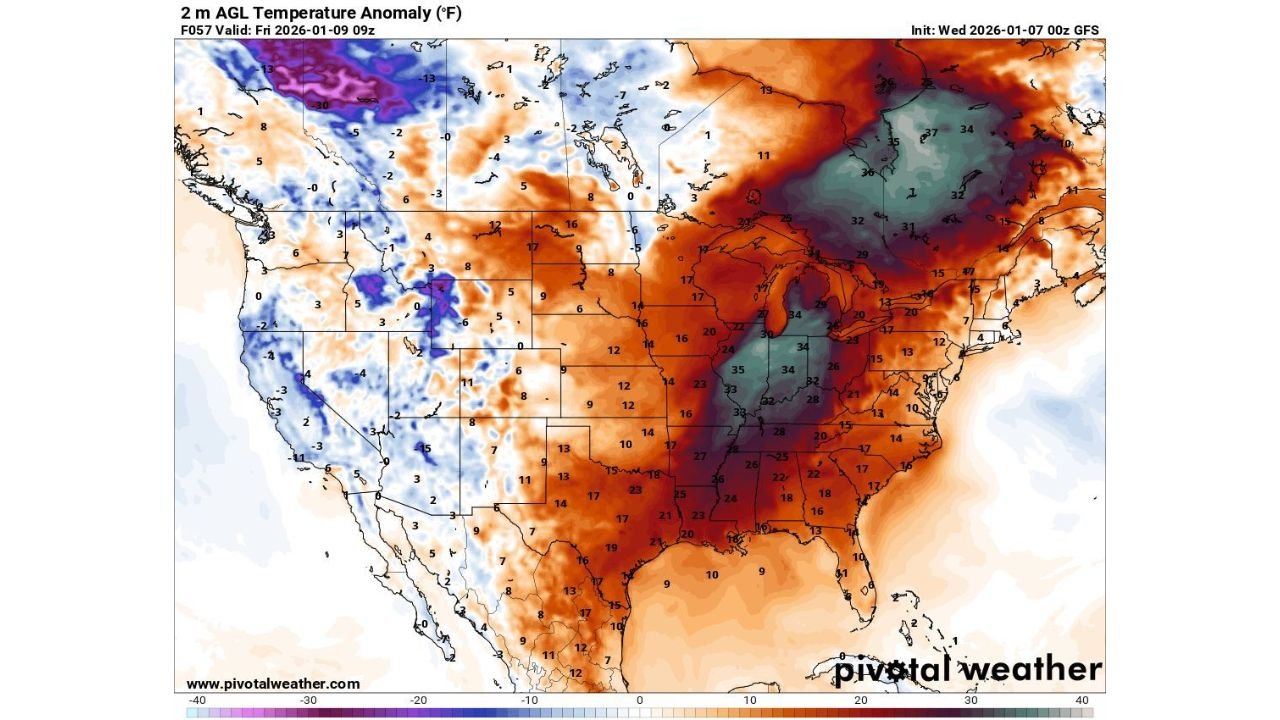
UNITED STATES — A rare and intense January warm surge is setting up across a large portion of the United States, with forecast data showing record-threatening warmth spreading from the Midwest through the Ohio Valley and into parts of the East Coast late this week.
Temperature anomaly maps indicate that several states — including Illinois, Indiana, Ohio, Michigan, Kentucky, Tennessee, Pennsylvania, and New York — could experience temperatures 30 to 40 degrees above average, a dramatic departure from typical mid-winter conditions.
Why This Warm Pattern Is Unusual for January
January is typically one of the coldest months of the year across the Midwest and Great Lakes, but the current atmospheric setup is allowing very mild air from the south to surge northward and overwhelm any lingering cold air.
Forecast guidance shows:
- Deep warm anomalies centered over the Ohio Valley and Great Lakes
- Overnight lows staying exceptionally warm, especially Thursday and Friday mornings
- Several locations potentially challenging daily high and warm-low records
In parts of the Ohio Valley, Thursday and Friday mornings may rank among the warmest January mornings ever recorded, based on historical averages.
Midwest and Ohio Valley See the Strongest Anomalies
The most extreme warmth is expected to focus over:
- Illinois and Indiana, where temperatures could run 25–35°F above normal
- Ohio and Michigan, with similar anomalies extending north into the Great Lakes
- Kentucky and Tennessee, where winterlike chill will be almost completely absent
Cities accustomed to freezing temperatures this time of year may instead see spring-like afternoons, with readings more typical of late March or early April.
East Coast Also Caught in the Warm Surge
The warm air mass does not stop in the Midwest. Forecast maps show significant warmth pushing into Pennsylvania, New York, and parts of the Northeast, especially west of the coast.
While coastal areas may stay slightly cooler due to marine influence, inland locations could still see:
- Afternoon temperatures well above seasonal norms
- A lack of overnight freezing, even in normally colder interior valleys
What Happens Next
This type of winter heatwave often comes with active weather patterns, including rain systems and, in some regions, thunderstorms as colder air eventually tries to return. However, during the peak of this warm spell, cold air is largely locked out, allowing mild conditions to dominate.
Forecasters note that while January warm spells are not unheard of, the magnitude and geographic spread of this event make it particularly notable, especially for the Midwest and Ohio Valley.
Why It Matters
Beyond breaking records, prolonged winter warmth can:
- Accelerate snowmelt and impact river levels
- Confuse seasonal plant cycles
- Increase energy demand swings due to reduced heating needs followed by potential sharp cooldowns later
Residents across the affected states should stay weather-aware, especially as this unusually warm pattern evolves and eventually transitions.
For continued updates on how this unusual January heatwave may affect travel, events, and regional conditions, keep following coverage from ChicagoMusicGuide.com.