Oklahoma, Texas, Kansas, Missouri, and Arkansas See Rising Snow Potential as Ensemble Models Trend Sharply Higher Ahead of Late-January Winter Storm
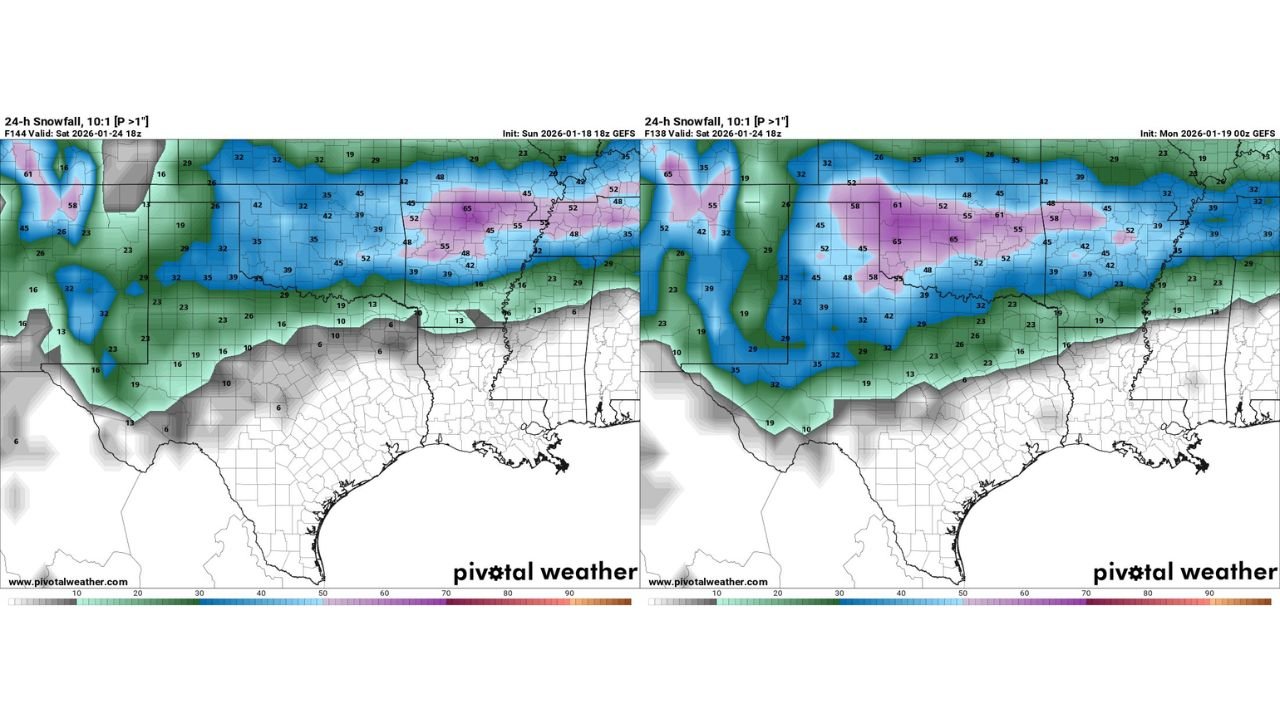
UNITED STATES — Confidence continues to increase that a major late-January winter storm will bring meaningful snowfall and disruptive winter weather across parts of the southern and central Plains, with Oklahoma emerging as a growing focal point in the latest model guidance. New ensemble data shows a significant upward trend in snowfall probabilities, including a notable signal for Oklahoma City, where odds for impactful snow totals have risen sharply over the past 24 hours.
Meteorologists monitoring the event say this is a clear model trend shift, not just noise, and it places Oklahoma and surrounding states under closer scrutiny as the storm window approaches.
Ensemble Models Signal a Major Shift Toward Oklahoma
The latest European Ensemble Prediction System (EPS) has trended meaningfully higher on snowfall potential across central and northern Oklahoma, extending into southern Kansas, northern Texas, western Missouri, and northwest Arkansas. One of the most striking data points is that the Oklahoma City metro now carries roughly a 50/50 probability of at least 4 inches of snow, a threshold that would represent a high-impact winter event for the region.
This shift suggests that the storm track and thermal profile are aligning more favorably for snow than earlier forecasts indicated. While not every ensemble member shows a heavy snow outcome, the increasing clustering around higher totals is a signal forecasters take seriously.
Why the Snow Signal Is Strengthening
Several atmospheric factors are coming together to support higher snowfall potential across Oklahoma and nearby states. A strong Arctic high pressure system is expected to anchor cold air across the central United States, allowing sub-freezing temperatures to remain in place as moisture increases from the southwest.
At the same time, a developing low-pressure system is forecast to move out of the Southwest and into the southern Plains. This setup favors overrunning precipitation, where moist air rides up and over shallow cold air at the surface—an efficient snow-producing pattern when temperatures cooperate.
The latest guidance suggests this cold air may be more resilient than previously thought, which helps explain the recent upward snowfall trend in Oklahoma.
Snowfall Probabilities Show Expanding Impact Zone
Beyond Oklahoma City, ensemble snowfall maps indicate:
- Moderate to high probabilities for at least 1 inch of snow across much of Oklahoma
- Increasing chances of 4 inches or more across central and northern Oklahoma
- A broader snow swath extending into southern Kansas and western Missouri
- Lighter but still impactful snowfall potential reaching northern Texas and northwest Arkansas
While exact totals remain uncertain, even modest snowfall in these areas can lead to travel disruptions, school closures, and power concerns, especially if snow falls quickly.
What Still Needs to Be Resolved
Despite the encouraging snow signal, meteorologists stress that important details remain unresolved. Small changes in:
- The track of the surface low
- The depth of cold air
- The timing of moisture arrival
could still shift the heaviest snow axis north or south. Additionally, any intrusion of warmer air aloft could introduce sleet or freezing rain, especially near the southern edge of the snow band.
Because the storm is still several days away, continued model fluctuations are expected—but the direction of recent trends is notable.
Why the Next 48 Hours Matter
Forecasters say the next couple of days will be critical in determining whether this snow signal continues to strengthen or levels off. If ensemble probabilities remain elevated or increase further, confidence in a high-impact winter storm for Oklahoma will grow rapidly.
For now, residents across Oklahoma, Texas, Kansas, Missouri, and Arkansas are encouraged to stay weather-aware, not alarmed, and monitor forecast updates closely as confidence sharpens.
As winter weather threats evolve across the country, staying informed is essential. For continued storm updates, forecast analysis, and regional impact coverage, visit ChicagoMusicGuide.com.