Minnesota, Wisconsin, Iowa, North Dakota, South Dakota and Michigan Face Rare “Exploding Tree” Risk as Arctic Cold Plunges Temperatures Below –20°F This Weekend
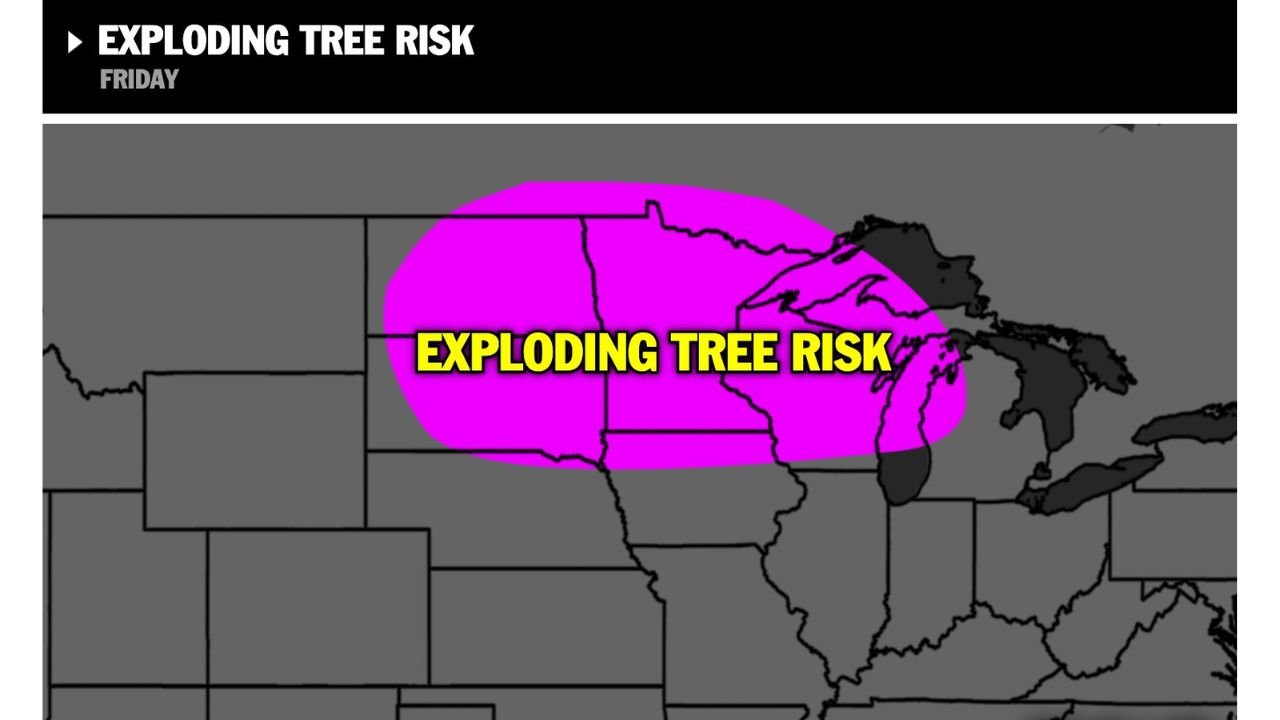
UNITED STATES — A dangerous surge of Arctic air is set to grip large portions of the Upper Midwest and Northern Plains on Friday and Saturday, with temperatures forecast to plunge as much as 20 degrees below zero, creating rare conditions where trees can literally split or “explode” from the cold stress.
Weather data and impact maps show the highest risk zone stretching across Minnesota, Wisconsin, northern Iowa, eastern North Dakota, eastern South Dakota, and parts of Michigan, where the combination of extreme cold, rapid temperature drops, and internal moisture freezing inside trees could lead to loud cracking sounds and sudden limb failures.
Why “Exploding Trees” Can Happen in Extreme Cold
When temperatures fall rapidly into deep subzero territory, moisture trapped inside tree trunks and branches freezes and expands faster than the wood can handle. This pressure buildup can cause trees to split violently, producing sharp cracking or popping noises often mistaken for gunshots or transformers blowing.
Forecasters note that this risk increases dramatically when temperatures fall below –20°F, especially after milder conditions earlier in the week that leave trees holding more internal moisture.
States Facing the Highest Risk This Weekend
Based on the highlighted impact zone, the greatest concern is focused on:
- Minnesota – including central and northern regions
- Wisconsin – especially western and northern areas
- North Dakota – eastern counties
- South Dakota – eastern half of the state
- Iowa – northern counties
- Michigan – Upper Peninsula and northern Lower Peninsula
Urban areas, older trees, and neighborhoods with mature landscaping may see increased reports of falling limbs, blocked roads, and localized power disruptions if branches strike lines.
Temperature Forecast and Timing
The most dangerous conditions are expected from Friday night through early Saturday morning, when overnight lows and wind chills reach their peak severity. Some locations may experience wind chills colder than –40°F, amplifying stress on trees, infrastructure, and exposed pipes.
Daytime highs will remain well below freezing, offering little relief and prolonging the threat through the weekend.
Potential Impacts Beyond Trees
While the “exploding tree” phenomenon draws attention, forecasters warn of broader risks during this cold outbreak:
- Falling tree limbs damaging vehicles and homes
- Power outages from downed lines
- Bursting water pipes
- Increased danger for pets and livestock
- Life-threatening exposure risk for anyone outdoors without proper protection
Residents are urged to avoid parking vehicles beneath large trees and to limit time outdoors during the coldest periods.
What Residents Should Do Now
Officials recommend taking the following precautions immediately:
- Stay indoors during overnight and early morning hours
- Bring pets inside and protect livestock
- Let faucets drip to prevent pipe freezes
- Keep phones charged in case of outages
- Avoid walking near heavily wooded areas during extreme cold
These steps can significantly reduce the risk of injury or property damage during the coldest phase of the event.
Cold Pattern Expected to Persist
Forecast guidance suggests this Arctic air mass will not exit quickly. Even after the coldest temperatures ease slightly, below-normal conditions are expected to persist into early next week, keeping frozen ground and stressed vegetation vulnerable.
Weather officials continue to monitor the situation and advise residents across the Midwest and Northern Plains to stay alert for updates as conditions evolve.
Have you experienced extreme cold impacts or heard trees cracking during past Arctic outbreaks?
Share your experience and stay informed with ongoing weather coverage at ChicagoMusicGuide.com.