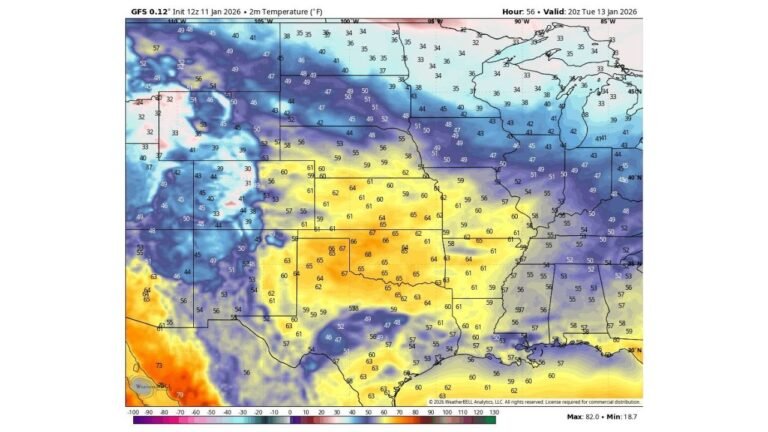
Historic U.S. Winter Storm Impacts Texas, Oklahoma, Arkansas, Missouri, Illinois, Indiana, Ohio, Pennsylvania, and New York as SPC Issues Record 26 Mesoscale Discussions
UNITED STATES — A powerful and unusually expansive winter storm swept across large portions of the country between January 24 and January 25, 2026, impacting Texas, Oklahoma, Arkansas, Missouri, Illinois, Indiana, Ohio, Pennsylvania, and New York. The scale and intensity of the system prompted meteorologists at the Storm Prediction Center (SPC) to issue a record-breaking 26 winter mesoscale discussions (MDs) within a 48-hour period, the highest total ever recorded since winter MD tracking began in 2008.
The storm produced a dangerous mix of heavy snow, sleet, and freezing rain, creating widespread travel hazards, power disruptions, and infrastructure stress across multiple regions at the same time.
Record-Breaking SPC Activity Highlights Storm Severity
Mesoscale discussions are issued when forecasters identify a rapidly evolving or high-confidence threat that may soon require warnings. Issuing 26 winter MDs in just two days underscores how complex and fast-changing this storm became as it moved east.
The previous record for winter MDs in a two-day span was 20, set during February 21–22, 2011. Surpassing that benchmark reflects not just storm strength, but the number of distinct hazard zones that developed simultaneously across the United States.
Forecasters were tracking multiple precipitation types at once, often separated by only a few dozen miles, making precise short-term forecasting critical.
Snow, Ice, and Mixed Precipitation Spread Across Multiple States
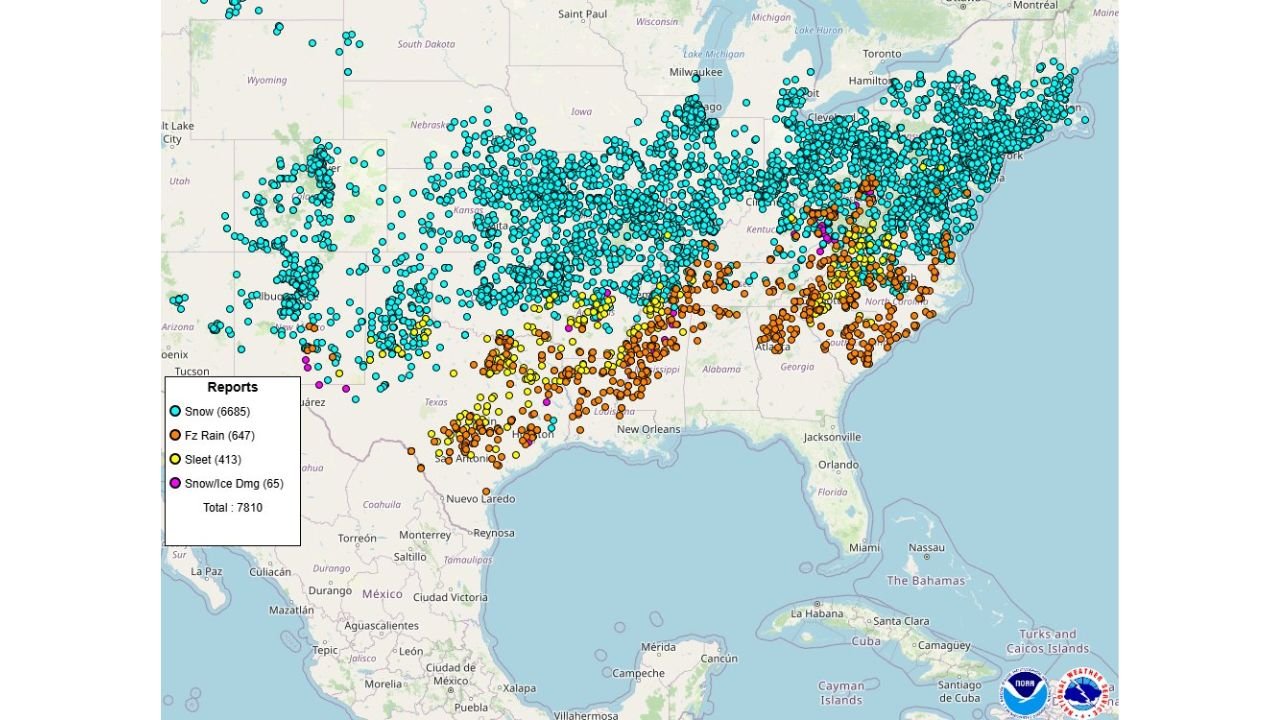
SPC maps show a long, continuous corridor of winter weather stretching from the Southern Plains into the Midwest, Ohio Valley, and Northeast.
- Heavy snow dominated across Missouri, Illinois, Indiana, Ohio, Pennsylvania, and New York, where cold air remained firmly in place.
- Freezing rain and sleet became the primary threat farther south, including parts of Texas, Oklahoma, Arkansas, Tennessee, Mississippi, Alabama, Georgia, and the Carolinas.
- Transition zones saw rapid changes between snow, sleet, and ice, increasing the risk of accidents and power outages.
Several MDs focused specifically on ice accretion, which can cause more damage than snow due to the added weight on trees and power lines.
Nearly 8,000 Winter Storm Reports Filed Nationwide
During the same 48-hour period, National Weather Service offices logged nearly 8,000 winter storm reports, illustrating the storm’s nationwide impact.
Reported totals included:
- Snow reports: approximately 6,685, concentrated from the Central Plains through the Great Lakes and Northeast
- Freezing rain reports: about 647, primarily across the Lower Mississippi Valley and Southeast
- Sleet reports: around 413, often within narrow transition zones
- Snow and ice damage reports: at least 65, including downed trees, damaged power lines, and blocked roadways
The sheer number of reports reflects how many communities were affected simultaneously, stretching local response resources thin.
Why Meteorologists Are Calling This Storm Exceptional
Winter storms regularly affect parts of the United States, but this event stood out due to its geographic reach, duration, and overlapping hazards. Forecasters had to monitor snowstorms in the north while simultaneously tracking dangerous ice storms to the south.
Strong upper-level energy, abundant moisture from the Gulf of Mexico, and entrenched cold air combined to create a setup capable of producing long-lasting and high-impact winter weather across multiple regions.
Meteorologists emphasized that issuing such a high number of mesoscale discussions reflects the need for constant real-time updates as conditions evolved hour by hour.
Impacts and Lessons From a Historic Winter Event
This storm will likely be studied as a benchmark event in operational winter forecasting, much like major blizzards and ice storms of the past. It highlights how winter weather can rival severe thunderstorms in terms of complexity, danger, and forecasting challenges.
For residents across affected states, the event served as a reminder of the importance of preparedness, especially during prolonged periods of snow and ice that strain transportation and power infrastructure.
As recovery continues and data analysis advances, meteorologists will use this storm to improve future winter-weather communication and response strategies.
For continued coverage of major weather events, storm analysis, and regional impacts across the United States, visit ChicagoMusicGuide.com for the latest updates and expert insight.