Flash Freeze Threat Targets Louisiana, Mississippi, Alabama, Georgia, and Tennessee as Roads Turn to Ice Overnight Across the Deep South
UNITED STATES — A dangerous flash freeze is rapidly developing across the Deep South, threatening parts of Louisiana, Mississippi, Alabama, Georgia, and Tennessee as temperatures plunge sharply overnight. Meteorologists warn that any standing water on roadways will freeze quickly, even in areas that did not receive snow or ice earlier, creating widespread black ice and extremely hazardous travel conditions.
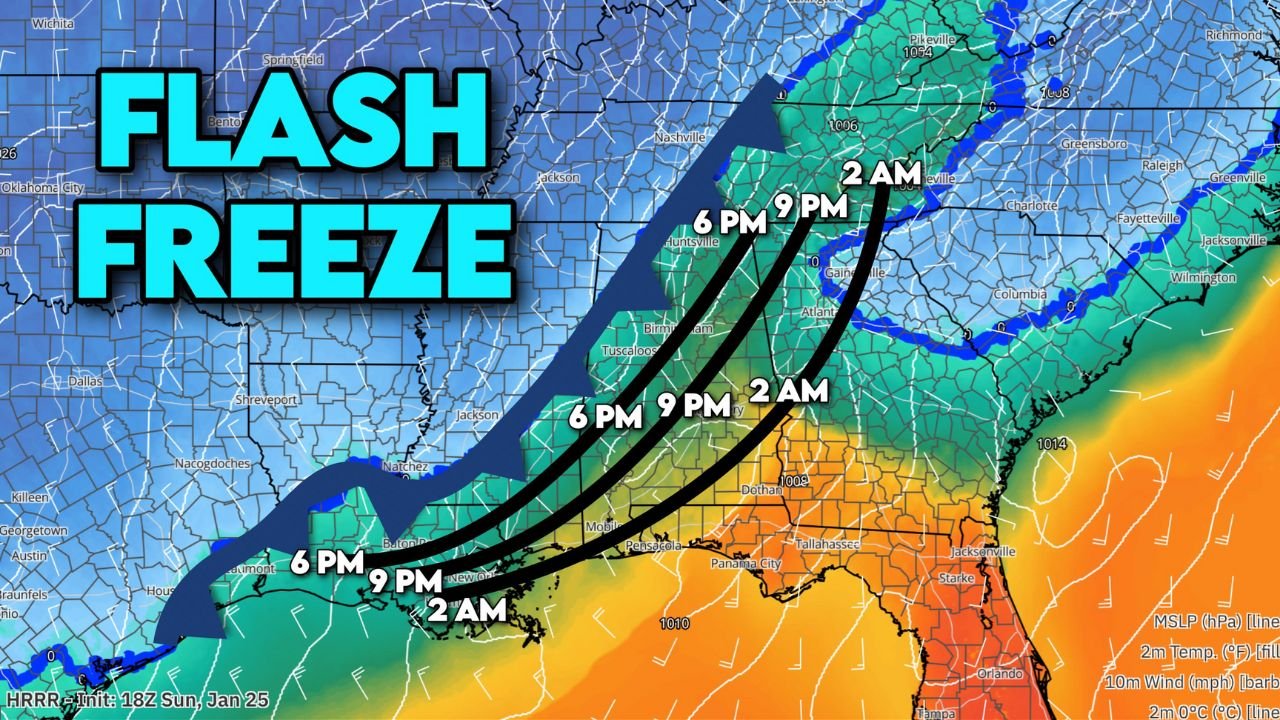
Forecast data shows temperatures falling below freezing within a narrow time window, allowing roads to transition from wet to ice-covered in minutes, particularly during the overnight and early morning hours.
What Is Driving This Rapid Flash Freeze
The flash freeze is being triggered by a strong Arctic air surge pushing southeast behind the departing winter storm system. As colder, drier air races southward, surface temperatures are expected to drop 10 to 20 degrees in just a few hours across much of the Deep South.
Because many locations experienced rain, sleet, or melting ice earlier in the day, road surfaces remain wet, setting the stage for instant icing once temperatures cross the freezing mark. Meteorologists stress that precipitation does not need to be ongoing for a flash freeze to occur.
City-by-City Timeline of When Roads May Freeze
Based on high-resolution forecast guidance, the onset of freezing conditions is expected to follow a southwest-to-northeast progression:
- Around 6 p.m.:
Tuscaloosa, Alabama; Birmingham, Alabama; Baton Rouge, Louisiana - Around 9 p.m.:
Selma, Alabama; Gadsden, Alabama; Interstate 59 and Interstate 20 corridors - Around 2 a.m.:
Montgomery, Alabama; Atlanta, Georgia; Mobile, Alabama; New Orleans, Louisiana
Once freezing begins, road conditions can deteriorate very rapidly, with bridges, overpasses, and elevated roadways icing first.
Why Roads Will Become Especially Dangerous Overnight
Unlike snowstorms that provide visual cues, black ice forms silently and invisibly, catching drivers off guard. Transportation officials warn that roadways could quickly become “skating rinks”, even in urban areas where traffic typically keeps pavement warmer.
The risk is highest overnight and during the early morning commute, when temperatures are coldest and road treatment efforts are less effective. Even treated roads may refreeze as colder air deepens.
Interstates and Major Travel Corridors at Risk
Several major transportation routes across the Deep South are expected to be impacted, including:
- Interstate 10 across Louisiana and southern Mississippi
- Interstate 20 and Interstate 59 across Mississippi and Alabama
- Interstate 65 from Mobile through Montgomery
- Interstate 75 and Interstate 85 in parts of Georgia
Officials urge motorists to avoid overnight travel entirely and strongly discourage early-morning driving unless absolutely necessary.
Why This Flash Freeze Is Especially Concerning
Flash freeze events are particularly dangerous because they follow active precipitation, leaving behind moisture that freezes before crews can fully respond. Emergency managers warn that crash risks increase dramatically during the first few hours of a freeze, especially when drivers underestimate conditions.
Power infrastructure may also be affected in areas where ice remains on trees and lines, as colder air can increase stress on already damaged systems.
What Residents Should Do Tonight and Tomorrow Morning
Authorities across the region recommend:
- Avoid driving overnight and early morning
- Delay commutes if possible
- Use extreme caution on bridges and overpasses
- Prepare for possible school and business delays
- Check local emergency updates before traveling
Residents are encouraged to remain indoors where possible and allow road crews time to assess and treat conditions after sunrise.
As this rapid flash freeze unfolds across the Deep South, conditions may worsen quickly with little warning. For continued updates, timing changes, and regional weather coverage impacting Louisiana, Mississippi, Alabama, Georgia, and Tennessee, stay with ChicagoMusicGuide.com for the latest analysis and alerts.