United States Gains Significant Daylight in February as Illinois, Texas, and Midwest See Noticeable Evening Light Increase
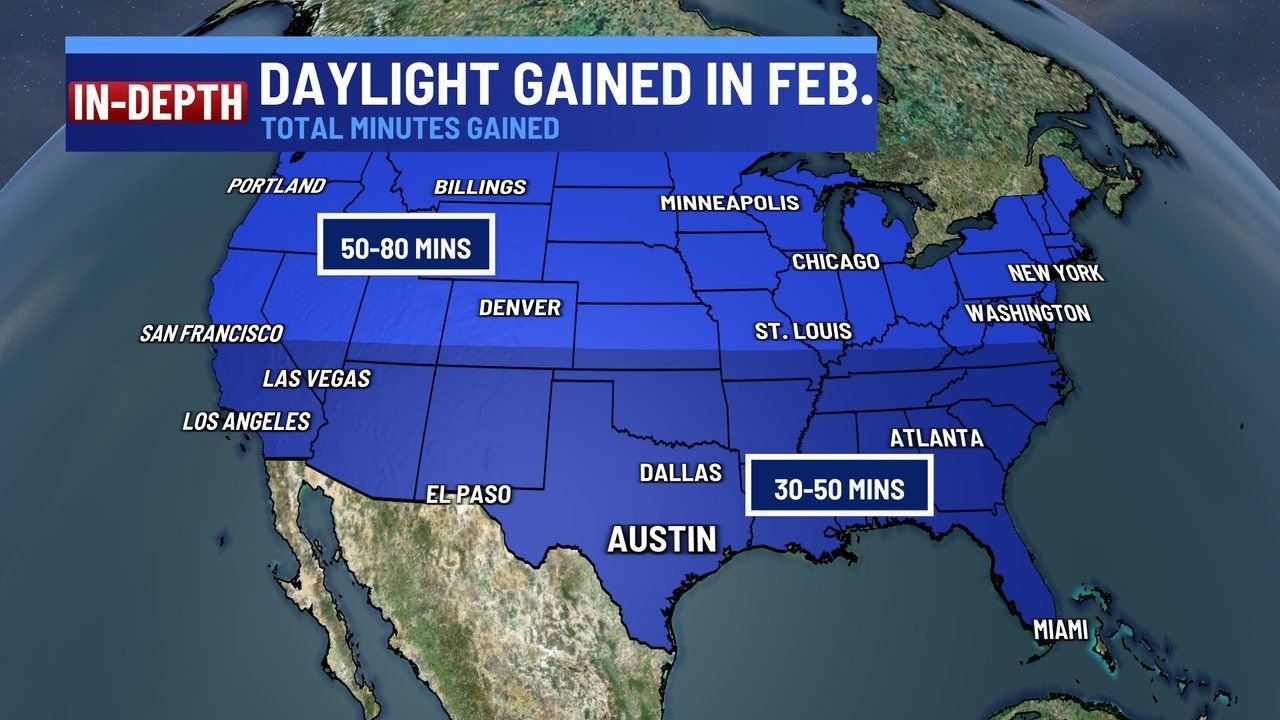
UNITED STATES — February brings a quiet but meaningful seasonal shift across the country: a sharp increase in daylight hours, even as winter weather continues to dominate much of the forecast. New data shows that nearly every region of the U.S. will gain 30 to 80 minutes of additional daylight by the end of the month, with noticeable differences depending on latitude.
For many cities, including Chicago, Austin, Minneapolis, Denver, and Portland, the change will be felt most clearly in the later sunsets, offering a psychological boost after the darkest stretch of winter.
How Much Daylight the U.S. Gains in February
The nationwide breakdown highlights a clear north-to-south gradient:
- Northern and Northwestern U.S. (Pacific Northwest, Northern Plains, Upper Midwest):
50 to 80 minutes of additional daylight
Cities like Portland, Billings, Minneapolis, and Chicago see the largest gains. - Central and Southern U.S. (Texas, Southeast, Gulf Coast):
30 to 50 minutes of additional daylight
Cities such as Austin, Dallas, Atlanta, and Miami still gain noticeable evening light, though less dramatically.
This increase happens rapidly because February follows the winter solstice recovery curve, when daylight lengthens faster with each passing day.
What This Means for Chicago and the Midwest
For Illinois and the Midwest, February is a turning point.
- Chicago gains roughly 45–50 minutes of daylight over the month.
- Sunset times begin pushing noticeably later by mid-February.
- Morning darkness still lingers, but evenings feel longer and less abrupt.
This shift is especially welcome as cold air outbreaks and snow events continue, making daylight gains one of the few immediate signs that winter’s grip will eventually loosen.
Texas and the Southern States Still Feel the Change
While the southern U.S. doesn’t gain daylight as quickly as northern regions, the impact is still meaningful:
- Austin gains around 45 minutes of daylight, aligning closely with parts of the Midwest.
- Longer evenings improve visibility for travel and outdoor activities.
- The shift often coincides with warmer afternoon temperatures, even if mornings remain chilly.
In states like Texas, Georgia, and Florida, February’s daylight increase often marks the start of a gradual seasonal transition.
Why February’s Daylight Increase Feels So Noticeable
February stands out because:
- The rate of daylight gain accelerates compared to January.
- Each day adds 2–3 minutes of light, which becomes noticeable within a week.
- Later sunsets provide a strong psychological contrast to mid-winter darkness.
Meteorologists often note that even during active winter patterns, daylight recovery is locked in and unaffected by cold snaps or snowstorms.
What Comes Next as March Approaches
Looking ahead:
- March will continue adding daylight at a rapid pace.
- Daylight gains begin to outpace winter storm impacts in daily perception.
- The spring equinox will further balance day and night.
While February may still deliver snow, ice, and cold temperatures, the growing daylight signals that the seasonal shift is already underway.
As winter weather persists across many regions, February’s expanding daylight offers a quiet but powerful reminder: brighter, longer days are steadily returning.
For more weather updates, seasonal insights, and national outlooks, keep following ChicagoMusicGuide.com.