New York’s Deepest Finger Lakes Remain Ice-Free in February 2026 as Seneca and Cayuga Stay Wide Open
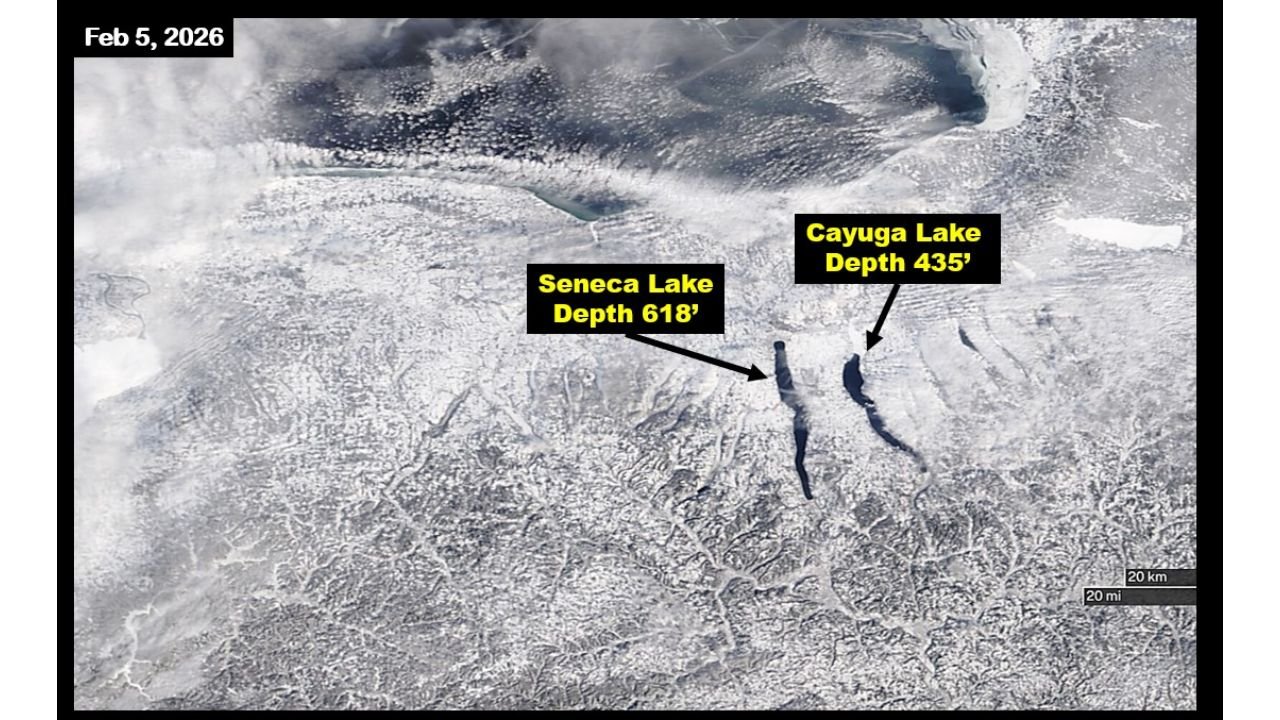
UNITED STATES — A striking mid-winter satellite view from early February 2026 shows Seneca Lake and Cayuga Lake, the two deepest lakes in New York State, remaining largely ice-free, underscoring just how difficult it is for these massive Finger Lakes to fully freeze — even during colder winters.
Captured on February 5, 2026, the imagery highlights both lakes standing out sharply against a snow-covered landscape, with long, dark stretches of open water clearly visible across central New York.
Why Seneca and Cayuga Rarely Freeze
Seneca Lake and Cayuga Lake are not just large — they are exceptionally deep, a key reason they behave differently than many surrounding lakes during winter.
- Seneca Lake depth: approximately 618 feet
- Cayuga Lake depth: approximately 435 feet
Because of their depth, these lakes store an enormous amount of heat relative to their surface area. That thermal inertia allows them to resist ice formation far longer than shallower lakes, even during prolonged cold spells.
A Glacial Origin That Still Matters Today
Both lakes were carved by glacial processes thousands of years ago, creating steep-sided basins that plunge hundreds of feet below the surrounding terrain. While they appear narrow from above, their depth allows warmer water to circulate upward, continually disrupting ice formation at the surface.
This circulation is one of the main reasons large sections of open water remain visible in mid-winter satellite imagery, even when air temperatures fall well below freezing.
When Did Seneca Lake Last Fully Freeze?
Historical records show just how rare complete ice cover truly is:
- Last reported full freeze of Seneca Lake: 1912
That means Seneca Lake has gone more than a century without a confirmed total freeze — a remarkable statistic that highlights the lake’s resilience against even severe winter conditions.
Cayuga Lake has also experienced very few full freezes in recorded history, reinforcing the idea that depth, not just temperature, plays a dominant role in winter lake behavior.
February 2026 Satellite View Tells the Story
The February 5, 2026 satellite imagery makes the contrast unmistakable:
- Surrounding land areas appear heavily snow-covered
- Smaller water bodies show more ice coverage
- Seneca and Cayuga remain visibly open, cutting dark lines through the frozen landscape
The open water signatures align perfectly with the known depths of each lake, offering a real-time visual example of how physical geography can override seasonal expectations.
Why This Matters Beyond Curiosity
While the open lakes may look visually striking, their winter behavior has broader implications:
- Local climate moderation: Open water can slightly temper nearby air temperatures
- Lake-effect snow dynamics: Open lakes provide moisture that can enhance snowfall downwind
- Ecosystem stability: Continuous mixing helps maintain oxygen levels for aquatic life
These effects make Seneca and Cayuga key players in the Finger Lakes regional climate, even during winter.
A Reminder That Cold Alone Doesn’t Decide Ice Cover
The February 2026 imagery serves as a powerful reminder that freezing lakes is not just about how cold it gets. Depth, volume, and heat storage often matter more than short-term temperature drops.
Even in winters with sustained cold, lakes as deep as Seneca and Cayuga behave more like inland seas than traditional frozen lakes — resisting ice in ways that still surprise many observers.
What to Watch Going Forward
As winter continues, smaller lakes and reservoirs across New York may freeze and thaw repeatedly. But history and physics strongly suggest that Seneca and Cayuga will remain largely open, unless an exceptionally prolonged and extreme cold pattern develops — something that has not occurred since the early 20th century.
If you enjoy detailed weather and climate breakdowns like this, keep following ChicagoMusicGuide.com for clear, data-driven coverage of the patterns shaping winters across the United States.