Mid-Atlantic States Mark 16 Years Since “Snowmageddon” as Historic February 2010 Blizzard Still Stands as a Benchmark
WASHINGTON, D.C. — Sixteen years ago today, the Mid-Atlantic experienced one of the most disruptive and historic winter storms in modern U.S. history, as the February 5–6, 2010 blizzard—widely remembered as Snowmageddon—paralyzed cities across Washington, D.C., Maryland, Virginia, Pennsylvania, and New Jersey with record-breaking snowfall and prolonged shutdowns.
The storm arrived in two major waves, with another foot of snow falling just days later, cementing February 2010 as one of the most severe winter periods the region has ever seen.
How the February 2010 Blizzard Unfolded Across the Mid-Atlantic
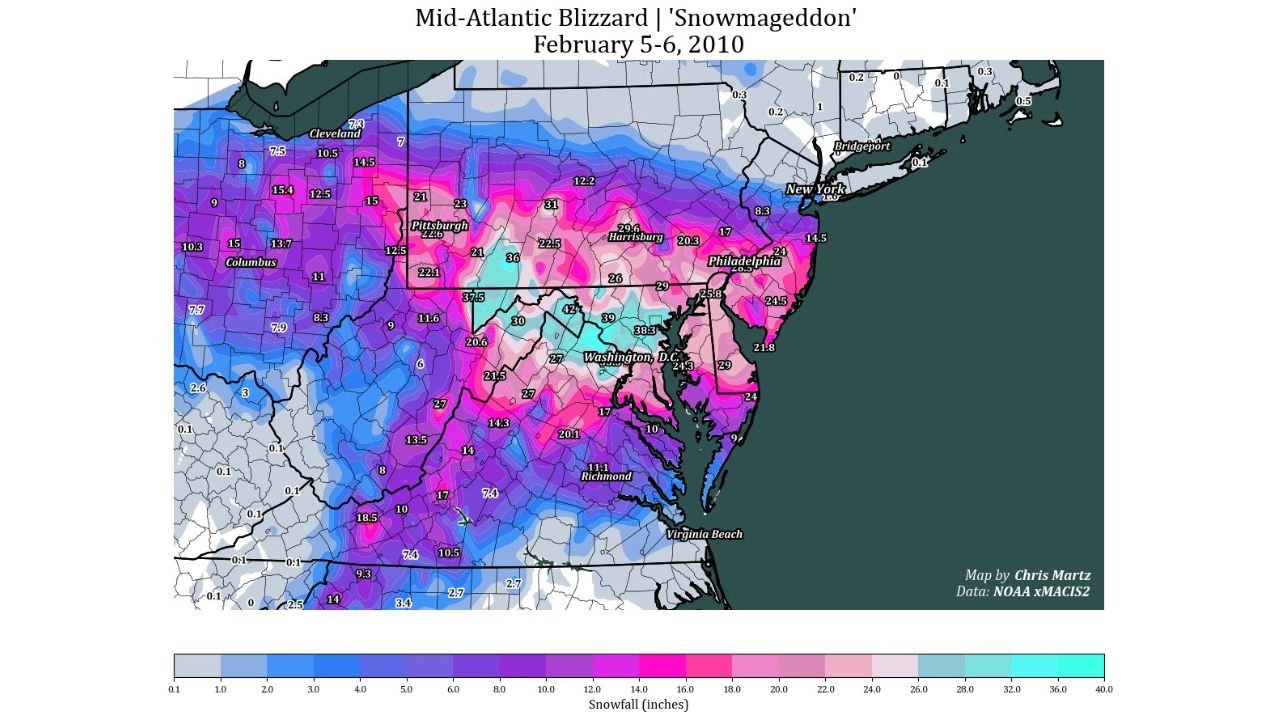
The snowfall map from February 5–6, 2010 shows an intense and expansive snow shield stretching from the Ohio Valley through the Mid-Atlantic corridor and into parts of the Northeast.
Some of the most significant totals included:
- Washington, D.C.: Around 24 inches
- Northern and Central Maryland: 30 to 38 inches
- Southern Pennsylvania: 20 to 30 inches
- Northern Virginia: 25 to 35 inches
- Eastern West Virginia: 30+ inches in several locations
The storm’s slow movement allowed snowfall rates to remain intense for hours, overwhelming plow operations and forcing extended closures across the region.
Why Snowmageddon Became a Once-in-a-Generation Event
What separated Snowmageddon from other major winter storms was not just snowfall totals, but timing and duration. Snow fell heavily for more than 24 hours, followed by additional storms that compounded impacts rather than allowing recovery.
Airports across Washington, Baltimore, and Philadelphia were shut down for days. Major interstates became impassable. Power outages spread as heavy snow accumulated on trees and infrastructure.
Many communities reported being isolated for multiple days, with emergency services struggling to reach residents during peak conditions.
Regional Impacts Still Remembered 16 Years Later
For many residents across the District of Columbia, Maryland, Virginia, and Pennsylvania, Snowmageddon became a benchmark event—often used as a comparison whenever a major winter storm threatens the region.
Schools remained closed for more than a week in some districts. Federal offices in Washington shut down for multiple consecutive days, an extremely rare occurrence. Grocery stores, concert venues, and nightlife districts went dark as travel became impossible.
Even today, Snowmageddon remains one of the most disruptive weather events in modern Mid-Atlantic history.
Why Snowmageddon Still Matters Today
Sixteen years later, Snowmageddon continues to shape how winter storms are forecast, communicated, and prepared for across the eastern United States.
The event highlighted how quickly infrastructure can become overwhelmed when snowfall exceeds expectations and arrives in multiple waves. It also reinforced the importance of layered preparedness, emergency planning, and public awareness during prolonged winter events.
As new winter storms develop each season, Snowmageddon remains the reference point—the storm that redefined what a true Mid-Atlantic blizzard looks like.
As winter weather continues to impact travel, events, and live music schedules across the country, ChicagoMusicGuide.com will keep tracking major weather patterns and their potential effects on weekend plans, touring schedules, and regional events.