Illinois, Iowa, Kansas and Oklahoma Enter Peak Tornado Season as EF3+ Risk Climbs Across the Plains
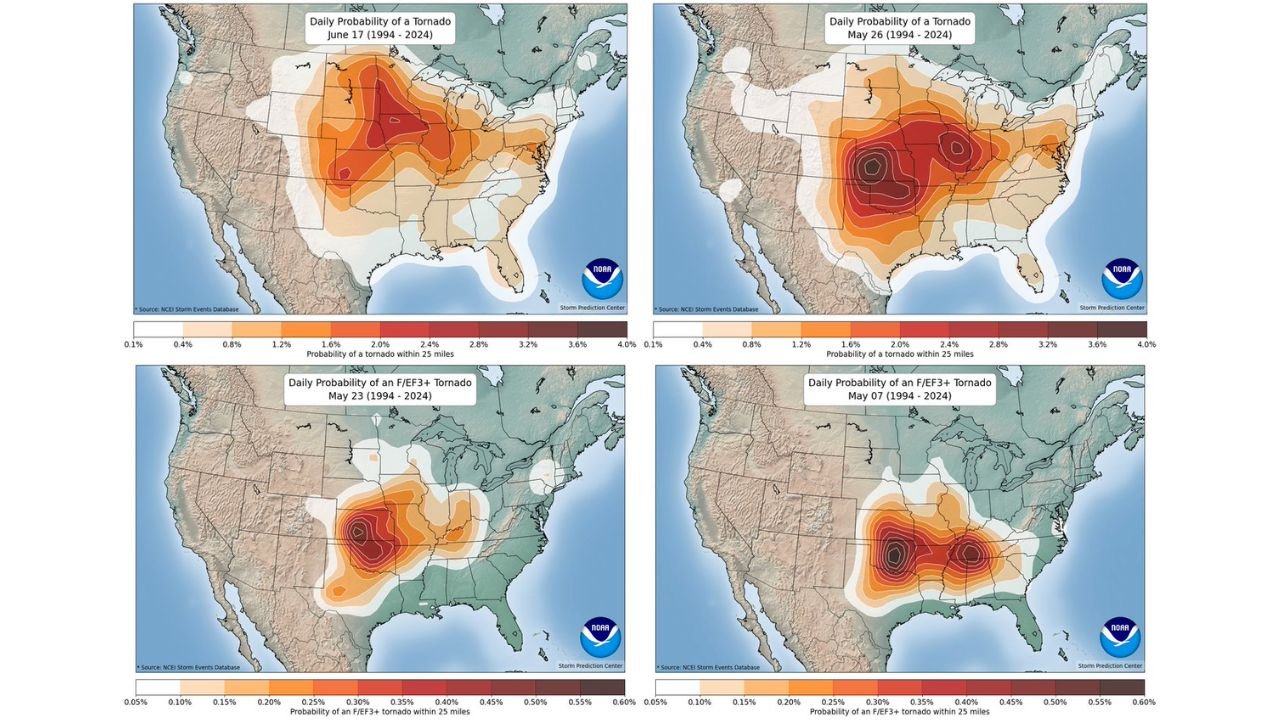
CHICAGO, ILLINOIS — Updated tornado climatology maps for late May and mid-June reveal that Illinois, Iowa, Kansas, and Oklahoma are entering the most dangerous stretch of severe weather season. Historical data from 1994–2024 shows tornado probabilities peaking across the Central Plains and Midwest, with particularly elevated EF3+ tornado risk in Kansas and Oklahoma.
Meteorologists are urging residents across these states to plan accordingly as daily tornado probabilities climb toward seasonal highs.
Iowa and Illinois Reach Climatological Tornado Peak
Daily probability maps for June 17 show the bullseye of tornado risk stretching from central Iowa into portions of northern Illinois and the Upper Midwest.
In Iowa, probabilities within 25 miles rise above 2.4% to 3.2%, signaling peak seasonal risk. Parts of western and central Illinois also sit within the higher-end probability contours during late May into June.
A separate late-May map (May 26) shows an even broader swath of enhanced tornado climatology expanding from Kansas and Nebraska eastward into Illinois and the Midwest corridor.
This places both Iowa and Illinois in the heart of peak tornado season — especially during the final week of May and into mid-June.
Kansas at the Center of Tornado Alley
For Kansas, the late-May climatology maps show the strongest daily tornado probabilities centered directly over the state.
On May 26, probabilities in parts of central and eastern Kansas approach the highest tiers on the map, placing the region firmly in the traditional Tornado Alley core.
Kansas not only peaks for overall tornado probability — it also shows one of the most concentrated areas of EF3+ tornado climatology in late May.
Residents across Wichita, Topeka, and surrounding communities are historically positioned within one of the most volatile tornado corridors in the country during this window.
EF3+ Risk Peaks for Kansas and Oklahoma
When focusing specifically on EF3+ tornado probabilities, the maps for May 23 and May 7 highlight a strong signal across Kansas and Oklahoma.
On May 23, the highest EF3+ probabilities cluster over:
- Central Kansas
- Northern Oklahoma
- Portions of southern Nebraska
Probability values for EF3+ events approach the upper climatological range shown on the map, exceeding 0.45% within 25 miles in peak zones.
The May 7 climatology map reinforces this signal, again showing Kansas and Oklahoma in the most concentrated EF3+ risk corridor.
This confirms that late May is not just peak tornado season — it is peak strong tornado season for these states.
Illinois Also Faces Elevated Strong Tornado Risk
While Kansas and Oklahoma dominate the highest EF3+ probabilities, Illinois remains within the broader enhanced zone during late May.
Central and southern Illinois fall within moderate EF3+ probability contours, particularly during the final week of May when severe weather patterns shift east from the Plains into the Midwest.
This underscores why Illinois frequently sees late-spring severe weather outbreaks as storm systems track along the jet stream into the Ohio Valley and Great Lakes.
Planning for Peak Season
Climatology does not guarantee a tornado on a specific day — but it clearly identifies when and where the historical odds are highest.
Based on updated data:
- Iowa: Peak overall tornado probability in mid-June.
- Illinois: Elevated risk late May through mid-June.
- Kansas: Peak overall and EF3+ probability in late May.
- Oklahoma: Strong EF3+ probability during early to mid-May.
For residents across these regions, preparation means:
- Reviewing tornado safety plans.
- Identifying shelter locations.
- Ensuring weather alert systems are active.
- Monitoring Storm Prediction Center outlooks during high-risk days.
Late May into mid-June historically represents the most active and dangerous tornado window across the Plains and Midwest.
As severe weather season intensifies across Illinois, Iowa, Kansas, and Oklahoma, staying informed and prepared can make a critical difference. For continued coverage of weather trends, seasonal outlooks, and severe storm updates across the United States, visit ChicagoMusicGuide.com.