Colorado Stuns the East: Denver Hits 70°F While Florida, Georgia, Louisiana and the Carolinas Stay Cooler Than the Mile High City
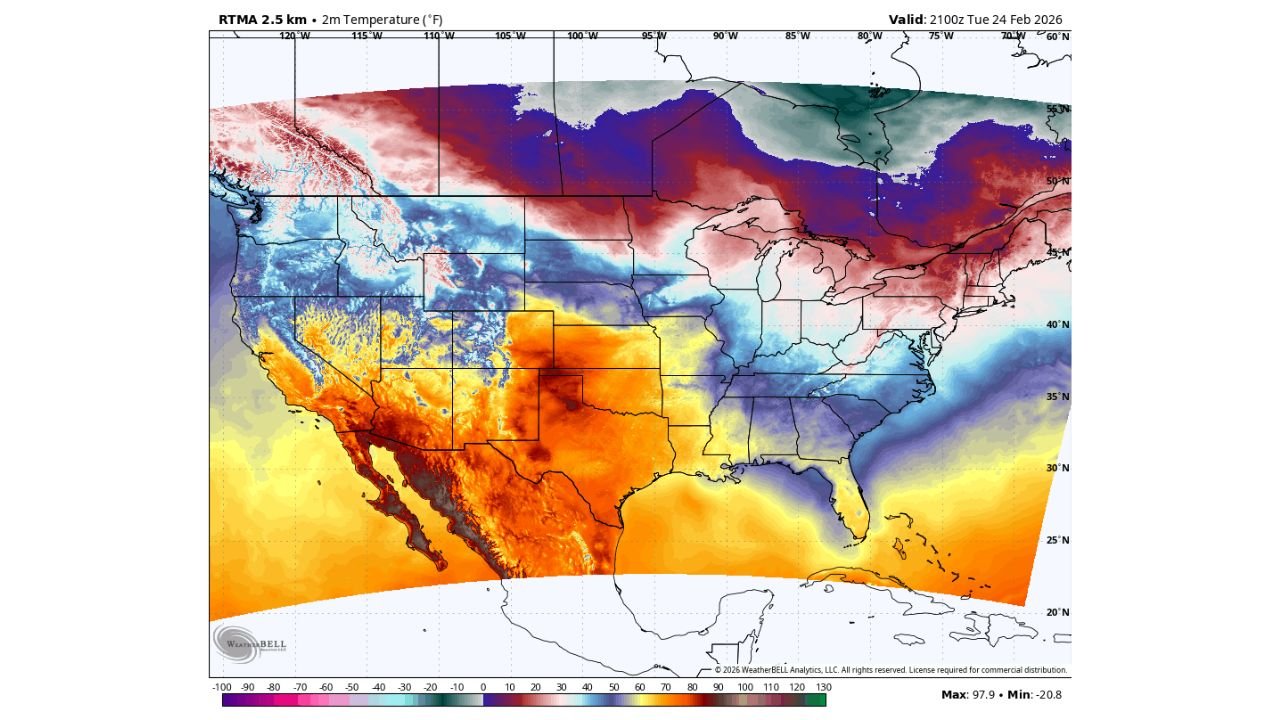
DENVER, COLORADO — In one of the most striking temperature contrasts of the season, Denver climbed to 70°F Tuesday evening — making it warmer than every location east of the Mississippi River at that hour.
While Colorado basked in springlike warmth, much of the eastern United States remained locked in noticeably cooler air.
Denver Warmer Than the Gulf Coast and Florida
At the same time Denver reached 70°F, several typically warmer cities were running significantly cooler:
- New Orleans, Louisiana — 59°F
- Atlanta, Georgia — 54°F
- Miami, Florida — 64°F
- Orlando, Florida — 60°F
- Key West, Florida — 61°F
- Myrtle Beach, South Carolina — 47°F
- Outer Banks, North Carolina — 40°F
- The Bahamas — 67°F
Even parts of South Florida and the northern Caribbean were cooler than Denver — a rare February setup that highlights the extreme temperature gradient across the country.
A Classic West Warmth, East Chill Divide
The real-time temperature analysis map shows a dramatic split:
- Deep orange and red shading across Colorado, New Mexico, Arizona, Texas and California, signaling widespread 60s and 70s.
- Blues and purples stretching from the Deep South through the Mid-Atlantic and Northeast, indicating cooler 40s and 50s.
A strong ridge of high pressure over the western United States is allowing warm, dry air to surge northward into the Rockies and High Plains. Meanwhile, cooler air remains entrenched across:
- Alabama
- Georgia
- South Carolina
- North Carolina
- Virginia
- Tennessee
- Kentucky
- Pennsylvania
- New York
- New Jersey
This contrast has created one of the more eye-catching East-West divides of the winter season.
Why Denver Was So Warm
Denver’s elevation often brings cooler temperatures in winter, but under the right setup, it can warm rapidly.
Key contributing factors include:
- Downslope warming off the Rockies
- Strong sunshine
- Dry air mass in place
- Lack of Arctic air intrusion in the West
When winds descend the eastern slopes of the Rockies, they compress and warm — sometimes producing dramatic temperature spikes even in February.
Meanwhile, the East Remains Under Cool Influence
The eastern half of the country is influenced by:
- Cooler air funneling southward from Canada
- Cloud cover and moisture in some regions
- Persistent troughing aloft
This has kept much of the Southeast and Mid-Atlantic in the 40s to low 60s, well below Denver’s afternoon warmth.
For places like Outer Banks, North Carolina (40°F) and Myrtle Beach, South Carolina (47°F), it felt far more like winter than early spring.
A Reminder of Winter’s Wild Swings
While winter often brings Arctic blasts to Colorado and milder air to Florida, this setup flipped the script — with the Mile High City briefly outpacing nearly every city east of the Mississippi.
Temperature contrasts like this are not uncommon during transitional patterns, but seeing Denver warmer than Miami, New Orleans and even the Bahamas certainly raises eyebrows.
As this pattern evolves, temperatures across the East may moderate, but for one evening, Colorado held the national spotlight for warmth.
ChicagoMusicGuide.com will continue tracking these dramatic temperature swings and the evolving late-winter weather pattern across the United States.