Iowa, Illinois and Wisconsin Show Sharp Soil Moisture Divide as Winter Snowfall Leaves Northern Areas Saturated and Southern Zones Dry Heading Into Spring
IOWA — A striking contrast is emerging across the Midwest as winter transitions into spring, with new data revealing a sharp soil moisture divide across Iowa, Illinois, Wisconsin, and surrounding states. The pattern, driven largely by uneven snowfall distribution this past winter, is now setting the stage for very different spring conditions across the region.
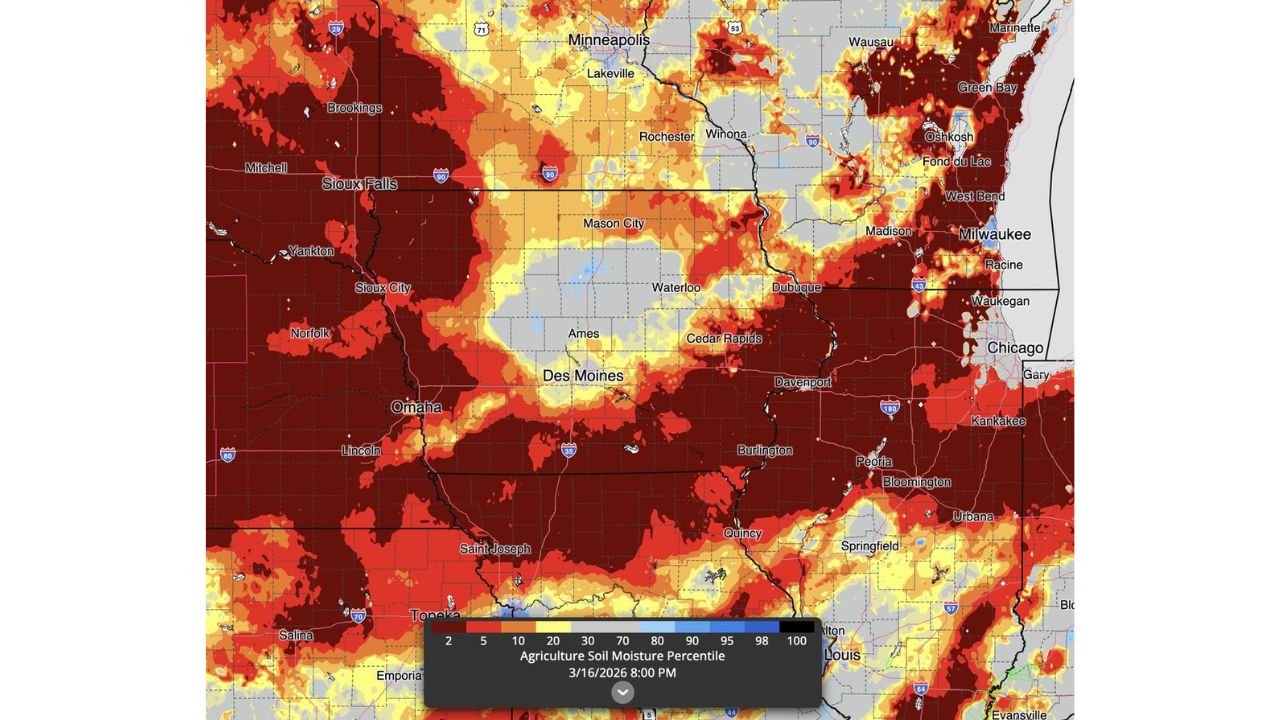
Recent soil moisture percentile maps show that central and northern Iowa, along with parts of Wisconsin and Minnesota, are experiencing significantly replenished soils, while southern Iowa, Illinois, and nearby areas remain much drier than normal.
Northern Iowa and Wisconsin Benefit From Heavy Winter Snowfall
Across northern and central Iowa, as well as portions of Wisconsin and southern Minnesota, soil moisture levels are notably high. These areas received consistent and heavier snowfall throughout the winter, which has gradually melted and soaked into the ground.
This has led to well-replenished soil conditions, particularly in regions near Mason City, Waterloo, Rochester, and parts of the Upper Midwest corridor. In some areas, moisture levels are ranking in the upper percentiles, indicating near-saturated ground conditions.
Such conditions can be beneficial heading into planting season, as soils retain more water and reduce early-season drought stress. However, they may also increase the risk of localized flooding if additional heavy rainfall occurs in the coming weeks.
Southern Iowa and Illinois Facing Dry Soil Concerns
In contrast, a large portion of southern Iowa, Illinois, and parts of eastern Nebraska and northern Missouri are showing significantly lower soil moisture levels. These regions missed out on the heavier snowfall events that benefited areas farther north.
Cities including Des Moines, Quincy, Peoria, Springfield, and parts of central Illinois are surrounded by zones where soil moisture percentiles are much lower, indicating drier-than-normal ground conditions heading into spring.
This dryness could become a concern if rainfall does not increase in the coming weeks, especially as temperatures rise and evaporation rates begin to climb.
What’s Driving This Midwest Soil Moisture Split
The key factor behind this divide is the uneven distribution of winter storms across the Midwest. Northern areas were repeatedly impacted by snow-producing systems, while southern zones saw fewer opportunities for meaningful precipitation.
As snowpack melted in northern regions, it provided a steady source of moisture, allowing soils to gradually recharge. Meanwhile, southern areas lacked this consistent input, leaving soils comparatively dry.
This type of pattern is not uncommon during transitional seasons, but the contrast this year is particularly pronounced, making it a critical factor to watch as spring weather patterns evolve.
Spring Weather Implications Across Iowa, Illinois and Wisconsin
The current soil moisture setup could have significant impacts on spring weather and agriculture across the Midwest. Areas with higher moisture levels may see:
- Increased chances of fog and low clouds
- Greater risk of flooding during heavy rain events
- Slower field drying for early planting
Meanwhile, drier regions across southern Iowa and Illinois may experience:
- Faster warming and drying of soils
- Potential for early-season drought stress if rain remains limited
- Increased vulnerability to wildfire risk in extreme cases
As April approaches, upcoming storm systems will play a major role in determining whether this moisture imbalance intensifies or begins to even out.
The evolving contrast between saturated northern zones and dry southern regions across Iowa, Illinois, and Wisconsin highlights how impactful winter weather patterns can be on spring conditions. For ongoing updates on Midwest weather trends and seasonal outlooks, stay connected with ChicagoMusicGuide.com.