Georgia Faces One of Its Worst Droughts in Nearly a Decade as 80 Percent of the State Falls Into Severe Conditions
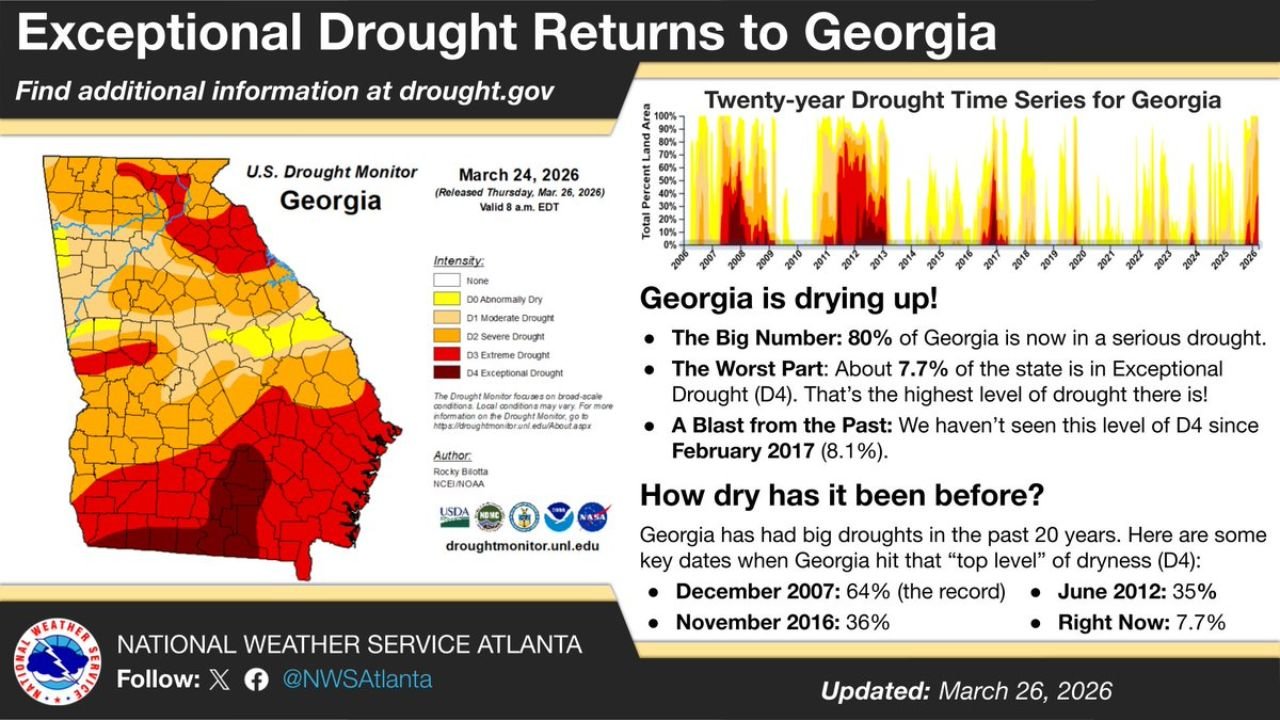
GEORGIA — A rapidly intensifying drought across Georgia is raising serious concerns as new data shows nearly 80 percent of the state is now experiencing at least severe drought conditions, marking one of the most significant dry spells in almost a decade. The latest update highlights expanding areas of extreme and exceptional drought, particularly across southern and eastern portions of the state.
This evolving situation places Georgia’s current drought among the most notable events since the major drought cycles seen in the past 20 years.
Drought Conditions Intensify Across Georgia
Recent analysis shows that a vast majority of Georgia’s counties are now under moderate to severe drought classifications, with large areas escalating into extreme (D3) and exceptional (D4) drought levels. The most severe conditions are concentrated in southern Georgia, where deep red shading indicates the highest level of dryness.
The data reveals that approximately 7.7 percent of Georgia is now in exceptional drought, which is the most severe category used to measure prolonged dryness. This level of intensity has not been observed since early 2017, highlighting how quickly conditions have deteriorated.
The widespread coverage of drought conditions also reflects ongoing precipitation deficits, lack of sustained rainfall, and increasing soil moisture loss across the region.
How 2026 Compares to Past Major Georgia Droughts
Looking at long-term trends, the current drought stands out when compared to previous major events in Georgia’s 20-year drought history. While the state has experienced several severe dry periods, the current pattern is notable for both its intensity and rapid expansion.
Historical comparisons show:
- December 2007 recorded the most extreme event, with 64 percent of the state in exceptional drought
- November 2016 saw about 36 percent in D4 conditions
- June 2012 had around 35 percent reaching the highest drought category
In contrast, while the current 7.7 percent exceptional drought coverage is lower than past peaks, the broader statistic of 80 percent of the state in serious drought conditions signals a widespread and impactful event affecting nearly every region.
Impacts on Agriculture, Water Supply, and Communities
The growing Georgia drought crisis is expected to impact multiple sectors, especially agriculture and water resources. Farmers across the state may face challenges related to crop stress, reduced yields, and limited irrigation availability as soil moisture continues to decline.
Water supply systems could also come under pressure if conditions persist, particularly in areas already experiencing prolonged dryness. The combination of high temperatures, lack of rainfall, and expanding drought zones may further intensify the situation heading into late spring.
Communities are also being encouraged to monitor water usage and prepare for potential restrictions if drought conditions continue to worsen.
What to Watch in the Coming Weeks
Meteorological patterns will play a crucial role in determining whether Georgia’s drought conditions improve or worsen. Without consistent and widespread rainfall, drought categories could continue to expand, especially in already hard-hit regions.
The current trend suggests that above-average dryness may persist, and any short-term rainfall may not be enough to reverse long-term deficits. Continued monitoring will be essential as the state moves deeper into the spring season.
Residents across Georgia should stay aware of updates regarding drought conditions, water advisories, and agricultural impacts as the situation evolves.
For more updates on major weather developments, regional climate trends, and environmental impacts across the country, visit ChicagoMusicGuide.com.