United States Drought Crisis Expands Nationwide With Severe Conditions Intensifying Across Intermountain West and Southern States
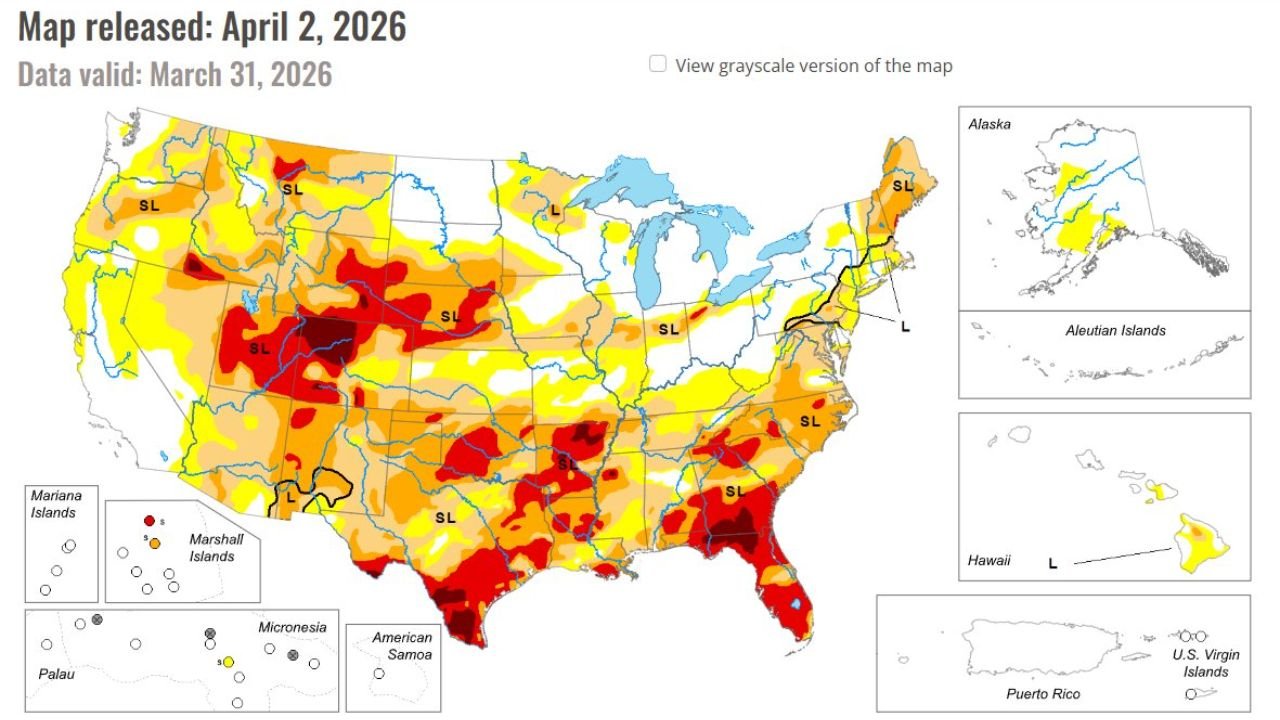
UNITED STATES — A newly released drought monitor map for late March 2026 is raising serious concerns, showing that nearly every state across the country is experiencing some level of drought conditions. From the Intermountain West to the Southern United States, widespread dryness is intensifying, signaling a troubling start to the spring season.
Drought Conditions Spread Across Nearly Entire United States
The latest data reveals an unusually expansive footprint of drought coverage across the United States, with only limited pockets of normal moisture remaining. Large portions of the country are marked under moderate, severe, and even extreme drought categories, highlighting how widespread the issue has become.
Regions across the Central Plains, Midwest, Southeast, and Northeast are all experiencing at least some degree of dryness. Even areas that are not in severe drought are still classified under abnormally dry conditions, indicating a broad lack of consistent rainfall.
This level of nationwide coverage is rare and suggests that precipitation deficits have been building over time, rather than being caused by a single short-term weather pattern.
Intermountain West and Southern States Facing Worst Impacts
The most intense drought conditions are currently centered across the Intermountain West, including states like Colorado, Utah, Wyoming, and New Mexico, where severe to extreme drought zones dominate the landscape.
At the same time, the Southern United States, particularly Texas, Louisiana, Mississippi, Alabama, and Florida, is also seeing widespread severe drought conditions, with some areas reaching the highest intensity levels.
These regions are especially vulnerable due to higher temperatures, lower soil moisture, and increased evaporation rates, all of which contribute to rapidly worsening drought conditions.
Impacts on Agriculture, Water Supply, and Fire Risk Growing
As drought conditions expand, the impacts are becoming more noticeable across multiple sectors. Agricultural regions are facing increased stress, with crops struggling due to limited soil moisture and inconsistent rainfall.
Water resources are also under pressure, particularly in areas that rely heavily on reservoirs and groundwater systems, which may not replenish quickly without sustained rainfall.
Additionally, the combination of dry vegetation and warming temperatures is elevating the risk of wildfires, especially across the Western and Southern United States, where conditions are already primed for fire activity.
Relief Will Depend on Upcoming Weather Patterns
Looking ahead, meaningful relief will depend on significant and sustained precipitation events, which are currently uncertain in many of the hardest-hit areas. While some regions may see temporary improvements from passing storm systems, widespread recovery will require consistent rainfall over an extended period.
With the spring season typically bringing increased storm activity, there is still an opportunity for conditions to improve—but the current outlook suggests that drought concerns will remain a major issue in the near term.
As drought conditions continue to evolve across the country, staying informed about regional weather patterns and potential relief systems is critical. For ongoing updates on drought trends, storm forecasts, and weather developments, visit ChicagoMusicGuide.com.