Watertown Opera Singer Kay Sparling Recalls Performing at More Than 300 9/11 Funerals and Benefit Dinners After Rudy Giuliani’s Call to Honor First Responders
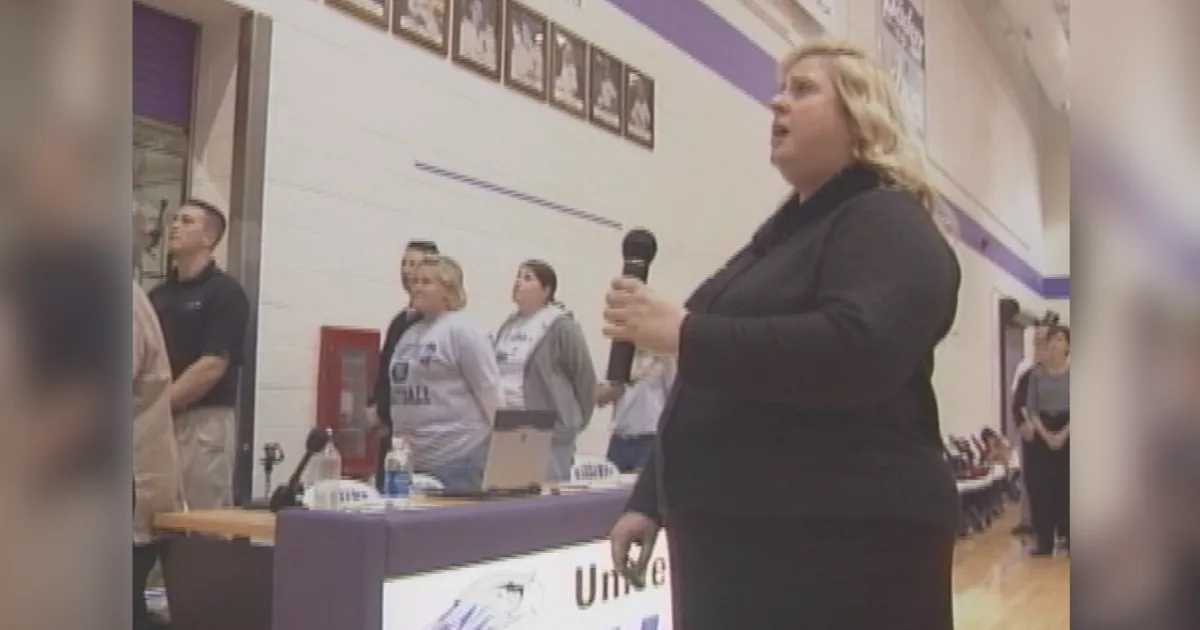
WATERTOWN, WI — Kay Sparling says she performed at more than 300 funerals and benefit dinners for first responders in the months after the Sept. 11 attacks, a stretch of work she remembers as physically draining and emotionally overwhelming. The opera singer, now living in Watertown, had been teaching and performing in New York when then-Mayor Rudy Giuliani called on her.
Sparling said the demands were relentless. She and other singers were traveling from borough to borough, often six days a week, to help families and communities mark losses that were still fresh and difficult to process.
Called from New York stages into days of memorials
Before the attacks, Sparling was living and teaching opera in New York. In the aftermath, her work shifted from performance spaces to memorial services and benefit events tied to the city’s recovery and to the people who had died serving others.
She said Giuliani’s call put her into an intense routine of constant travel and singing. The schedule left little room to recover between events, and she described the pace as grueling. Even so, she kept showing up because the moment called for voices that could carry grief in a way ordinary conversation could not.
That period became a defining chapter in her career, not because of applause or theater lights, but because of the sheer number of ceremonies and the emotional weight attached to each one.
How Sparling learned to keep singing through grief
Sparling said the hardest part was holding back her own emotions long enough to finish the music. Over time, she learned a technique she described as letting tears run down the back of her throat, allowing her to keep singing even while overcome by sadness.
She said people in emotionally intense jobs eventually develop a kind of familiarity with pain, though that did not make the work easy. Her description makes clear how much discipline it took to keep her voice steady while the services around her carried so much sorrow.
The singing was not simply a job. For Sparling, it became a form of emotional labor, one that asked her to absorb other people’s grief and transform it into sound.
A firefighter's funeral became a memory that still lingers
One moment from that time has stayed with Sparling for more than two decades: the funeral of firefighter Michael Elferis. She recalled seeing his daughter, who she described as about five years old, walk up to his picture in a beautiful dress and place her hand on his face.
That image was enough to break through the distance she had built to keep singing. Sparling said she started crying as she watched the child’s gesture, a scene that captured the heartbreak of families facing loss after the attacks.
For Sparling, the memory remains vivid because it distilled the human cost of the days after Sept. 11 into one small, devastating act of love and farewell.
Teaching opera also meant deep ties with students
Beyond the memorials, Sparling said her life as a teacher shaped how she understood emotional connection. Training to become a professional singer, she explained, means forming very close relationships with voice teachers, and that closeness carried over into her own work with students.
She recalled one student in particular whose final words to her were, “I love you.” Sparling said she knew in that instant that the student had died. The memory reflects how closely teaching and caregiving can overlap in the life of a vocal coach.
Those bonds, she said, made the loss feel even sharper. Her work was not only about technique, but about relationships that could run all the way to a final goodbye.
Why Sparling says the human voice can reach where words cannot
Now retired, Sparling looks back on that period as proof that song can carry emotion in a way ordinary language cannot. She said the human voice in music opens a channel that touches the soul in ways words never fully can.
That belief helps explain why she kept singing through so many difficult ceremonies. In her telling, the voice was not simply a performance instrument; it was a bridge for grief, comfort and remembrance when families and first responders needed it most.
Her reflections also underscore why those post-9/11 memorial services remain part of the cultural memory of the attacks. For Sparling, every funeral and benefit dinner was one more chance to give form to sorrow that was still too raw to express any other way.
Chicago's music scene, one story at a time — Chicago Music Guide.