Wu-Tang Management Shares Business Advice and Life Lessons With Birmingham Youth Before the Group’s Final Tour Stop at Coca-Cola Amphitheater
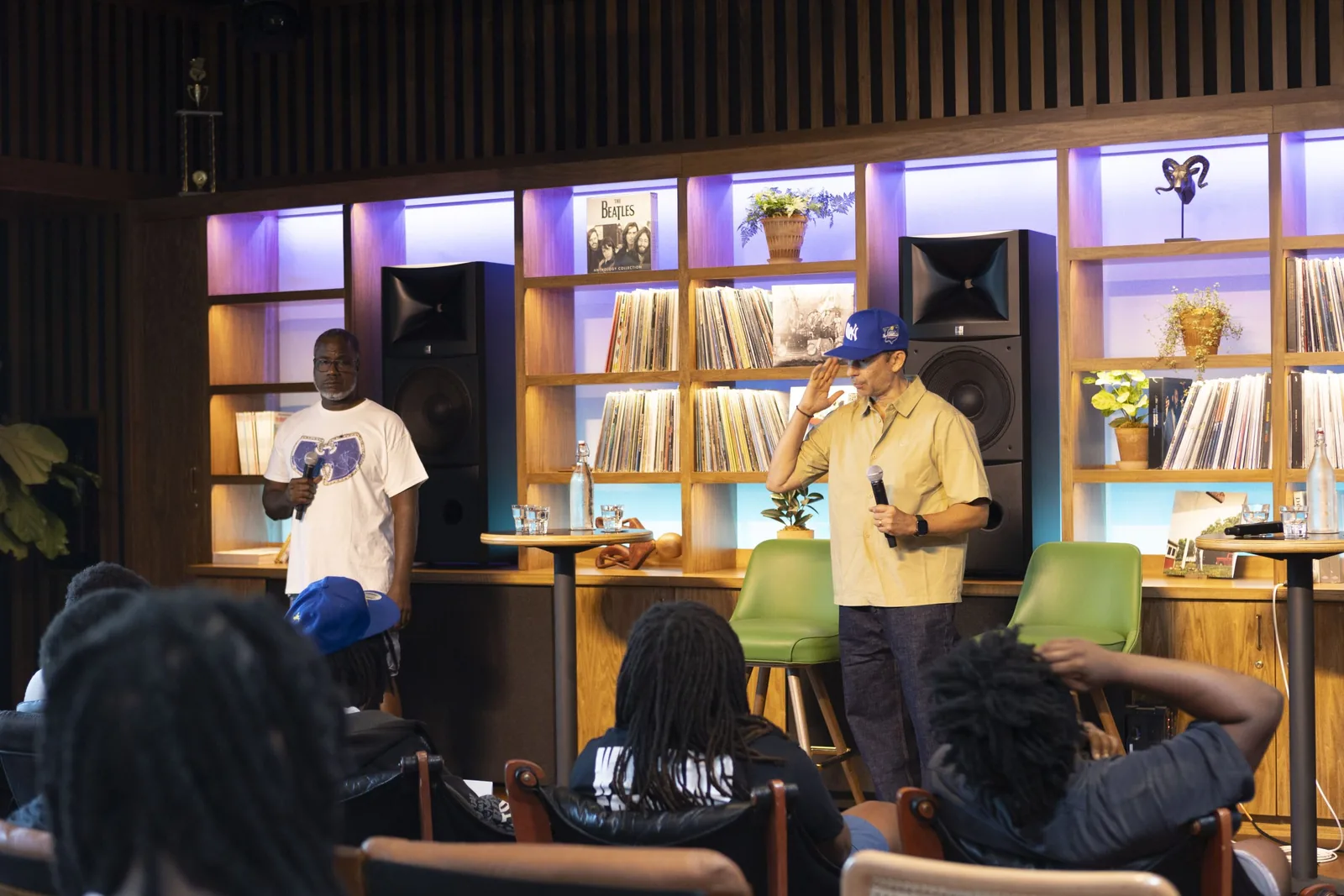
BIRMINGHAM, AL — The Wu-Tang Clan’s final tour run in Birmingham came with more than a concert ticket. Hours before the group played Coca-Cola Amphitheater, members of Wu-Tang Management met with local youth for a conversation about music, business, and making the most of opportunity.
John “Mook” Gibbons and Ray Acosta spoke with teenagers and young adults at High Dive HiFi Lounge in Lakeview Marina, turning the day into a broader Wu-Tang celebration that also included a merchandise pop-up and DJ set at Seasick Records. The morning gathering brought the group’s long-running message about community impact into a more intimate setting.
A morning event built around Wu-Tang’s community message
The Birmingham stop reflected the way Wu-Tang has framed its current tour, Wu-Tang Forever: The Final Chamber Tour. The run began last summer and has already included community-focused pop-up experiences in Kansas City and Memphis, giving fans a way to connect with the group’s legacy beyond the stage.
In Birmingham, that approach showed up in a smaller room filled with young people, including participants in the city’s RESTORE Juvenile Reentry Program. Instead of a simple meet-and-greet, the event leaned into listening, discussion, and direct advice from people who helped shape the group’s business side. The setting made the conversation feel personal rather than ceremonial.
Birmingham Mayor Randall Woodfin praised that approach, saying the group’s impact goes well beyond the music itself. He said he appreciated that Wu-Tang intentionally tries to leave something behind in the communities it visits, especially for Black boys and young Black men.
Why Gibbons and Acosta opened with personal stories
The talk began on a more serious note when Gibbons and Acosta spoke about friends and family members who had been incarcerated. Their remarks set a reflective tone before the discussion moved toward careers, discipline, and the realities of growing up in difficult circumstances.
That opening mattered because it framed the rest of the session as something rooted in shared experience, not distant celebrity advice. Gibbons said the group’s outreach starts with teaching and listening, and he described the youth in the room as people who come from places not unlike the neighborhoods Wu-Tang members knew growing up.
For the speakers, the point was not to present success as something accidental. They emphasized that the path out of hardship requires intentional effort, and that the lessons from their own histories still shape how they approach young audiences now.
From filmmaking to the Marine Corps, every path had value
During the question-and-answer portion, Gibbons and Acosta asked the attendees what they hoped to do with their lives. The answers ranged widely. Some young people mentioned creative work such as filmmaking and music, while others named trades, cybersecurity, or the Marine Corps.
Gibbons used those responses to make a point about the music business itself. He said there is room for many different kinds of workers, not just performers, because the industry depends on people who handle equipment, engineering, logistics, and other jobs behind the scenes.
His message was simple: finding a lane matters more than fitting one stereotype. He told the group that a person does not need to be a singer or rapper to build a meaningful and well-paid career around music. The business, he said, runs on a wide system of roles that can support a lot of different talents.
Acosta breaks down branding, marketing, and staying visible
Twenty-year-old Elijah Rhynes, who performs as Jackboi Fetti and works closely with the RESTORE program, asked how the pair stayed motivated as the industry changed over time. Acosta answered by drawing a sharp line between marketing and branding.
In his view, marketing is about promoting an image and building relationships, while a brand is an identity. He encouraged young artists to let people around them know what they are doing, to tell their circle when a song is finished, and to make use of social media by posting consistently.
Acosta also said artists need honest feedback and a network, not just a finished track. He pointed to tools like smartphones, YouTube, and streaming services as reasons it is easier now to build a name independently than it once was. He said he studied marketing and branding early in his own career, then later started a design agency.
How Wu-Tang sold records before the internet age
Acosta’s business path eventually led him to Wu-Tang Clan leader RZA, who brought him into the group’s orbit and connected him with other team members, including the late Oliver “Power” Grant. One of Acosta’s projects was refining the Wu-Tang logo, originally hand-drawn by DJ Mathematics.
Gibbons used that same business-minded spirit to explain how he approached the group’s early push. He said he looked at hip-hop as another product to sell, the same way someone might think about sodas or beer on the beach in Coney Island. That mindset helped him push one of Wu-Tang’s earliest success stories: selling 40,000 records out of the trunks of cars.
He described trying to get record stores and DJs interested, often without success. Eventually, he brought the tape to Rock and Soul in New York City, got a DJ to play it, and then used a simple demand tactic to build interest. The method worked, and he said the group repeated it from New York City to Florida and even in Birmingham.
Chicago's music scene, one story at a time — Chicago Music Guide.