Colorado and Wyoming Face Extreme Fire Weather Threat as Destructive 80–100 MPH Winds Slam Front Range
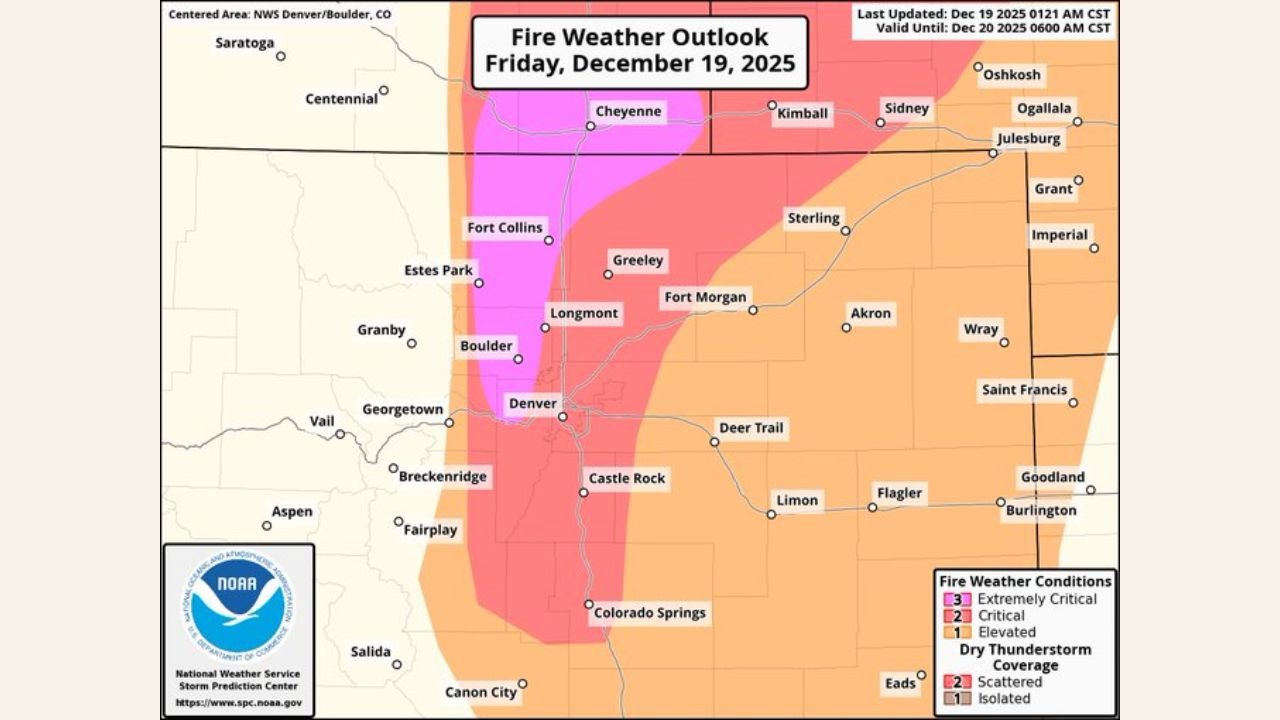
DENVER, CO — The National Weather Service and NOAA Storm Prediction Center have issued critical to extremely critical fire weather alerts for large portions of Colorado and southeastern Wyoming, warning that a very dangerous fire weather event is unfolding along the Front Range of the Rocky Mountains as destructive winds and extremely dry air combine to create explosive wildfire conditions.
Forecast data shows wind gusts between 80 and 100 mph, with isolated gusts potentially exceeding that range in foothill and mountain wave–prone areas. At the same time, dew points are projected to fall into the single digits, creating conditions where any spark could lead to rapid, uncontrollable fire spread.
Most Impacted Areas Identified by Forecast Data
Based on the latest Fire Weather Outlooks, HRRR wind guidance, and dew point analysis, the most dangerous conditions are expected in:
- Colorado Front Range — including Denver, Boulder, Fort Collins, Greeley, Longmont, Castle Rock, and Colorado Springs
- Foothills and Palmer Divide
- Southeastern Wyoming, including areas near Cheyenne
- Adjacent High Plains east of the Rockies, where downslope winds accelerate
Meteorologists warn that terrain-driven wind acceleration along the Front Range will significantly increase the risk of fast-moving grass and brush fires, even in urban-adjacent areas.
“This Is a High-End, Dangerous Fire Weather Setup”
Forecasters describe today’s setup as one of the most dangerous combinations for wildfire spread:
“Extremely strong winds combined with very low humidity create conditions where fires can spread faster than crews can respond.”
Wind gust projections show a north–south corridor of extreme winds aligned with the Front Range, consistent with mountain wave amplification. This pattern has historically produced widespread power outages, structural damage, and rapidly spreading fires.
Why This Event Is Especially Dangerous
Several high-risk factors are aligning at once:
- Wind gusts of 80–100 mph, capable of downing trees and power lines
- Single-digit dew points, indicating critically dry air
- Unseasonably warm temperatures, enhancing fuel dryness
- Dormant winter vegetation, which ignites easily
- Urban-wildland interface exposure, increasing property risk
Fire behavior under these conditions can become erratic and uncontrollable, with embers traveling long distances ahead of the main fire line.
Power Outages and Property Damage Likely
Emergency managers warn that widespread power outages are possible, particularly in foothill communities and along the Front Range corridor. High winds may also cause:
- Structural damage
- Blowing debris hazards
- Transportation disruptions
- Rapidly escalating emergency situations
Officials strongly advise avoiding any outdoor burning, securing loose objects, and being prepared for sudden evacuations if fires ignite.
Fire Weather Alerts in Effect
- Extremely Critical Fire Weather — Front Range foothills and adjacent plains
- Critical Fire Weather — Eastern Colorado and southeastern Wyoming
- Elevated Fire Risk — Surrounding High Plains
Alerts remain in effect through Friday, with peak impacts expected during the late morning through evening hours.
What Residents Should Do Now
- Do not start fires of any kind
- Avoid activities that produce sparks, including machinery use
- Prepare for power outages
- Monitor local emergency alerts closely
- Have evacuation plans ready, especially in foothill areas
Officials stress that conditions today could overwhelm initial firefighting response, making prevention absolutely critical.
Why This Matters to the Region
This event highlights how winter does not eliminate wildfire risk in the Rockies. Instead, wind-driven fire weather can be just as dangerous — or worse — than summer outbreaks.
“This is not a typical windy day. This is a setup where small fires can become disasters in minutes.”
Stay alert, stay informed, and take all warnings seriously. Conditions today across Colorado and Wyoming demand heightened awareness and immediate caution.