EF-2 Tornado Confirmed in Central Illinois as Mount Zion Storm Traveled 23.6 Miles With 120 MPH Winds
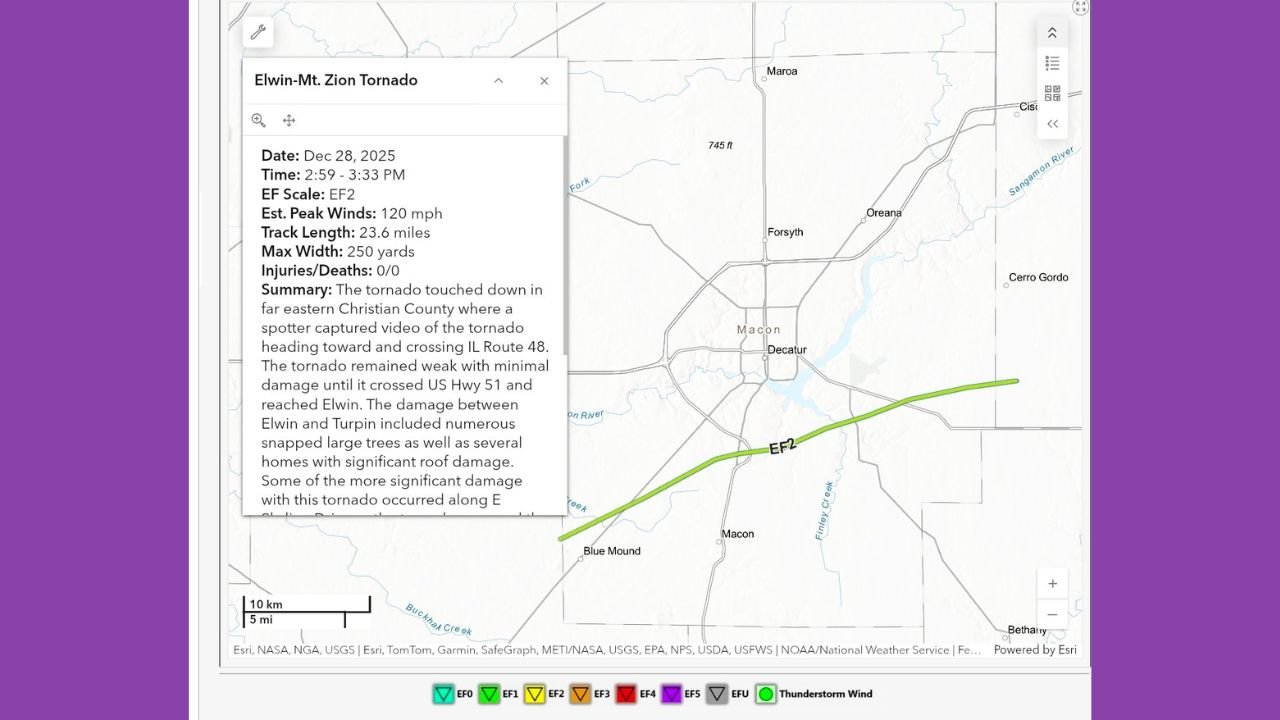
ILLINOIS — The National Weather Service has officially confirmed that an EF-2 tornado struck Mount Zion and nearby central Illinois communities on Sunday afternoon, December 28, 2025, producing peak winds of 120 miles per hour and remaining on the ground for more than 23 miles, according to preliminary damage survey data.
The tornado touched down shortly before 3 p.m. and continued through 3:33 p.m., cutting a long, continuous path across Christian and Macon counties before lifting. Despite the strength and length of the tornado, no injuries or fatalities were reported.
Long-Track Tornado Crossed Central Illinois Communities
Based on the survey map and storm summary, the tornado first touched down in far eastern Christian County, where a spotter captured video as the circulation moved northeast and crossed Illinois Route 48.
As the tornado progressed, it crossed U.S. Highway 51 and intensified near Elwin and Mount Zion, where the most significant damage was documented.
The tornado’s track length measured approximately 23.6 miles, with a maximum width of around 250 yards, placing it firmly within the EF-2 category on the Enhanced Fujita Scale.
Damage Included Snapped Trees and Severe Roof Loss
Survey details indicate that damage increased as the tornado moved eastward. In the Elwin–Turpin corridor, crews found:
- Numerous large trees snapped or uprooted
- Multiple homes sustaining significant roof damage
- Structural impacts consistent with winds near 120 mph
Officials noted that while the tornado began relatively weak, its intensity increased before gradually weakening again as it moved out of the Mount Zion area.
Why This Tornado Stands Out
EF-2 tornadoes are considered strong tornadoes, and what makes this event notable is its long, continuous path through populated parts of central Illinois during daylight hours.
Meteorologists emphasize that long-track tornadoes increase risk because they affect multiple communities over an extended period, even if the damage varies along the path.
The absence of injuries is being credited to timely warnings, spotter reports, and residents taking shelter quickly as the storm moved through the region.
Ongoing Review and Final Survey Pending
The National Weather Service noted that survey information is preliminary and may be refined as additional data is reviewed. However, the EF-2 rating, wind estimate, and track length are considered reliable based on current findings.
Emergency management officials continue to assess localized damage while reminding residents that severe weather can occur even outside peak tornado season in Illinois.
What do you think — were you in the path of this storm, or did you experience severe weather nearby as it moved through central Illinois? Share your experience and stay informed with weather and regional updates at ChicagoMusicGuide.com.