
California, Nevada, Arizona and Colorado Shatter Records as New York, Pennsylvania and New England Turn Colder — Winter 2025–2026 Ranks Among Top 5 Warmest in U.S. History
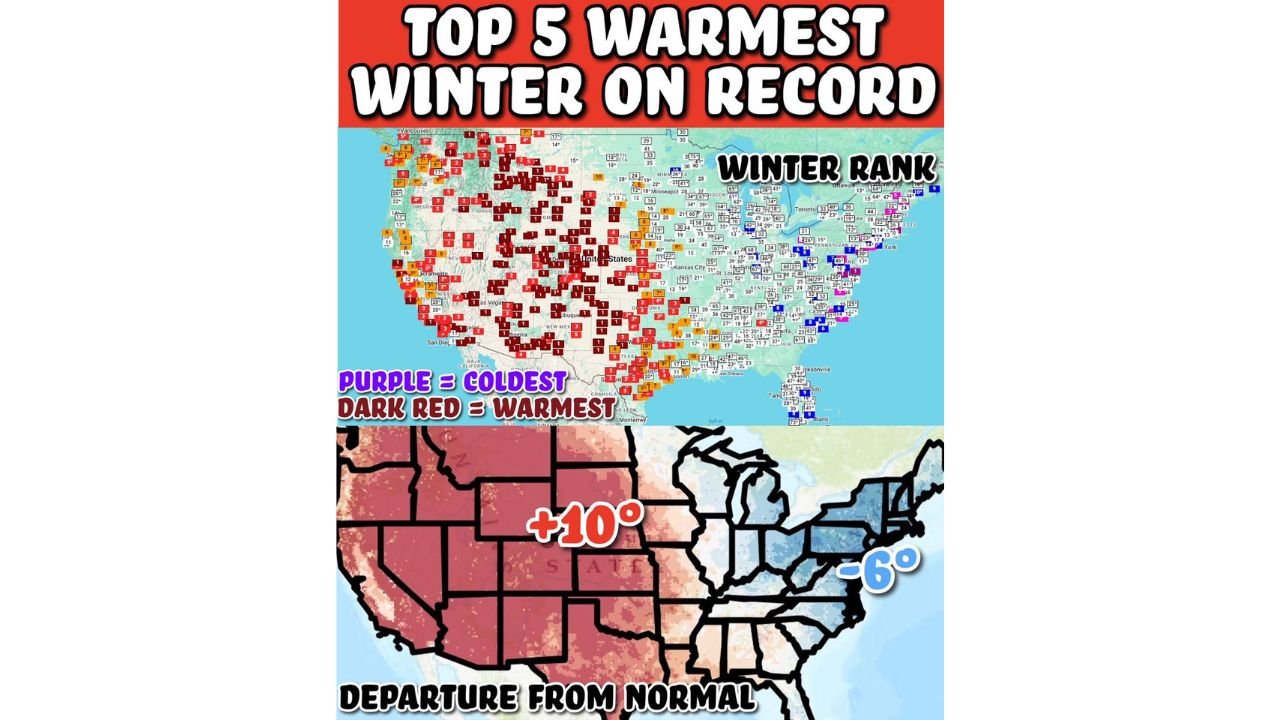
UNITED STATES — Meteorological winter has officially wrapped up, and preliminary data suggests the December–February period will rank among the top five warmest winters on record nationwide — possibly even top three once final numbers are confirmed.
While residents in New York, Pennsylvania and parts of New England may remember snow and cold stretches, the broader national picture tells a very different story.
West and High Plains Baked Under Record Warmth
Temperature departure maps show widespread and significant warmth across:
- California
- Nevada
- Arizona
- Utah
- Colorado
- New Mexico
- Wyoming
- Western portions of Texas
The High Plains region, including eastern Colorado, western Kansas and Nebraska, recorded winter temperature anomalies approaching +10°F above normal in some areas.
Many weather stations across the West and Interior Southwest ranked this winter as their warmest or near-warmest on record.
Dark red markers dominate the western half of the country, indicating top-tier warm rankings.
Eastern Cold Was Real — But Not Historic
In contrast, portions of:
- New York
- Pennsylvania
- Ohio
- Massachusetts
- Connecticut
- Maine
saw colder-than-average conditions at times.
Departure maps show anomalies dipping to around –6°F below normal in parts of the Northeast.
However, compared to the full historical record, that cold was modest rather than extreme.
Purple and blue rankings appear in the Northeast, but they are limited geographically and numerically when compared to the overwhelming warmth in the West.
Why the National Ranking Skewed So Warm
National winter rankings are determined by averaging temperatures across the entire contiguous United States.
The West’s persistent, widespread record warmth overwhelmed the more localized cold in the East.
When regions like California, Nevada, Arizona and the Rockies post their warmest winter on record, it dramatically influences the national average.
In other words:
- The East felt cold at times
- The West experienced record-breaking warmth
- The national outcome leaned heavily warm
Midwest Mixed but Not Extreme
States such as:
- Illinois
- Indiana
- Missouri
- Iowa
- Wisconsin
saw a more mixed winter overall, with near-normal or slightly below-normal stretches balanced by milder intervals.
While the Midwest experienced notable cold snaps, it did not see sustained, record-level cold.
A Winter of Contrast
This winter will likely be remembered as one defined by contrast:
- Snow and cold headlines in the Northeast
- Exceptional warmth and minimal snowpack in parts of the West
- Significant positive anomalies in the High Plains
- A top-five national warm ranking overall
It underscores how regional experiences can differ dramatically from national climate statistics.
Bottom Line
Despite pockets of cold across New York, Pennsylvania and New England, the overwhelming warmth across California, Nevada, Arizona, Colorado and the High Plains pushed Winter 2025–2026 into the top five warmest on record in the United States.
Final rankings will be confirmed soon, but the signal is clear: this was a historically warm winter nationwide.
Stay with ChicagoMusicGuide.com for continued climate and seasonal trend coverage as we transition from meteorological winter into spring.