
California, Oregon, Washington and Nevada Brace for Explosive March Heat Surge as Temperatures Soar 15–30°F Above Normal Threatening Snowpack Collapse
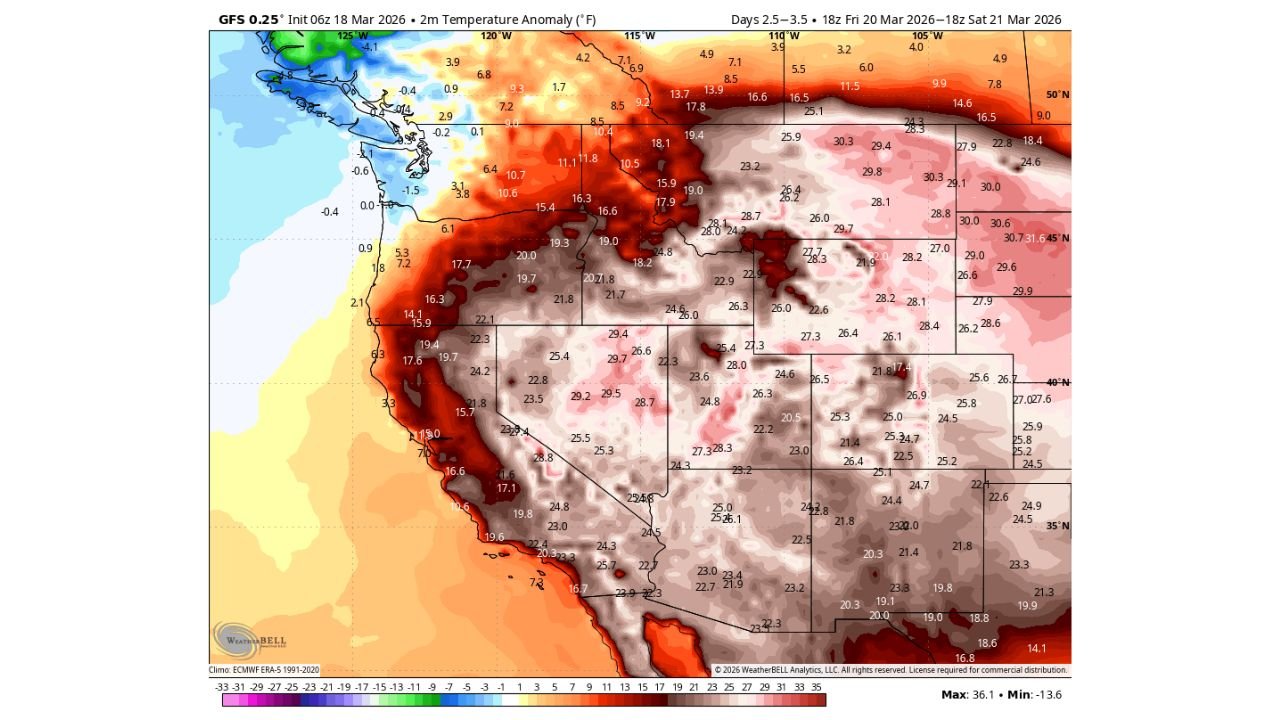
CALIFORNIA — A powerful and potentially damaging late-March heat surge is building across the Western United States, with forecast data showing temperatures climbing 15 to over 30 degrees above normal across California, Oregon, Washington, Nevada, and parts of the Interior West between March 20–21, 2026.
This developing pattern is raising serious concerns—not just for record-breaking warmth—but for the rapid deterioration of already low snowpack across the region, particularly in the mountains of the West.
Extreme Temperature Anomalies Spread Across California and the West Coast
Forecast anomaly maps highlight an intense zone of above-normal temperatures along the West Coast, especially across California, Oregon, and Washington, where departures from average could exceed 15 to 25°F.
The most extreme anomalies are centered over California’s Central Valley, inland valleys, and coastal ranges, where heat is expected to surge well beyond typical March levels.
Even typically cooler regions of the Pacific Northwest are expected to experience notable warmth, though the most intense heat remains concentrated farther south.
Interior West Including Nevada and Idaho Sees Even Higher Departures
Moving inland, the heat signal becomes even more pronounced across Nevada, Idaho, Utah, and parts of Montana, where temperature anomalies could push into the 20 to 30°F above normal range.
This level of warming is highly unusual for March and signals a strong upper-level ridge dominating the western half of the country, allowing heat to build and persist.
Widespread areas across the Great Basin and Northern Rockies are expected to experience sustained above-normal temperatures over multiple days.
Snowpack at Risk as Rapid Warming Accelerates Melt
One of the biggest concerns tied to this heat surge is its impact on mountain snowpack, which is already below normal in several regions.
With temperatures rising sharply, snowpack across the Sierra Nevada, Cascades, and parts of the Rockies could experience rapid melting, increasing the risk of:
- Early-season runoff
- Reduced water availability later in spring and summer
- Potential strain on water resources across the West
The contrast between record-low snowpack and record-level heat creates a particularly volatile situation heading into the seasonal transition.
Why This March Heat Event Is So Significant
Late March is typically a transitional period, but this pattern represents a high-end anomaly event, driven by a strong ridge of high pressure that is effectively blocking cooler air from entering the region.
Such setups can lead to prolonged periods of heat, especially when combined with dry ground conditions and clear skies.
The magnitude of the anomaly—especially the widespread 20–30°F above normal readings—places this event among the more significant early-season heat episodes in recent years.
Heat Expected to Intensify and Expand Through the Weekend
Forecast guidance indicates that this heat event will expand geographically and intensify over the coming days, with additional areas across the West likely to experience near-record or record-breaking temperatures.
Regions currently on the edge of the anomaly zone, including parts of the Northern Rockies and interior Northwest, may soon see stronger warming signals as the pattern evolves.
A Critical Moment for the Western U.S. Climate Pattern
This event could serve as an early indicator of a warmer and potentially drier trend heading deeper into spring, particularly if snowpack losses accelerate.
The combination of extreme warmth, low snowpack, and expanding heat coverage makes this a key moment to monitor for both meteorologists and water resource planners.
As California, Oregon, Washington, Nevada, and the broader Western United States brace for this surge, the coming days may play a crucial role in shaping the region’s spring outlook.
For continued coverage of major U.S. weather developments, stay connected with ChicagoMusicGuide.com.