
Colorado Issues First-Ever Particularly Dangerous Situation Fire Weather Warning as Extreme Winds and Dry Air Threaten Denver and Boulder Areas
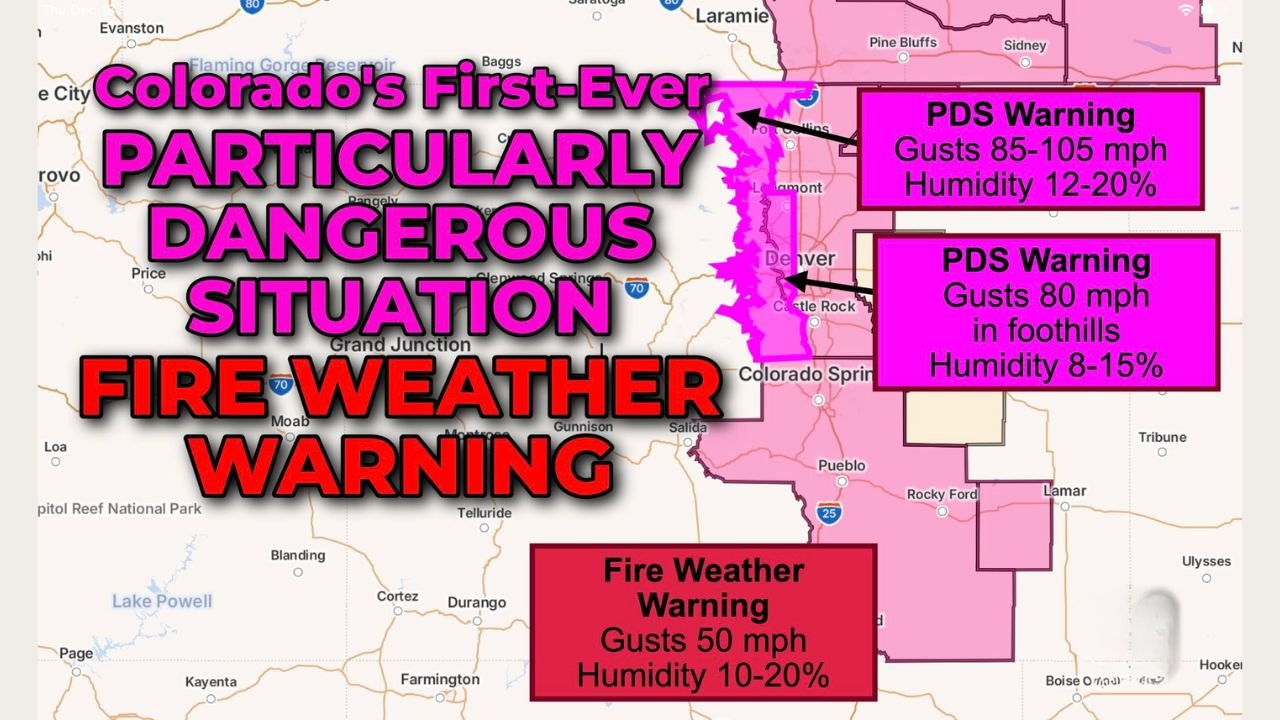
COLORADO — An extremely dangerous fire weather situation is unfolding across Colorado’s Front Range, with the Denver and Boulder metro areas at the center of what meteorologists are calling a historic and unprecedented threat. For the first time on record, a PDS (Particularly Dangerous Situation) Fire Weather Warning has been issued, signaling conditions capable of producing fast-moving, destructive wildfires.
Forecast data shows this event peaking Friday, December 19, with near-hurricane-force wind gusts and critically low humidity levels, creating a scenario strikingly similar to the setup that led to the Marshall Fire in December 2021.
Why This Fire Weather Threat Is Unprecedented in Colorado
Meteorologists emphasize that this is not a typical Red Flag Warning. The issuance of a PDS Fire Weather Warning places this event in the highest category of fire danger.
“This is a VERY dangerous situation,” forecasters warned, citing the combination of extreme winds, dry fuels, and collapsing humidity.
In the mountains, wind gusts are expected to exceed 100 mph, while foothill and urban-adjacent areas could see gusts between 70 and 80 mph. Relative humidity levels are forecast to plunge to 8–15 percent, creating a tinderbox environment.
Downslope Winds to Accelerate Fire Spread
Dry air racing down the eastern slopes of the Rockies will intensify conditions as winds accelerate and dry further during downslope flow. This process rapidly removes moisture from vegetation and allows any ignition to spread explosively.
“Any sparks that become ignited will spread rapidly, and fires could exhibit extreme growth and behavior,” officials cautioned.
Under these conditions, fires can move faster than emergency response efforts, making early prevention critical.
Communities at Highest Risk Along the Front Range
The most vulnerable areas include western portions of the Denver metro and northern Front Range communities, particularly locations near foothills and open terrain.
Residents in Denver, Boulder, Longmont, Broomfield, Louisville, Superior, Niwot, and Gunbarrel are urged to take this threat seriously and prepare for the possibility of rapid evacuations.
Officials recommend:
- Keeping vehicles fueled
- Preparing a go-bag with essentials
- Staying alert for emergency notifications
Historical Comparison Raises Alarm
Forecasters note the atmospheric setup bears strong resemblance to the Marshall Fire on December 30, 2021, which destroyed 1,084 structures in Boulder County.
“This setup is very similar to the Marshall Fire event,” meteorologists stated, underscoring the potential severity if a fire were to ignite.
The combination of extreme winds, dry fuels, and urban-adjacent wildland areas significantly elevates the risk to life and property.
Strict Fire Safety Measures Urged
Authorities are stressing zero tolerance for fire-starting activities during this warning period:
- NO burning of any kind
- NO discarding cigarette butts
- NO off-roading or spark-producing activities
Even a single spark could lead to a rapidly spreading wildfire under these conditions.
What Happens Next
Conditions are expected to remain dangerous through Friday, with officials closely monitoring wind speeds and humidity trends. Residents are urged to remain prepared, follow all safety guidance, and respond immediately to any evacuation orders if issued.
ChicagoMusicGuide.com will continue to monitor this historic Colorado fire weather emergency and provide updates as conditions evolve.