
Colorado, New Mexico, Idaho, Washington, Oregon, Utah, and Nevada See Record-Breaking Warm December Across the Western United States
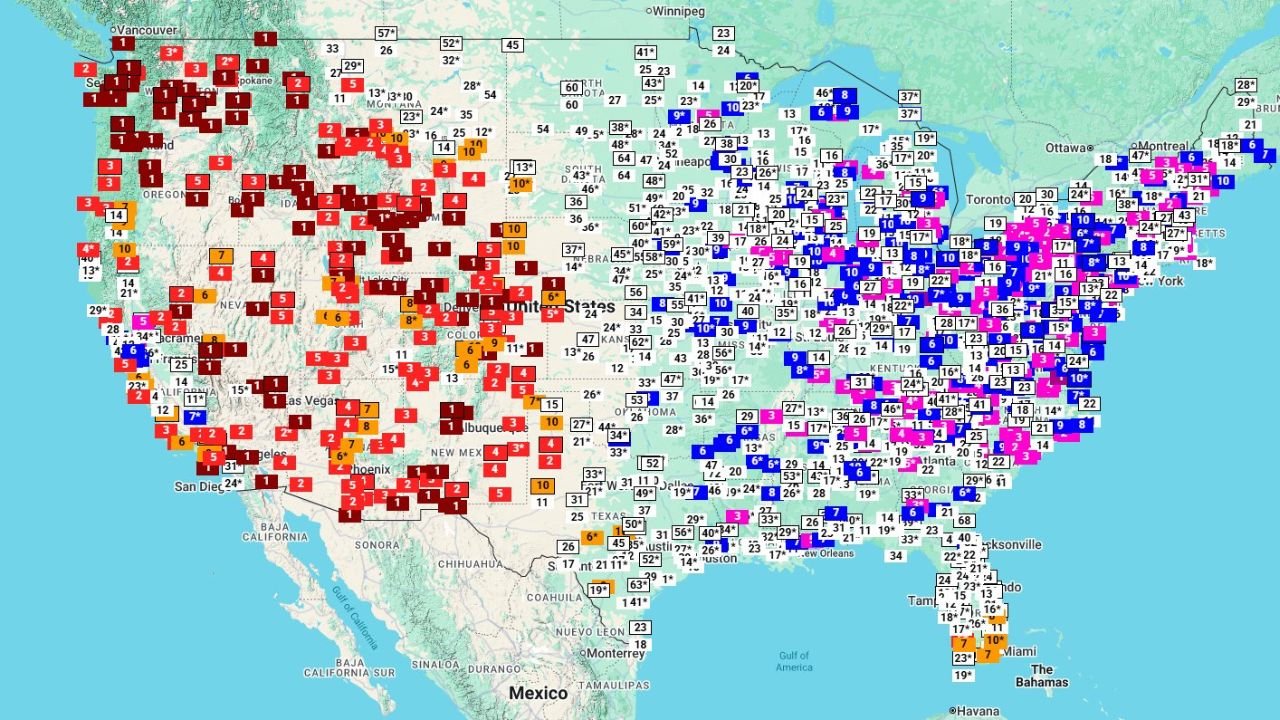
UNITED STATES — Large portions of the western United States are experiencing an exceptionally warm December, with multiple cities across the Rockies, Pacific Northwest, and Southwest either setting or threatening their warmest December on record, according to temperature ranking data shown in the latest nationwide analysis.
The data indicates that Colorado, New Mexico, Idaho, Washington, Oregon, Utah, and Nevada are among the most impacted states, as persistent high pressure and a lack of sustained Arctic intrusions have allowed unusual warmth to dominate much of the month.
Denver and the Rockies Lead the Warmth Rankings
Colorado stands out as one of the clearest examples of the ongoing anomaly. Denver is currently ranked first for its warmest December on record, based on month-to-date averages. Nearby high-elevation and Front Range locations across the state are also ranking within the top few warmest Decembers historically.
This warmth has not been limited to Colorado alone. New Mexico and Utah are also seeing widespread top-ranked warmth, with Albuquerque and Salt Lake City appearing among dozens of western locations tracking near or at record levels.
Daytime highs across interior western states have frequently reached 10 to 20 degrees above normal, with overnight lows staying unusually mild as well — a key contributor to record-setting monthly averages.
Pacific Northwest and Intermountain West Also Impacted
Farther northwest, Washington and Oregon are experiencing a similar pattern. Cities such as Seattle and Portland are ranked at or near their warmest December historically, as repeated Pacific systems bring clouds and rain but very little cold air.
In Idaho, much of the state shows strong warm rankings as well, particularly across lower elevations and urban corridors. Snowpack development has lagged in several basins due to warmer-than-average temperatures, raising concerns about long-term water supply if the pattern persists.
Nevada and the Southwest Continue Unseasonable Heat
The warmth extends deep into the Southwest. Nevada, including the Las Vegas region, is also tracking among its warmest Decembers on record. Afternoon temperatures across desert areas have regularly climbed well above seasonal averages, while even higher terrain has struggled to maintain sustained cold.
The map data shows widespread clusters of top-ranked warmth across the western half of the country, with many stations marked as No. 1, No. 2, or No. 3 warmest Decembers historically.
Why the West Is So Warm Right Now
Meteorologists attribute the pattern to a persistent upper-level ridge anchored over the western United States. This ridge has repeatedly deflected colder Arctic air into central and eastern portions of the country while allowing mild Pacific air to dominate the West.
The absence of prolonged snow cover in many regions has further reinforced the warmth, creating a feedback loop that keeps temperatures elevated even during overnight hours.
What Happens Next
While long-range forecasts suggest changes may eventually arrive later in winter, there is no immediate signal of a sustained cold reversal for much of the western United States. Any brief cool-downs are expected to be temporary unless the broader atmospheric pattern shifts.
For now, Colorado, New Mexico, Idaho, Washington, Oregon, Utah, and Nevada remain firmly in the spotlight as December continues to unfold as one of the warmest on record across the region.
If you’re tracking unusual weather patterns or noticing how this warmth is affecting outdoor events, travel, or winter recreation, share your experience. Stay connected with ChicagoMusicGuide.com for continued coverage of major weather trends impacting communities across the United States.