
Great Lakes Ice Coverage Drops From 55% to 33% as Regional Waters Rapidly Thaw Across Midwest and Ontario
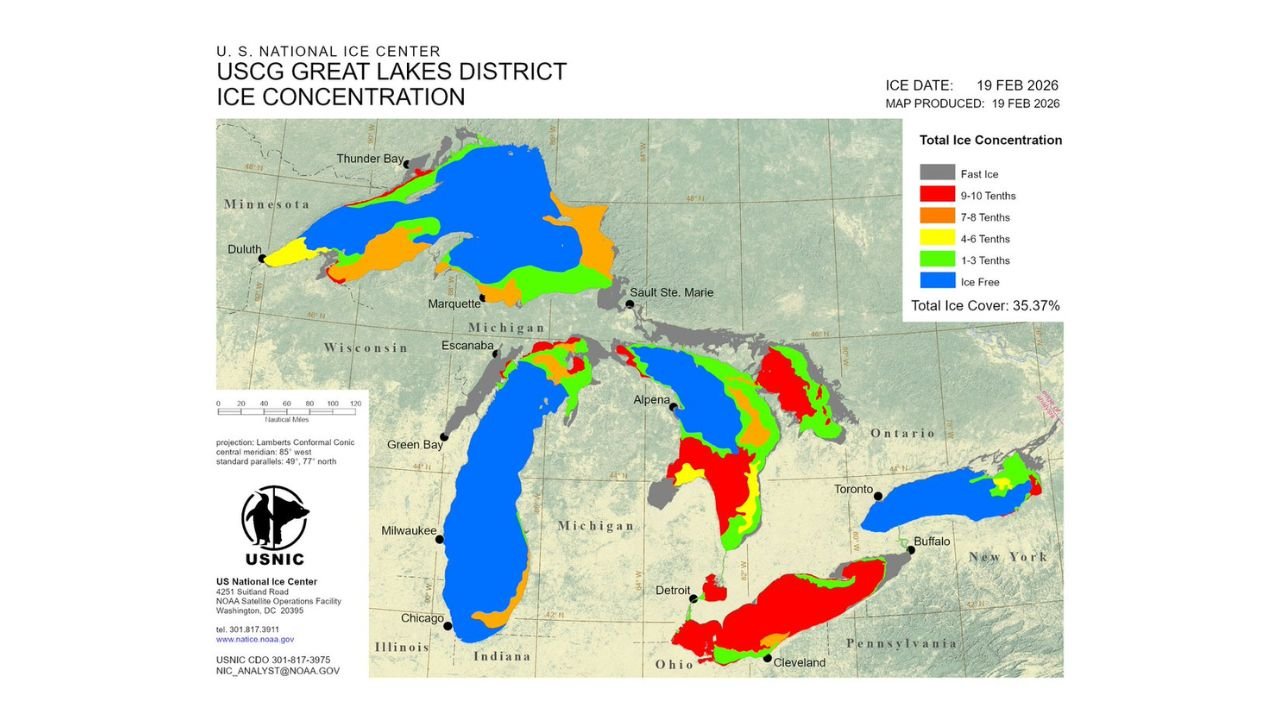
GREAT LAKES REGION — Ice coverage across the Great Lakes has dropped sharply from a recent seasonal high near 55% to approximately 33–35%, according to the latest update from the U.S. National Ice Center dated February 19, 2026. The rapid decline signals widespread thawing across Lakes Michigan, Superior, Huron, Erie, and Ontario.
While forecasters expect some ice to redevelop over the next week due to colder air returning to the region, experts suggest that the earlier 55% coverage may ultimately stand as the peak for the 2026 winter season.
Lake Michigan Shows Significant Open Water Near Chicago
The updated ice concentration map shows Lake Michigan largely ice-free across its central basin, including waters offshore of Chicago, Milwaukee, and Green Bay. Only limited ice remains near shoreline areas and portions of the northern basin.
This dramatic reduction reflects milder temperatures and shifting wind patterns that have broken apart earlier ice formation. Chicago’s lakefront, which briefly experienced thicker ice along the shoreline earlier this winter, now sits adjacent to mostly open water.
The southern tip of Lake Michigan near Indiana shows minimal ice presence, reinforcing how rapidly conditions have changed.
Lake Erie Still Holds Heavy Ice Concentration
In contrast, Lake Erie remains one of the most ice-covered lakes in the system. The map indicates large sections of the western and central basin in the 9–10 tenths concentration range, meaning nearly solid ice coverage in some areas.
Communities near Cleveland, Detroit, and the western basin continue to see significant ice presence. This aligns with Lake Erie’s shallower depth, which allows it to freeze more quickly and retain ice longer than deeper lakes like Lake Michigan.
However, even Lake Erie has shown variability in concentration compared to earlier winter peaks.
Lake Superior and Lake Huron See Mixed Conditions
Lake Superior and Lake Huron show mixed ice concentration levels. Portions of Superior near Thunder Bay, Duluth, and the eastern basin retain moderate coverage, but large central areas remain ice-free.
Meanwhile, Lake Huron displays varying ice bands, particularly near the eastern shoreline of Michigan and into Ontario. The central basin, however, remains largely open water.
These variations reflect how wind-driven movement and fluctuating temperatures impact ice stability differently across each lake.
55% Likely the Seasonal Peak
At its recent high point, total Great Lakes ice coverage reached approximately 55%, but that figure has now fallen to around 35% according to the February 19 data.
Meteorologists expect colder air in the coming days to add some ice back into the system. However, with the seasonal calendar advancing and sun angle increasing, experts believe the 55% mark will likely remain the highest overall coverage seen this winter.
Historically, Great Lakes ice coverage can fluctuate significantly year to year, influenced by Arctic air outbreaks, storm tracks, and prevailing wind patterns.
Implications for the Midwest
Declining ice coverage can influence:
- Lake-effect snow patterns
- Shipping routes
- Coastal erosion risks
- Water temperature trends heading into spring
For cities like Chicago, reduced ice cover may allow more open-water evaporation, potentially affecting localized weather patterns if cold air returns.
Officials and climatologists continue monitoring ice trends closely, as they serve as an important indicator of broader winter severity across the Midwest and Northeast.
As ice conditions continue evolving across Lake Michigan, Lake Superior, Lake Huron, Lake Erie, and Lake Ontario, regional agencies will track further changes into early spring. For ongoing updates on Midwest weather trends and Great Lakes conditions, visit ChicagoMusicGuide.com.