Grouper’s Liz Harris Opens up on Helen’s Restorative New Album, Viral Streaming Scams and Why Her Rare Town Hall Shows Feel Like a Hard-Won Reset
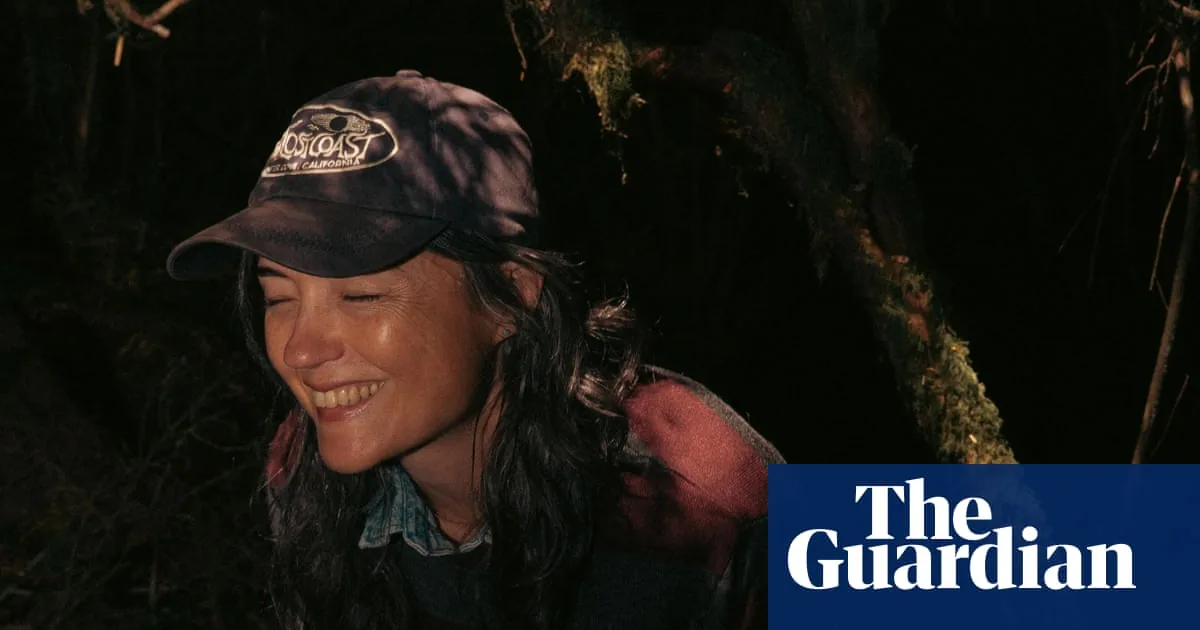
NEW YORK, NY — Liz Harris arrived at Manhattan’s Town Hall with a quiet kind of magnitude: one night into a two-night, sold-out run, soundchecking to an empty house that would soon be packed. The setting suited Grouper, the long-running project she has built around intimate, often elusive songs that seem designed for close listening rather than spectacle.
For Harris, the shows mark a rare return to the road. They also come five years after her last Grouper album, Shade, and arrive at a moment when her music is reaching listeners in multiple forms at once. Some fans know her as a solitary ambient artist; others have found her through Helen, the dream-pop trio that lets her step into something looser, brighter and more communal.
From Oakland noise warehouses to ambient cult figure
Harris started Grouper in 2005 in Oakland’s DIY noise scene, and over two decades she has become one of ambient music’s most influential figures. Now 46 and living in Astoria, Oregon, she makes spare but dense records that rely on guitar, piano, voice and space to create music that can feel both devastating and comforting.
Her work has left a broad mark. Phoebe Bridgers and Mk.gee are among the artists who have drawn from her style, while Lil B and 100 Gecs have sampled it. Harris describes the music in physical terms, calling it “like a bloodletting,” and says she has long been uneasy with the idea of standing at the center of attention for something so inward-looking.
That tension has followed her from the start. Even as fans prize Grouper for its depth and mystery, Harris says she has always preferred to keep some distance from the machinery around it, focusing instead on the room she is actually standing in.
Helen gives Harris room to be playful, not just solitary
Helen, the trio she shares with drummer Jed Bindeman and bassist Scott Simmons, offers a different kind of emotional space. Their new album, Linda’s Head, follows 2015’s The Original Faces and folds Flying Nun-style indie-pop into a stark Pacific Northwest frame. Compared with Grouper, the songs feel more direct and more exposed.
Harris says that is part of the appeal. In Helen, she can be “less guarded” and show the side of herself that likes friends, fun and collaboration. The band’s name also carries layered meaning, referring both to Mount St. Helens and to a ghost Harris imagined as a lonely child.
The new record has a particular clarity and weight. Harris hears it as music that can hold brightness and darkness at once, which suits a trio built around layered harmonies, communal rehearsal and a mood she describes as both restorative and haunted.
A brutal world, but a record built around connection
Harris says Linda’s Head grew out of what she calls “ecstatic nihilism,” a response to a world she sees as difficult and destabilized. She points to the war in Gaza and “straight-up fascism in this country” as part of the backdrop for that feeling, and says the album holds both the desire to escape and the need to stay present with other people.
That push and pull mattered even more while she was dealing with medical difficulties. Rehearsals with Bindeman became a source of relief rather than pressure. She says she often dragged herself to practice and left feeling grateful she had gone, calling the experience “really restorative.”
That collaborative energy also changes how she thinks about performance. Harris says she has felt more integrated lately, and she hears that state of mind in Helen’s music as well as in the way the band comes across live.
Dead Shark, Dead Shark II and the coast that changed the songs
Two tracks on Linda’s Head, “Dead Shark” and “Dead Shark II,” are based on the same melody but approach it from different angles. Their titles may sound grim, but Harris says the songs came from a real moment on the coast, when she saw a shark’s body floating in the water while she was feeling especially low.
Rather than deepen her gloom, the sight snapped her out of it. She describes the shark as a distraction that pulled her away from her own head and toward nature, even if only briefly. The songs became a way to think about connection, pain and the strange relief of being interrupted by the world outside yourself.
That approach is familiar in Harris’s catalog. She has often turned unsettling images into songs that feel strangely clarifying, and these new tracks follow the same path, using dark titles to open onto something more vivid than despair alone.
The cult background still shadows the music, but no longer defines it
Harris’s childhood shaped a lot of that inwardness. Her family joined the Group, a spiritual community in Northern California, after moving from Bolinas to Sonoma County when she was two. The adults followed teachings associated with mystic Gurdjieff, while the children were told that most of the world was asleep.
Harris says that experience made her fearful of other people and anxious about whether she could stay “real.” She now calls the Group cult-like and exploitative, though she also says it is no longer the center of her focus. What remains is the way those years fed her music, including the 2008 song “Heavy Water/I’d Rather Be Sleeping,” which she says came from a depressive period and a vivid inner life.
She has spent much of adulthood processing that past through art, and says she is still having existential crises. Even so, she feels she has landed in a better place than before.
When Poison Tree went viral, Harris found the internet’s rougher side
The pandemic brought Harris into contact with a newer kind of attention. Her 2008 rarity “Poison Tree” suddenly caught fire online, eventually drawing hundreds of millions of plays on the world’s biggest streaming service. Harris says she missed much of the momentum at first because she does not track numbers and did not even know how to check them.
The surge turned out to be more than a simple discovery story. Harris and Kranky general manager Brian Foote learned that the song had been fraudulently uploaded and was already earning money for someone else. Because the scammer used the same distribution platform, they were able to shut it down and recover what was owed.
That episode left her wary of the industry’s digital side. Harris says fake remixes and duplicate uploads are common enough that artists have to spend energy constantly chasing them down. For her, that makes caution feel less like paranoia and more like common sense.
Chicago's music scene, one story at a time — Chicago Music Guide.