
Illinois, Michigan, Indiana, and Ohio Face Lake-Effect Snow Threat as Midwest Stays Unseasonably Warm
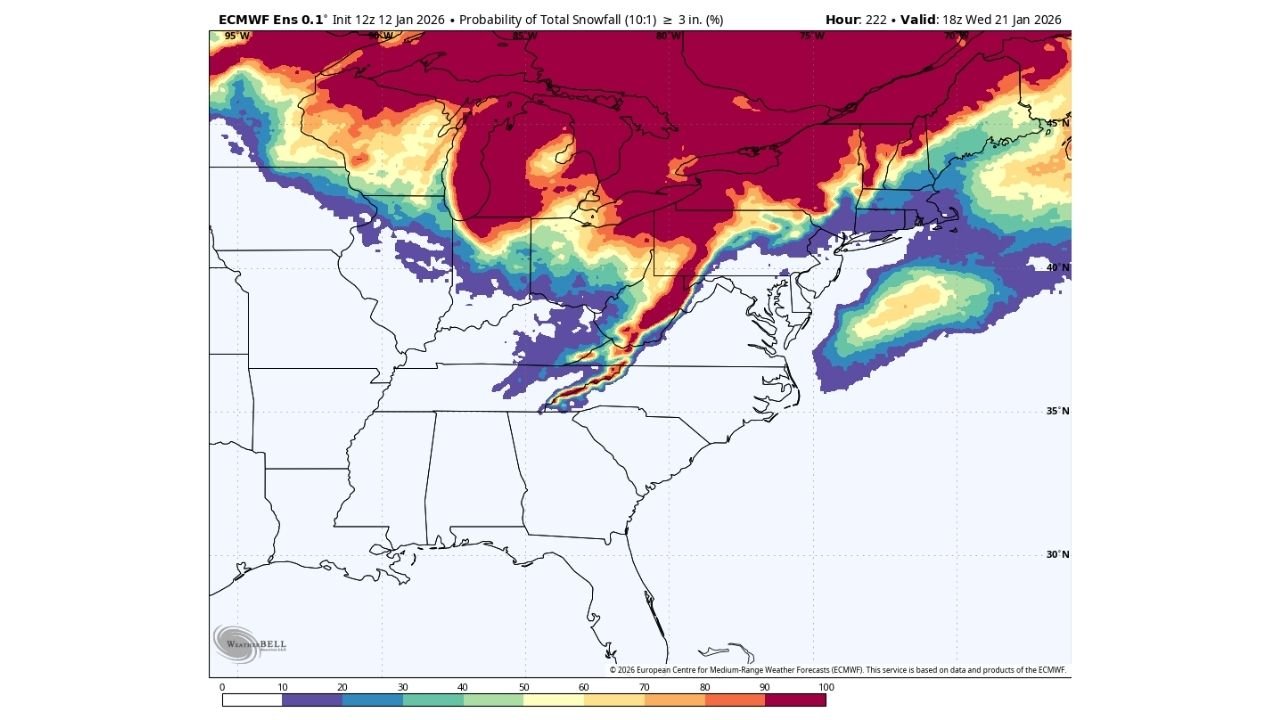
CHICAGO, ILLINOIS — A sharply divided January weather pattern is setting up across the United States, with unseasonably warm temperatures dominating much of the Midwest, while localized but intense lake-effect snow targets parts of Michigan, northern Indiana, and northwest Ohio through midweek.
Latest National Weather Service and European ensemble guidance confirms that while large-scale winter storms are being hyped online, actual snow risks remain narrow, regional, and highly dependent on lake-effect processes rather than widespread systems.
Midwest Temperatures Running 25–30 Degrees Above Normal
Temperature departure maps show Illinois, Missouri, Iowa, Kansas, and much of the central Plains running 25 to 30 degrees above seasonal averages early this week.
Highs across much of Illinois and Indiana are expected to reach the upper 40s and 50s, with some southern locations briefly touching the low 60s — levels more typical of early spring than mid-January. This warmth is driven by a strong upper-level ridge suppressing storm development across the central U.S.
Lake-Effect Snow Focused on Michigan and Northern Indiana
While inland areas remain quiet, cold air moving across the Great Lakes is triggering classic lake-effect snow bands, especially downwind of Lake Michigan and Lake Superior.
Forecast snowfall guidance shows narrow but intense snow corridors, where 6 to 12 inches of snow is possible, particularly in:
- Western and northern Lower Michigan
- Parts of Michigan’s Upper Peninsula
- Northern Indiana snowbelt communities near Lake Michigan
As typical with lake-effect setups, snowfall totals will vary dramatically over short distances, with some locations seeing heavy accumulation while nearby towns receive little to none.
No Widespread Southern Snow Despite Social Media Claims
Despite viral posts predicting a major snowstorm across the Deep South and Mid-Atlantic, reliable ensemble probability data does not support those scenarios.
European ensemble guidance shows:
- Zero probability of one inch or more of snow across Alabama
- Only a low chance of light flurries at times later in the week
- No accumulation or travel-impacting snow expected
Any meaningful snow potential remains confined to interior New England, where isolated areas could see a couple of inches.
Model Disagreements Create Southeast Uncertainty
Short-range model comparisons show differences between forecasting systems:
- The GFS model keeps snow largely north of the Southeast
- The European model briefly hints at a broader wintry mix Sunday
However, forecasters stress that only one model supports widespread snow, while ensemble probabilities remain low — signaling high uncertainty and low confidence in any southern snow event.
Arctic Cold Could Set Up Dangerous Wind Chills in Illinois and Indiana
Looking toward next weekend, model blends suggest a sharp Arctic air intrusion across the Midwest.
Wind chill projections show sub-zero readings possible across northern Illinois, northern Indiana, and southern Michigan, with some locations dropping into the -5°F to -10°F range. These conditions could rival historic cold events, especially if strong winds materialize.
Key Takeaways From the Latest Data
- Midwest warmth continues early this week
- Lake-effect snow remains the primary winter hazard
- Southern snowstorm hype is not supported by ensemble data
- Late-week cold may shift focus back to wind chills over snowfall
Forecasters urge the public to rely on ensemble trends and official guidance, not long-range viral snow maps.
Final Outlook
January’s weather pattern highlights how winter impacts can be extreme yet highly localized, especially across the Great Lakes region. While much of the Midwest enjoys spring-like warmth, communities near Lake Michigan and Lake Superior must stay alert for sudden snow squalls and rapidly changing conditions.
For continued Midwest and Great Lakes weather updates, follow ChicagoMusicGuide.com and stay informed as this pattern evolves.