
Illinois, Wisconsin, Minnesota and Michigan Gain Up to 100 Extra Minutes of Daylight in March as U.S. Prepares for March 8 Time Change and March 20 Equinox
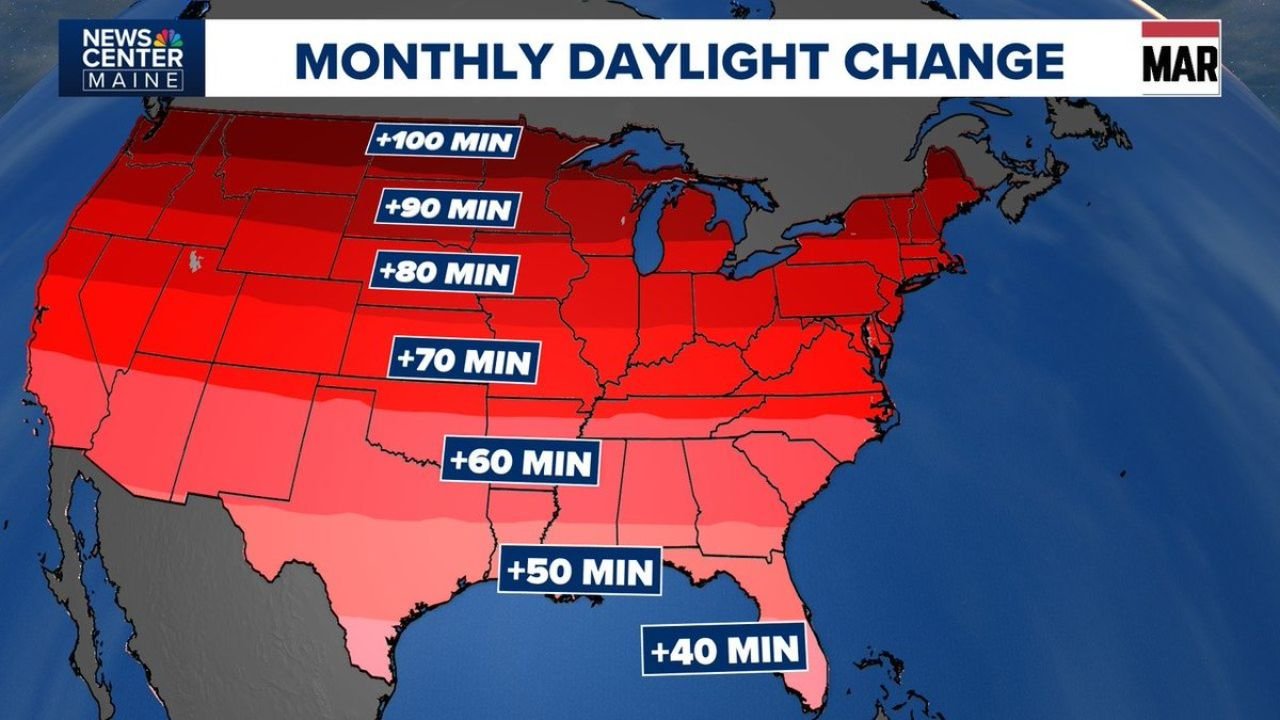
UNITED STATES — March is nearly here, and the increase in daylight is accelerating dramatically across the country as the vernal equinox approaches on March 20.
New monthly daylight projections show a significant jump in sunset times nationwide, with northern states gaining more than 90 minutes of additional daylight by the end of the month.
And before we even reach the equinox, clocks will “spring forward” early March 8 — pushing sunset even later into the evening.
Midwest Sees Some of the Biggest Daylight Gains
The northern tier of the country experiences the most dramatic daylight increases in March.
Projected gains include:
- Upper Midwest & Northern Plains: +90 to +100 minutes
- Great Lakes region (including Illinois, Michigan, Wisconsin): Around +90 minutes
- Central Midwest: +80 to +90 minutes
For cities like:
- Chicago, Illinois
- Milwaukee, Wisconsin
- Minneapolis, Minnesota
- Detroit, Michigan
the shift will be noticeable. Evening light will stretch significantly later compared to early February.
Southern States Still Gain Big — But Slightly Less
Farther south, daylight gains are still substantial, though not as extreme as northern states.
- Mid-South & Southern Plains: +60 to +70 minutes
- Deep South: +50 to +60 minutes
- Florida: Around +40 minutes
Even along the Gulf Coast, sunsets will noticeably creep later throughout the month.
March 8: Daylight Saving Time Begins
The early March 8 clock change will immediately shift sunset one hour later in the evening.
While we lose one hour of sleep that weekend, we gain brighter and longer afternoons.
The combination of:
- Natural seasonal daylight increase
- The time change adjustment
creates a rapid jump in usable evening light.
March 20: Vernal Equinox Marks Astronomical Spring
By March 20, the sun will sit directly over the equator, marking the vernal equinox.
At that point:
- Day and night are nearly equal length
- Daylight increases accelerate in the Northern Hemisphere
- Spring officially begins astronomically
After the equinox, daylight will continue increasing through June.
Why the North Gains More Light
Northern states experience larger daylight swings due to Earth’s axial tilt.
During winter, they lose more daylight. In spring, they regain it faster.
That’s why:
- The Dakotas and Upper Midwest gain up to +100 minutes
- The Deep South gains closer to +40 to +60 minutes
The farther north you live, the more dramatic the shift.
What It Means for the Midwest
For the Midwest — including Illinois and surrounding states — March will feel like a dramatic transition month.
Longer evenings mean:
- More after-work outdoor time
- Warmer-feeling afternoons
- A psychological shift toward spring
By the end of March, sunset in cities like Chicago will push significantly later into the evening compared to early February.
Bottom Line
March delivers one of the fastest daylight increases of the entire year.
With:
- Up to 90–100 extra minutes of daylight in northern states
- The March 8 “spring forward” time change
- The March 20 vernal equinox
the shift toward spring is about to accelerate across the United States.
Stay with ChicagoMusicGuide.com for continued seasonal updates as daylight climbs and spring officially takes hold.