International Contemporary Ensemble Closes TIME:SPANS Festival With Four Premieres at Dimenna Center, Turning Coins, Breath and Electronics Into a Hush Fans Could Hear
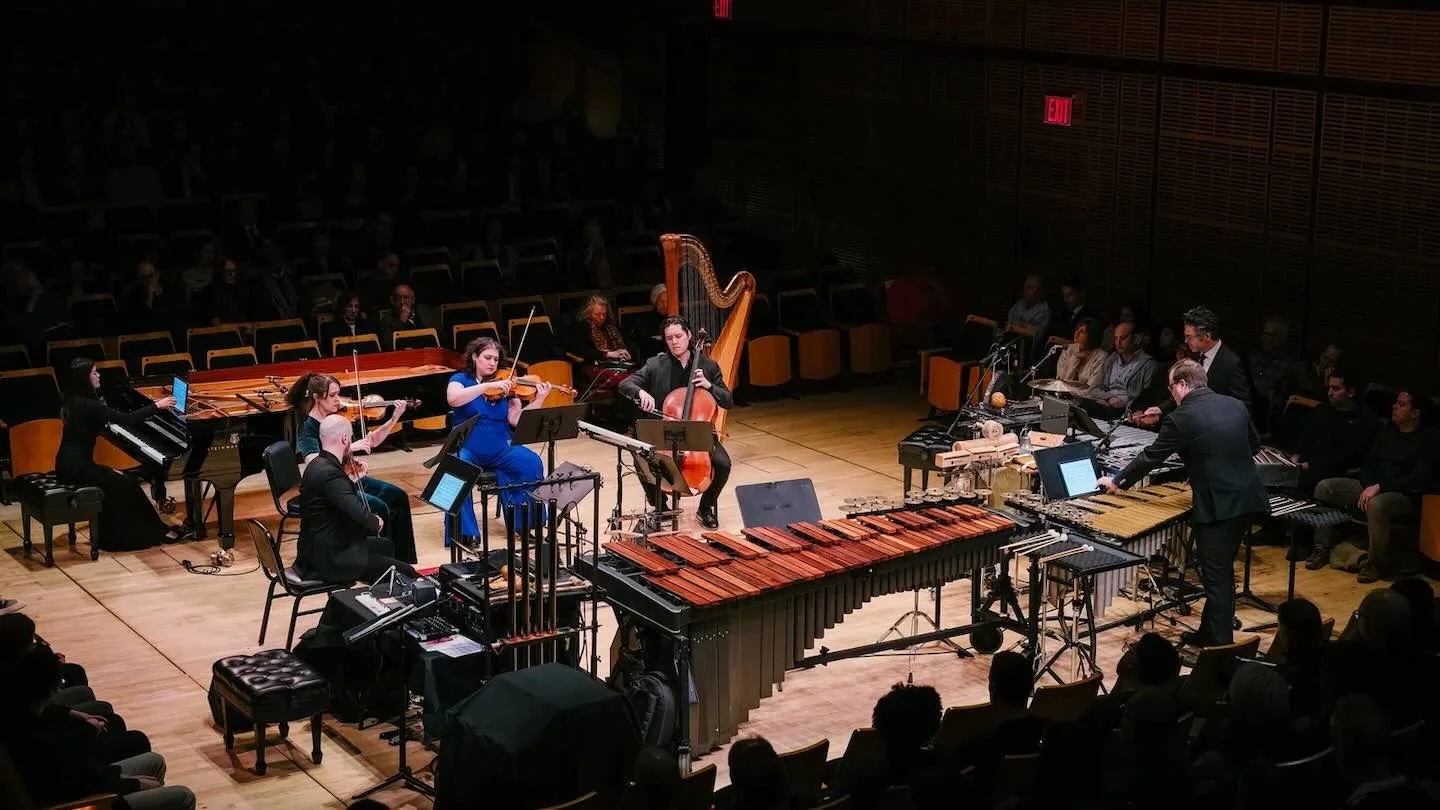
NEW YORK, NY — NEW YORK, NY — The International Contemporary Ensemble used the final minutes of Márton Illés’ Forajzok to make silence feel like a finish line. Musicians shook coins overhead with conductor Rebekah Heller, then slowly lowered their arms until the sound thinned into a low rattle and stopped.
The response was immediate: quiet, then applause. That ending capped a night of four premieres on Aug. 17 at The DiMenna Center for Classical Music, where TIME:SPANS Festival programmed works that kept asking the same question from different angles. How does instrumental sound creep toward the human voice, and how does that voice drift toward silence?
The answer, across the evening, was less a single argument than a carefully sequenced descent. Each piece seemed to prepare the next one, building toward a final moment when the room itself became part of the performance.
Electronics, percussion and color drive the opening pair
The concert opened with the U.S. premiere of Imsu Choi’s Pop (2023), an 11-minute piece for small winds and percussion built around one electronic popping sound. Generated through a motion-sensor improvisation tool, that clipped noise shaped the whole performance as it darted through flute, clarinet, trombone and woodblocks.
Choi’s electronics did not sit above the ensemble as decoration. Instead, they pushed the acoustic players into sharp, reactive gestures: clarinetist Emmalie Tello sent out wild divebombs, while the woodblocks suggested a fragmented melody. The result felt lively and unstable, with the electronic pulse supplying energy the ensemble kept trying to transform.
Njabulo Phungula’s ochre song (2024) followed with a broader, more textural approach. The work is organized around three descriptors — grainy, fluid and earthy — and roughly 15 linked sections that move by color association rather than melody. Bass, viola, percussion and trombone built waves of sound, then let them recede toward a dreamier close.
Fallah’s aubade brings morning, memory and war into focus
Farzia Fallah’s I did not paint the war. I lived the war. — une Aubade (2025) gave the evening its most explicit emotional frame. Fallah wrote it after encountering Picasso’s L’Aubade and Dora Maar’s photographs of Guernica in Paris, while also carrying recent experience of war in the Middle East into the piece’s atmosphere.
Rebekah Heller led the musicians with enough freedom for swells, glissandi and sustained tones to open fully. The clarinet often sounded like a voice refusing to give way to catastrophe, while the strings and piano pulled the music toward a dawn-colored unrest. Tellingly, the piece did not rush toward release; it seemed to hold the listener inside the long hour before morning arrives.
That made the program’s title reference to an aubade especially apt. In the tradition, the form marks parting at daybreak, when lovers or a city are separated by light. Here, the sense of parting was gradual, and the ensemble used that tension to keep the room listening.
Illés ends the night by making breath and silence audible
Forajzok brought the concert’s ideas into the body. Márton Illés has described his music as rooted in physical gesture, and this performance made that clear through grunts, whispers, hisses, clicks and sighs threaded through the ensemble. Woodwinds and strings sounded less like separate sections than extensions of breath itself.
Bassist Randall Zigler stayed underneath the texture as a steady anchor, even as other players moved in and out of earshot with extended techniques. The piece kept returning the listener to the human instrument at the center of music-making, whether through vocal-like noise or the uneasy pause that followed it.
By the time the coins arrived, the ending felt inevitable rather than surprising. The ensemble had spent the evening clearing space for that final stop, and when it came, the hall kept listening for a few more seconds. The program had led, quietly but decisively, to a silence the audience could hear.
Chicago's music scene, one story at a time — Chicago Music Guide.