
Late February Sun Now as Strong as Late October and March Matches September Intensity, Why Early Spring Sunburns Happen Faster Than You Think
UNITED STATES — Even though it still feels like winter in many parts of the country, the sun overhead is already climbing higher — and getting much stronger.
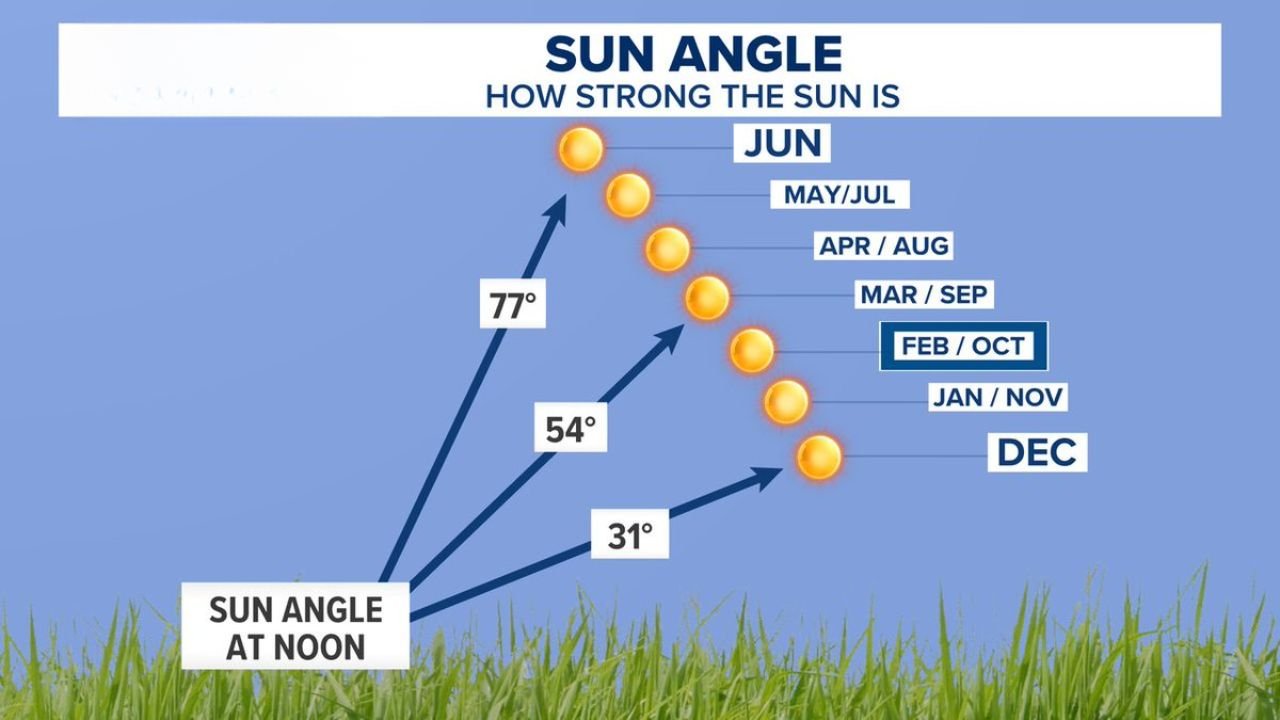
By late February, the sun angle at noon is comparable to what we experience in late October. And once March arrives, the intensity of sunlight mirrors September levels. By April, solar strength resembles August.
That seasonal flip surprises many people — and it explains why early spring sunburns can happen quickly.
How Sun Angle Changes the Strength of Sunlight
The key factor is the sun angle at noon — how high the sun sits in the sky.
The graphic shows:
- December: Lowest sun angle of the year
- January / November: Slightly higher
- February / October: Noticeably stronger
- March / September: Even stronger
- April / August: Near peak intensity
- May / July: High summer strength
- June: Maximum solar angle
In December, the sun sits around 31° above the horizon at noon.
By early spring, that climbs into the 50° range, and by summer it reaches around 77°.
As the sun climbs higher, its rays become more direct and concentrated, increasing UV intensity.
Why February and March Sun Feels Misleading
The air temperature can still be cold — especially across the Midwest, Great Lakes, and Northeast — but sunlight strength is determined by angle, not air temperature.
That means:
- Snow on the ground can reflect UV rays
- Cool breezes can mask how strong the sun feels
- Skin can burn faster than expected
Late February sunlight is already equivalent to late October. In March, the sun strength matches early fall levels — even if patches of snow still remain.
Chicago and Midwest Impact
For areas like Chicago, Milwaukee, Detroit, Indianapolis, and Cleveland, this transition can be especially deceptive.
People step outside after a long winter and underestimate:
- UV exposure
- Reflectivity from snow
- Longer daylight hours
Even on 40-degree days, UV levels can be high enough for mild sunburn with prolonged exposure.
Spring Sun Intensity Increases Rapidly
From February through April, solar angle increases quickly:
- Late February ≈ Late October
- March ≈ September
- April ≈ August
This rapid ramp-up means sun protection becomes more important much sooner than many realize.
By April, midday sun intensity rivals late-summer levels, even if air temperatures are still fluctuating.
Why Early Spring Sunburns Are Common
Early spring sunburns often happen because:
- Skin hasn’t been exposed for months
- People don’t think to use sunscreen
- Outdoor activities increase
- Reflection off water or snow boosts UV exposure
The discomfort feels surprising because temperatures don’t match the strength of sunlight.
Bottom Line
The calendar may still say winter, but the sun angle says otherwise.
Late February sun is already as strong as late October. March matches September. April resembles August.
As we move toward meteorological spring, sunlight intensity ramps up quickly — so even cool days can bring unexpected UV exposure.
Stay with ChicagoMusicGuide.com for continued seasonal weather insights and updates as we transition into spring.