Meshell Ndegeocello Reimagines Classic Duets With Brandi Carlile, Anohni and WILLOW on Her New Album Synonym, Turning Familiar Songs Into Jazz-Rooted Surprises
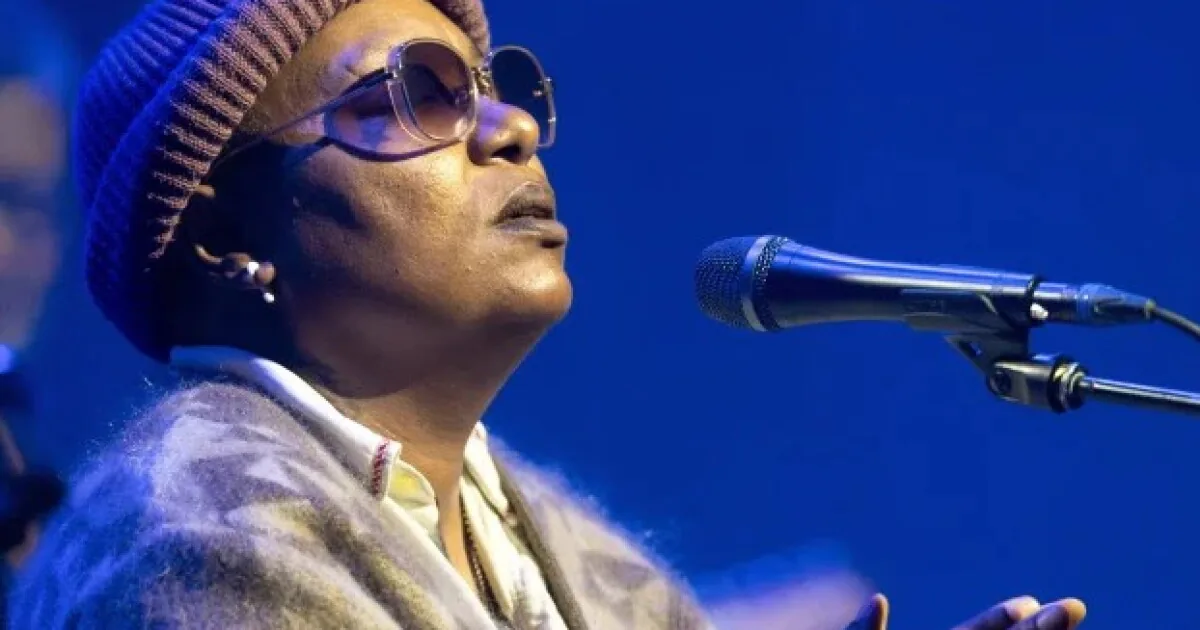
WASHINGTON, DC — Meshell Ndegeocello’s new album Synonym takes a familiar idea and makes it feel newly open-ended: the cover song as reinvention. Rather than simply reproducing beloved duet recordings, she reshapes them with new textures, altered tempos and collaborators whose styles push the material somewhere different.
The collection brings together songs from country, pop, hip-hop, rock and soul, all filtered through Ndegeocello’s jazz-centered sensibility. That approach fits an artist who has spent decades moving across genres as a singer, songwriter, producer and multi-instrumentalist, while remaining best known as a bassist.
Why Ndegeocello keeps defying easy categories
Ndegeocello has long been hard to pin down, and that is part of the appeal. Her music starts in jazz, but it reaches outward into rock, soul, hip-hop and reggae, creating a sound that belongs to her even when it is built from very different traditions.
Her career has also been recognized by the Recording Academy in a category that reflects that range. She has won two Grammy Awards this decade for Best Alternative Jazz Album, a notable fit for an artist whose work has never stayed in one lane for long.
That flexibility matters on Synonym, where the songs are not treated as museum pieces. Instead, they become proof of how much room a great arrangement can create for interpretation, even when listeners already know every contour of the originals.
Brandi Carlile turns Golden Ring into a more spacious duet
One of the album’s most striking pairings is Meshell Ndegeocello with Brandi Carlile on George Jones and Tammy Wynette’s “Golden Ring.” Carlile sings the Tammy Wynette part, helping reframe the country standard without stripping away the emotional core that made it endure in the first place.
Where the original leans on guitar and the familiar give-and-take of Jones and Wynette’s voices, this version moves with a jazzy electric piano groove. The arrangement then broadens further, ending in church-like background vocals that swell toward a choir-like finish.
The result feels less like imitation than translation. Ndegeocello keeps the song recognizable, but she also opens space inside it, letting the duet breathe in a way that changes how the sentiment lands.
Anohni and Laura Lee reshape the album’s pop and rap references
Ndegeocello also takes on “I Got You Babe” with soul singer Anohni, giving Sonny and Cher’s classic a denser and more layered vocal architecture. The arrangement recalls the stacked-vocal precision of Jacob Collier while staying anchored by sparse wind instruments and light percussion.
That balance helps the song feel intimate without becoming thin. Rather than leaning on nostalgia, the performance creates a new emotional temperature, one that sounds carefully built rather than simply restored.
On “Always on Time,” Ndegeocello teams with Laura Lee, the bassist and vocalist from Khruangbin, for a version of the Ja Rule and Ashanti hit that slows everything down. The signature walking bassline stands out immediately, and the song’s harder rap edges are softened into something more jazz-inflected.
Hunger Strike becomes ethereal with WILLOW
Another standout moment on Synonym comes with “Hunger Strike,” the Temple of the Dog song written by the late Chris Cornell. Ndegeocello performs it with WILLOW, the daughter of Will Smith, and the two of them strip away much of the aggression that defined the original.
The distorted guitars and forceful vocals that drive the grunge version are replaced by a lighter, more fragile atmosphere. What emerges is almost ethereal, showing how a familiar rock anthem can be altered simply by changing the arrangement and the vocal approach.
That transformation reflects one of Ndegeocello’s central ideas about interpretation. She has said in a Morning Edition interview that even a song you wrote yourself can be treated like a cover if a new reading gives it fresh life.
How Synonym treats familiar songs like living material
The album’s larger concept rests on two traditional ways of approaching covers: stay close to the original or remake the song so thoroughly that it becomes your own. Ndegeocello chooses the second path without erasing what made the songs work in the first place.
That is why Synonym can feel both respectful and adventurous at once. The record does not depend on shock value or novelty for its effect. Its power comes from close listening, from hearing how small decisions in harmony, rhythm and instrumentation can alter a song’s meaning.
For fans, that gives the album a replay value that goes beyond the names attached to it. Each duet becomes a kind of argument for reinterpretation, and each track reveals another way a song can sound when it is allowed to evolve.
A record built for careful listening and repeated discovery
Synonym is also a reminder of what makes Meshell Ndegeocello such a durable presence in modern music. She is not just revisiting familiar material; she is testing how far a classic can move before it stops feeling familiar and starts feeling newly alive.
That spirit is what makes the album a natural fit for listeners who enjoy hearing songs from different eras and genres folded into one another. It is also why the record stands out in a career already defined by refusal to settle on one sound.
With collaborators like Brandi Carlile, Anohni, Laura Lee and WILLOW, Ndegeocello turns well-known duets into something more than covers. The album becomes a demonstration of how reinvention can reveal hidden details, and how the most familiar songs can still surprise when placed in the right hands.
Chicago's music scene, one story at a time — Chicago Music Guide.