
Tennessee, Mississippi, Louisiana, Texas, Kentucky, South Carolina, Georgia, and North Carolina Devastated by One of the Most Widespread and High-Impact Winter Storms in Years
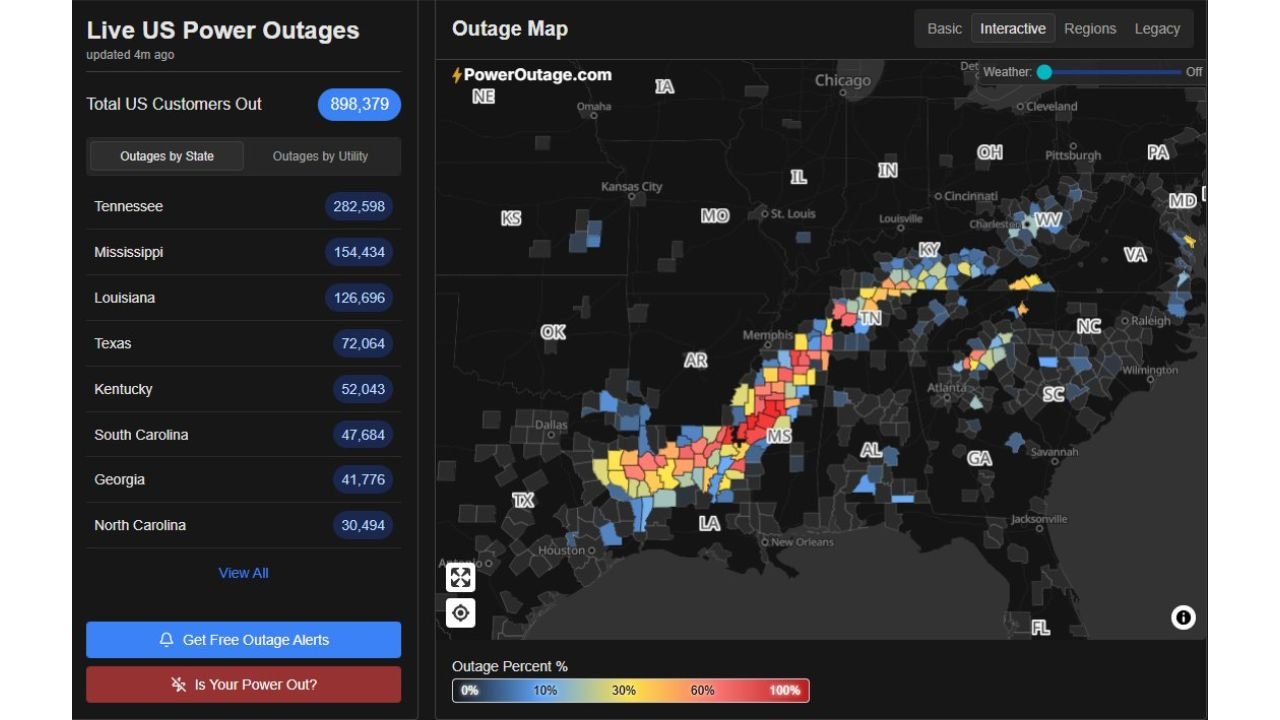
UNITED STATES — One of the most widespread and high-impact winter storms in years unfolded over the weekend, delivering heavy snow, destructive ice, and dangerous cold across a massive stretch of the country. From the Southern Rockies and Plains through the Ohio Valley and into the Northeast, the storm disrupted travel, knocked out power to hundreds of thousands, and created life-threatening conditions that lingered well after precipitation ended.
Heavy Snow Blankets the Central and Eastern United States
The storm produced a long, continuous swath of heavy snowfall stretching from the Southern Rockies through the Midwest and into the Northeast. Many communities reported 6 to 10 inches of snow, with localized areas exceeding 12 inches, particularly where mesoscale banding set up for several hours.
Snowfall intensity varied by region, but the sheer geographic coverage made this event stand out. Even areas that did not reach extreme totals experienced prolonged periods of moderate snow, leading to hazardous road conditions, airport delays, and widespread closures. While snowfall totals in parts of the Plains ended up lower than some model projections, the overall storm evolution remained well forecasted and highly impactful.
Crippling Ice Accumulations Drive the Most Severe Impacts
While snow was significant, ice proved to be the most damaging element of the storm. From the Southern Plains through the Lower Mississippi Valley, Ohio Valley, and Mid-Atlantic, freezing rain and drizzle accumulated at dangerous levels.
Many locations recorded over one-quarter inch of ice, with large portions of the Lower Mississippi Valley into the Ohio Valley seeing one-half to three-quarters of an inch. Isolated areas reported near or slightly above one inch of ice, enough to bring down trees, power lines, and utility infrastructure.
The ice also created extremely hazardous travel conditions, particularly on untreated roads and elevated surfaces. Traffic data showed rapid slowdowns as freezing rain advanced north to south, underscoring how quickly conditions deteriorated once surface temperatures dropped below freezing.
Extreme Cold Follows, Locking In Dangerous Conditions
Behind the storm system, bitter Arctic air surged southward, intensifying the overall danger. With lighter winds but exceptionally cold temperatures, many inland locations dropped below zero, especially overnight.
This cold snap ensured that ice and snow lingered, preventing melting and prolonging travel hazards. It also increased the risk of hypothermia and exposure, particularly in areas dealing with power outages or limited access to heat.
Massive Power Outages and Confirmed Fatalities
As of the latest reports, over 850,000 customers across multiple states were left without power, with crippling ice cited as the primary cause of outages. Tennessee, Mississippi, Louisiana, Texas, Kentucky, South Carolina, Georgia, and North Carolina were among the hardest-hit states.
Utility crews faced difficult conditions as ice-laden trees and lines complicated restoration efforts. Tragically, at least a dozen fatalities have been reported so far, with officials warning that the number could rise due to prolonged outages and extreme cold exposure in heavily impacted regions.
A Storm That Underscored the Value of Early Warnings
Despite its severity, this winter storm stands as an example of effective forecasting and communication. Meteorologists and emergency officials consistently emphasized the risks days in advance, allowing millions to prepare for one of the most expansive winter weather events in recent memory.
The storm’s legacy will be measured not only by its snow totals and ice maps, but by how early warnings and public awareness helped reduce loss of life during a weekend defined by extreme weather.
As recovery continues and temperatures slowly moderate, residents across affected regions are urged to remain cautious, especially when traveling or using alternative heating sources.
For continued coverage of major weather events, safety updates, and regional impacts, visit ChicagoMusicGuide.com, where we track the stories shaping communities across the country.