
Texas, Oklahoma and Louisiana Brace for Dangerous Arctic Blast With Temperatures 35–40 Degrees Below Normal
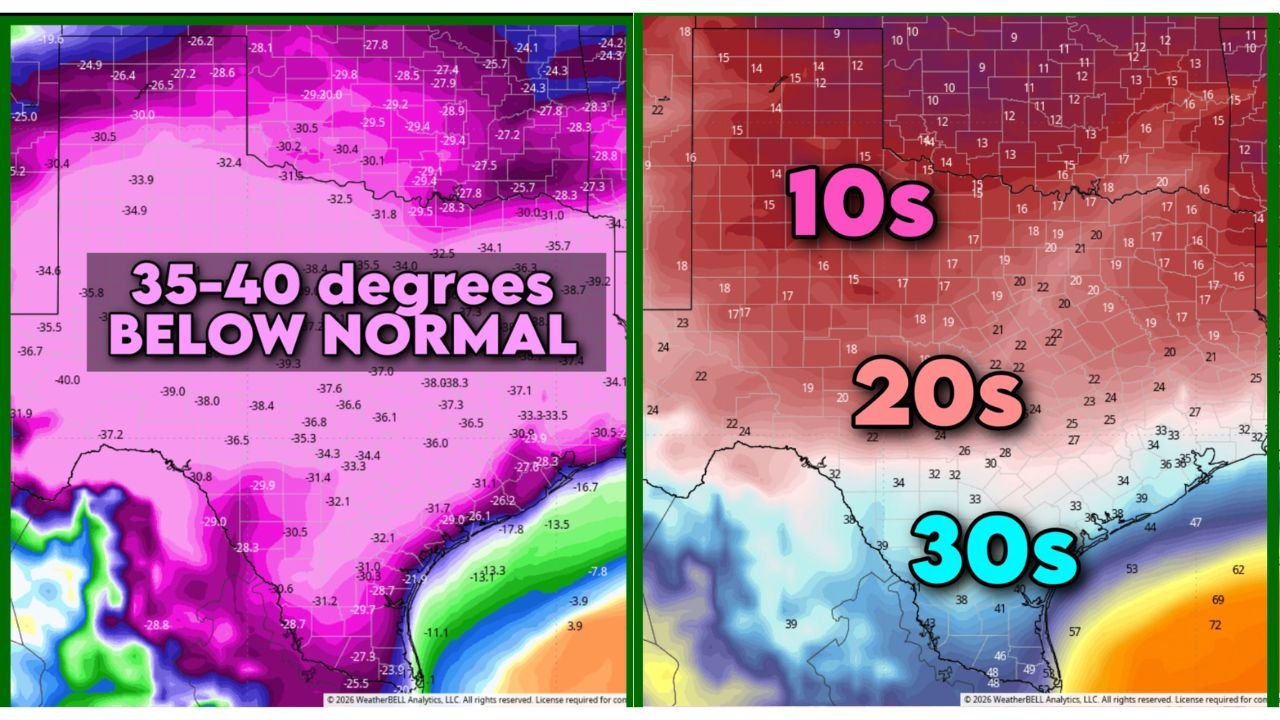
UNITED STATES — A potentially historic Arctic outbreak is lining up to impact Texas, Oklahoma, and parts of Louisiana, with forecast data showing temperatures plunging 35 to 40 degrees below normal by this weekend. The setup, shown in the latest model guidance and temperature anomaly maps, is drawing comparisons to February 2021, when extreme cold, ice, and power failures created a humanitarian crisis across the region.
Meteorologists are emphasizing that this is not a routine cold snap. The combination of deep Arctic air, prolonged subfreezing temperatures, and the risk of ice-related power outages raises serious concerns for public safety, especially across central and northern Texas.
Arctic Air Mass Targets Texas and the Southern Plains
The temperature anomaly maps clearly show the core of the cold air settling over Texas and Oklahoma, with much of the region shaded in values indicating 35–40°F below seasonal averages. This level of anomaly is rare for the Southern Plains and suggests a strong, deeply entrenched Arctic high pressure system.
Daytime highs across large portions of Texas are projected to struggle out of the teens and lower 20s, while overnight lows could dip even lower. Farther south toward the Gulf Coast, temperatures are expected to remain in the 20s to low 30s, still cold enough to cause infrastructure stress and dangerous wind chills.
Why This Setup Is Raising 2021 Red Flags
Forecasters are drawing parallels to the February 2021 winter disaster because of three key similarities visible in the data:
- Extreme temperature departures well beyond typical cold fronts
- Prolonged duration, lasting several days rather than a single night
- High risk of ice, which can damage power lines before the coldest air arrives
The concern is not just how cold it gets, but how long the cold persists. Extended periods below freezing dramatically increase the risk of frozen pipes, unsafe indoor temperatures, and cascading power failures.
Power Outage and Heating Risks Increase Rapidly
Model guidance suggests ice may already be impacting parts of the region before the coldest air fully settles in. If power is lost early, homes can become dangerously cold very quickly once temperatures fall into the teens.
Many households across Texas rely on electric heating, which increases vulnerability if grid disruptions occur. Elderly residents, young children, and those without alternative heat sources are at the highest risk.
Meteorologists are urging residents to prepare in advance, not after outages begin.
Temperature Breakdown Across the Region
Based on current projections shown in the forecast imagery:
- North & Central Texas / Oklahoma: Teens to low 20s
- Interior Texas: Widespread 20s
- South Texas & Gulf Coast: Upper 20s to low 30s
- Temperature Anomalies: 35–40°F below normal in hardest-hit areas
These values indicate a level of cold rarely experienced this far south, especially over such a wide area.
What Residents Should Do Now
Officials and weather experts are stressing that preparation must happen before the weekend. Recommended actions include:
- Securing an alternative heat source if possible
- Stocking up on food, water, and medications
- Protecting pipes and outdoor plumbing
- Checking in on elderly neighbors and relatives
- Planning for the possibility of extended power outages
This event has the potential to become a high-impact, life-threatening cold wave if preparations are delayed.
Forecast Confidence and Next Updates
While exact temperatures and ice placement may still shift, confidence is high that a major Arctic outbreak will affect Texas and neighboring states. The core message from meteorologists is clear: this threat is real and should be taken seriously, even as fine details are refined over the next few days.
Further updates are expected as new model runs arrive and confidence increases.
If you’re attending concerts, events, or traveling across Texas this weekend, stay weather-aware and build flexibility into your plans.
Stay tuned to ChicagoMusicGuide.com for continued weather updates and major regional impact stories, and share how you’re preparing for the cold with our readers.