
Texas, Oklahoma, Tennessee, North Carolina, Virginia, Pennsylvania, and New Jersey Face Long-Duration January Winter Storm With Heavy Snow, Sleet, and Ice Through the Weekend
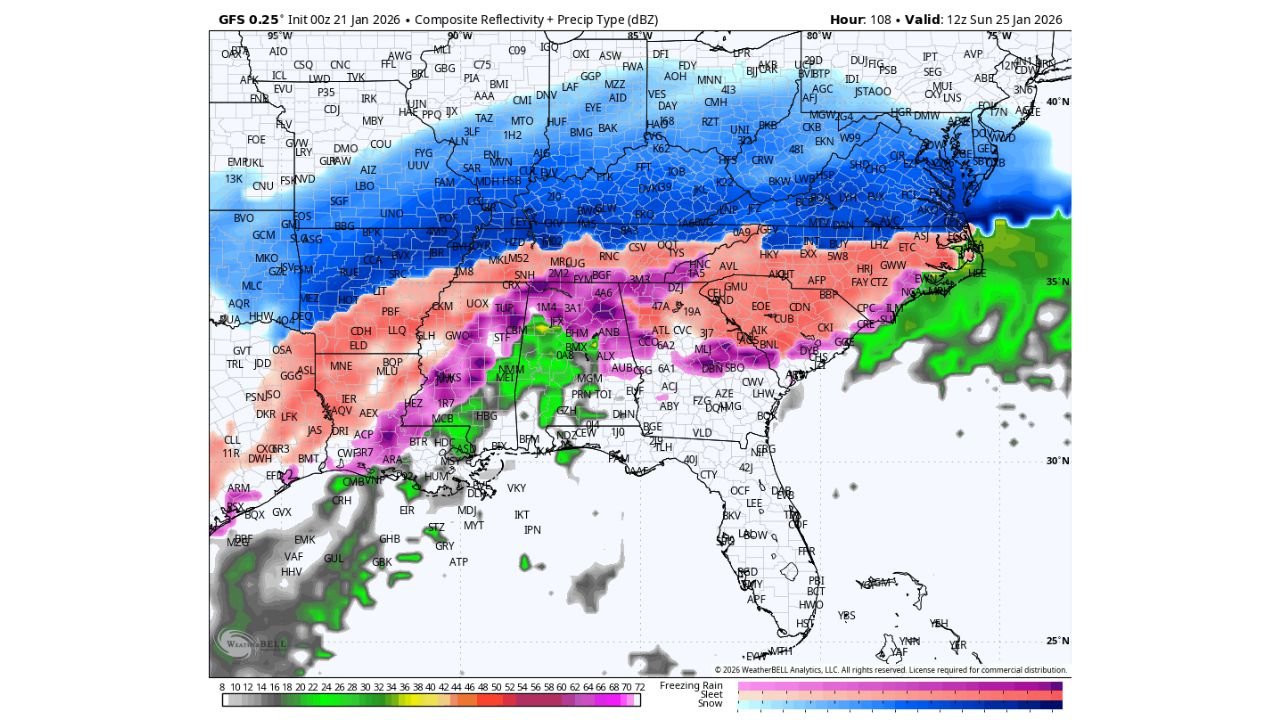
UNITED STATES — A long-duration and potentially high-impact January winter storm is taking shape across a large portion of the central and eastern United States, with forecast guidance now converging on a multi-day event from Friday through early next week. Updated model data shows a broad corridor of heavy snow exceeding 6 inches — and locally 8 inches or more — stretching from the Texas Panhandle through the Mid-South, Appalachians, Mid-Atlantic, and into the Northeast, including parts of New Jersey.
Meteorologists say confidence is increasing in a significant winter storm, though critical details such as exact snow-to-ice transition zones and precipitation type remain highly sensitive to small temperature changes in the atmosphere.
Storm Track Shifts North, Expanding Impact Zone
Overnight guidance indicates the storm track has shifted slightly north, expanding the area expected to see meaningful impacts. This adjustment places more communities under the risk of heavy snow, prolonged sleet, or dangerous freezing rain, depending on location.
Forecast models, including the GFS and European guidance, are now more aligned, increasing confidence that this will be a widespread and prolonged system, rather than a quick-moving winter event.
Heavy Snow Corridor From Texas to the Northeast
The most consistent signal across forecast data is a long stripe of heavy snowfall, with potential totals of 6 to 10 inches or more in several regions:
- Texas Panhandle into Oklahoma, including the Oklahoma City metro
- Southern and central Appalachians, especially eastern Tennessee into western North Carolina, where elevation and terrain could enhance snowfall
- Mid-Atlantic and Northeast, where snow could persist for an extended period before tapering late Sunday or Monday
Because the storm will last several days, even moderate snowfall rates could accumulate into significant totals, leading to snow-covered roads, reduced visibility, and widespread travel disruptions.
Ice and Freezing Rain Pose Highest Risk South of Snow Zone
Just south of the heavy snow axis, forecast data highlights a dangerous stripe of sleet and freezing rain extending from Texas through the Mid-South and into parts of the Carolinas.
This zone is of particular concern because freezing rain can accumulate on roads, power lines, trees, and infrastructure, increasing the risk of:
- Hazardous and impassable road conditions
- Tree damage and downed power lines
- Power outages, especially where freezing rain persists for several hours
Meteorologists caution that sleet and freezing rain boundaries are notoriously difficult to pin down until closer to the event, meaning some locations could see rapid changes from snow to sleet to freezing rain.
Why This Storm Brings Extra Uncertainty
Forecast discussions note that this setup shares some similarities with past high-impact winter storms, where warmer air aloft overrides surface cold air, creating complex precipitation types.
In this scenario:
- Snow forms where the atmosphere remains fully cold
- Sleet occurs when snow partially melts aloft before refreezing
- Freezing rain develops when melted snow reaches the ground as liquid and freezes on contact
While sleet can be disruptive, freezing rain poses the greatest threat to infrastructure, coating surfaces with ice rather than bouncing off.
Timing: When Conditions Deteriorate
Current projections suggest:
- Cold air deepens late Friday
- Widespread winter precipitation develops Friday night
- Peak impacts likely Saturday through early Sunday
- Lingering snow and ice possible into Monday in parts of the East
The prolonged nature of the storm means repeated rounds of precipitation, which could worsen conditions even in areas that initially escape the heaviest impacts.
Travel and Preparedness Concerns
Officials urge residents across the impacted regions to prepare now, especially given the storm’s duration and uncertainty. Recommended steps include:
- Adjusting travel plans and avoiding unnecessary trips
- Protecting pipes, pets, and vulnerable plants from prolonged cold
- Ensuring multiple ways to receive weather alerts and updates
- Preparing for possible power disruptions in ice-prone areas
Even small shifts in temperature could dramatically change outcomes for individual cities and towns.
What to Watch Going Forward
Forecasters emphasize that confidence is high in a major winter storm, but lower on exact local impacts. Final snow and ice totals — especially near transition zones — may not be known until 24 hours or less before the event begins.
More refined forecasts and possible winter storm watches are expected as confidence continues to increase heading into the weekend.
Stay alert, stay prepared, and keep checking updates as this long-duration winter storm approaches.
For ongoing weather coverage and regional impact updates, keep following ChicagoMusicGuide.com and join the conversation on how this storm could affect travel, events, and daily life across the country.