Yosemite Falls in California Produces a Stunning Rainbow Waterfall as Sunlight Hits the Mist at Perfect Angle
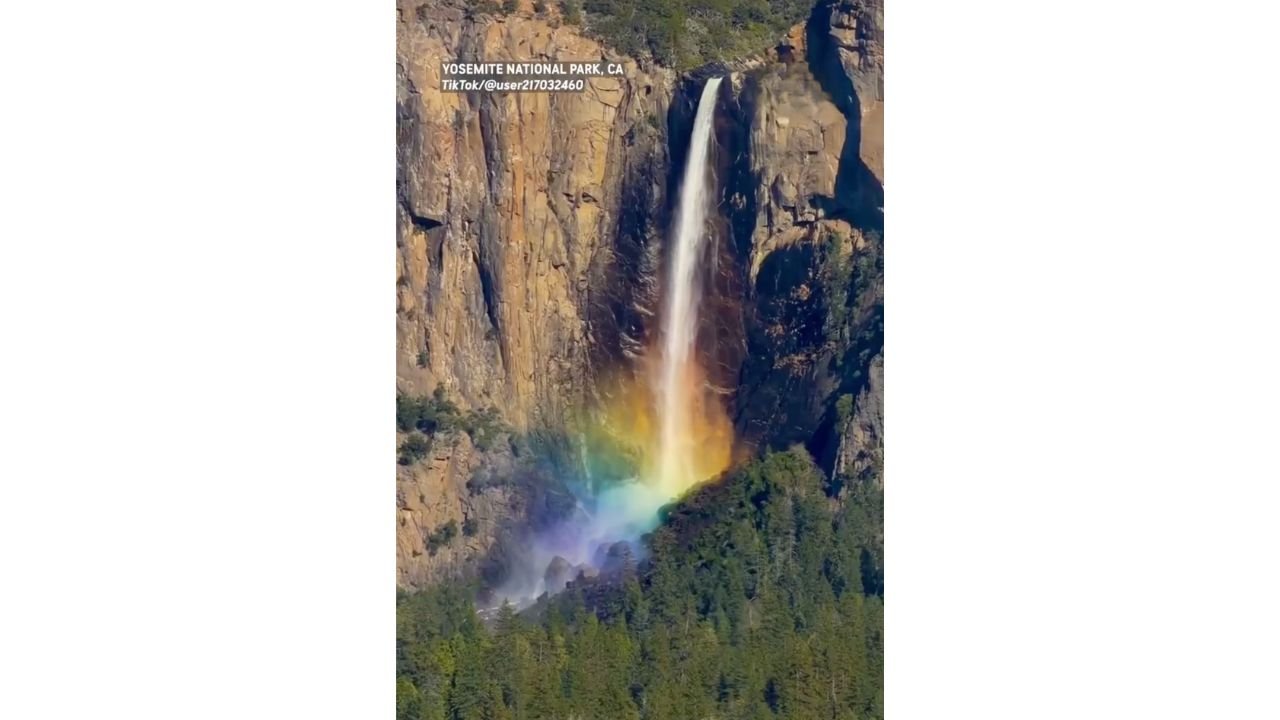
YOSEMITE NATIONAL PARK, CA — Nature put on one of its most spectacular displays at Yosemite National Park, California, where sunlight striking the mist at the base of Yosemite Falls created a vivid, full-color rainbow cascading directly below one of the most iconic waterfalls in the United States. The result is exactly what it looks like — a waterfall that appears to pour directly into a pool of gold, red, green, and violet light.
The Science Behind the Rainbow Waterfall
This phenomenon is not rare at Yosemite Falls, but capturing it this clearly is. When sunlight hits water droplets suspended in the air at a specific angle, each droplet acts as a tiny prism, bending and separating white light into its individual color components. The result is a rainbow visible to observers positioned at the right angle relative to the sun and the mist.
At Yosemite Falls, the enormous volume of water crashing onto the rocks below generates a constant fine mist cloud that fills the air at the base of the falls. During the right time of day when the sun is at a low angle, the mist field becomes a natural rainbow generator. Spring is the best season to witness this effect because snowmelt keeps Yosemite Falls running at peak volume, maximizing the mist output and the rainbow intensity.
Where the gold lies – a beautiful rainbow waterfall at Yosemite National Park. The sunlight hits the mist from the flowing Yosemite Falls, creating a bright rainbow 🌈 pic.twitter.com/J1S1QJJMD4
— AccuWeather (@accuweather) May 12, 2026
Why Spring Makes This Possible
Yosemite Falls is a seasonal waterfall that depends almost entirely on Sierra Nevada snowmelt to flow. During dry summers it can slow to a trickle or stop completely. The heavy snowpack that builds through winter and releases through spring is what powers the falls at the volume needed to create the dramatic mist displays that produce phenomena like the rainbow waterfall captured here.
Yosemite National Park in California draws millions of visitors every year, but witnessing the rainbow waterfall requires showing up at the right time of day during peak spring flow. Early morning and late afternoon, when the sun sits low in the sky, produce the best angles for rainbow formation at the falls base.
Planning a Visit to See This
Current spring conditions at Yosemite National Park are ideal for waterfall viewing. Visitors wanting to maximize their chances of seeing the rainbow effect at Yosemite Falls should plan morning visits when the sun angle is optimal and the falls are running at full spring volume. The window for peak flow typically runs from April through early June depending on snowpack levels in the Sierra Nevada.
More weather and nature coverage is always on the horizon. Stay informed at ChicagoMusicGuide.com — your source for stunning weather phenomena, nature coverage, and breaking weather stories across California and the entire United States.