Ohio, Pennsylvania, New York, New England, and the Mid-Atlantic Face Major January Winter Storm as Snow Targets Buffalo, Syracuse, Albany, Boston, and Portland While Ice and Sleet Threaten Washington DC, Richmond, Raleigh, and Norfolk
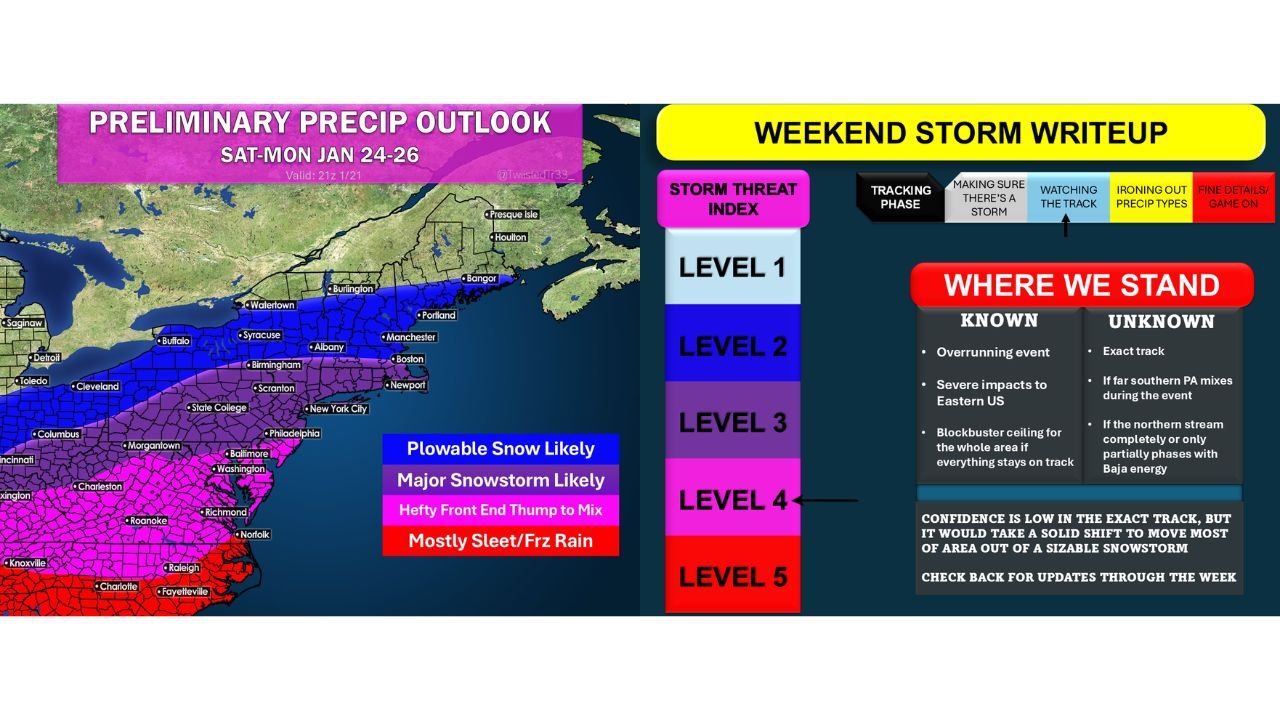
UNITED STATES — A significant January winter storm is taking shape across the eastern United States, with forecast maps showing a wide swath of heavy snow, sleet, and freezing rain stretching from the Ohio Valley through the Mid-Atlantic and into New England. According to the latest precipitation outlook, the system is expected to impact the region from Saturday through Monday, bringing travel disruptions, power outage risks, and rapidly changing conditions across multiple states.
Meteorologists emphasize that while exact precipitation types may still shift slightly, confidence is growing that this storm will be a high-impact event, especially for areas caught near the snow-to-ice transition zone.
Snowfall Focused Across Ohio, Pennsylvania, New York, and New England
The most consistent signal in the forecast points to a plowable to major snowstorm affecting large portions of Ohio, Pennsylvania, New York, and New England. The blue and purple shading on the precipitation outlook highlights areas where steady, accumulating snow is expected for much of the event.
Cities such as Buffalo, Syracuse, Albany, and New York City fall within the primary snow zone, while northern New England locations including Burlington, Manchester, Portland, and Bangor are also positioned for impactful snowfall. In these areas, snow may fall for extended periods, leading to hazardous road conditions and possible delays at airports and transit hubs.
Forecasters note that snowfall intensity could vary from place to place, but the overall footprint of snow is broad, increasing the likelihood of widespread travel disruptions across state lines.
Mid-Atlantic Faces Sleet and Freezing Rain Threat
South of the primary snow band, a dangerous transition zone is expected to set up across parts of the Mid-Atlantic, where warmer air aloft may cause snow to mix with or change to sleet and freezing rain. This zone includes portions of Maryland, Virginia, and West Virginia.
Urban corridors such as Washington, DC, Baltimore, Richmond, Roanoke, and Norfolk are highlighted in the pink and red shading, indicating a higher likelihood of ice accretion and sleet accumulation. Even small amounts of freezing rain can create treacherous travel conditions, but forecasters warn that localized heavier icing could significantly increase the risk of power outages and downed trees.
Because freezing rain tends to accumulate on power lines and vegetation, this part of the storm may prove more disruptive than snow in some locations, especially if cold air quickly follows the system.
Timing, Uncertainty, and What Makes This Storm Different
The storm is expected to unfold between Saturday and Monday, though exact timing may vary by location. One of the biggest challenges forecasters continue to monitor is the precise placement of the snow-to-ice line, which could shift north or south depending on subtle changes in the storm track.
Meteorologists describe this system as having a high-impact ceiling, meaning that if the current projections hold, many areas could experience their most significant winter weather event of the season. At the same time, forecast uncertainty remains moderate, especially for cities near the mixing zone, where conditions could change rapidly over short distances.
Residents across the affected region are urged to stay alert for updated forecasts and potential winter weather advisories or warnings as the event draws closer.
Why This Storm Matters for Travel and Daily Life
With the storm impacting a densely populated portion of the eastern United States, even modest changes in precipitation type could have outsized consequences. Snow-covered highways in the Northeast, combined with icy roads in the Mid-Atlantic, may lead to widespread travel delays, school disruptions, and business closures.
Air and rail travel could also be affected, particularly in major metro areas that fall directly within the snow band. Emergency planners stress that preparation is key, especially for those living in areas where ice accumulation could result in extended power outages.
As this winter storm continues to evolve, staying informed will be critical for navigating the days ahead. For continued updates, detailed forecasts, and regional weather coverage, visit ChicagoMusicGuide.com, where we track major weather events impacting communities across the country.