Arctic Blast Slams New York, Pennsylvania, New Jersey, and New England as Dangerous Subzero Wind Chills and Snow Squalls Hit the East
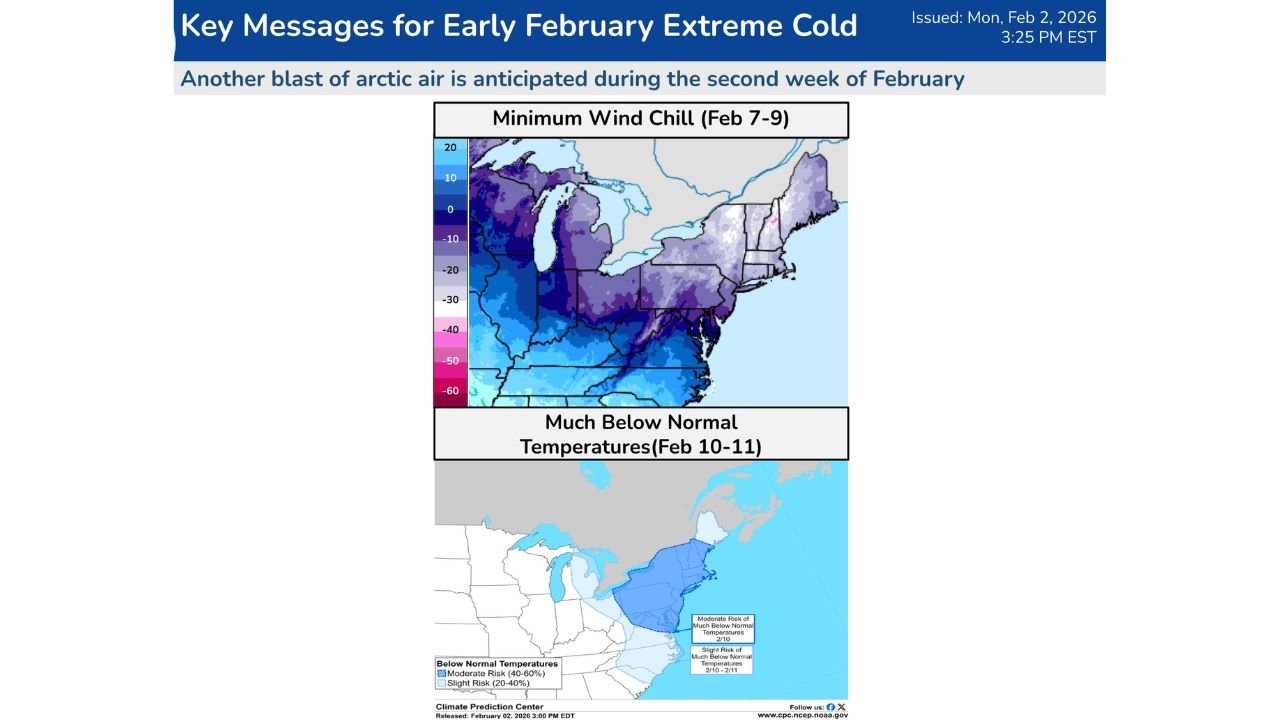
UNITED STATES — A powerful Arctic outbreak is set to return to the eastern United States this weekend, bringing bitterly cold temperatures, dangerous subzero wind chills, and the potential for brief but intense snow squalls across the Northeast and northern Mid-Atlantic, according to new early-February guidance issued on Monday, February 2, 2026.
Forecasters warn that this surge of Arctic air could deliver some of the coldest conditions of the season, with impacts extending from the Great Lakes through the Ohio Valley, into New England, and down the Mid-Atlantic coast.
Arctic Air Returns With Record-Cold Potential
The incoming Arctic blast is expected to arrive as another deep push of polar air dives south during the second week of February, reinforcing already cold conditions across the East.
Forecast data shows much below-normal temperatures developing rapidly, with some locations potentially approaching record-breaking cold. The intensity of the cold will be amplified by strong, gusty winds, making conditions feel significantly colder than actual air temperatures.
Meteorologists caution that the combination of cold air and wind will create widespread subzero wind chills, particularly across the Upper Midwest, Great Lakes, Interior Northeast, and parts of the central Appalachians.
Subzero Wind Chills Expected From the Midwest to the Coast
The most dangerous impacts are expected between February 7 and February 9, when minimum wind chills plunge well below zero across large portions of the eastern half of the country.
Forecast maps indicate wind chill values as low as -20°F to -40°F in parts of the Upper Midwest, with single-digit and subzero wind chills extending into the Ohio Valley, Mid-Atlantic, and Northeast. Even areas closer to the coast may experience biting wind chills rarely seen in recent winters.
These conditions significantly increase the risk of frostbite on exposed skin within minutes and can strain energy systems, transportation, and outdoor operations.
Snow Squalls May Accompany the Cold Surge
While widespread heavy snowfall is not the primary concern, forecasters warn that brief bursts of intense snowfall, known as snow squalls, are possible as the Arctic air mass moves in.
Snow squalls can cause sudden whiteout conditions, rapidly reduced visibility, and slick roadways — particularly dangerous for travelers caught off guard. These fast-moving bands of snow are most likely across the Great Lakes, Interior Northeast, and northern Mid-Atlantic, especially during the initial arrival of the cold air.
Even short-lived squalls can lead to traffic accidents and hazardous commuting conditions, especially during early morning or evening hours.
Cold May Linger Well Into Next Week
Unlike short-lived cold snaps, this Arctic outbreak is expected to linger into next week, with extreme cold potentially persisting through at least February 11.
Forecast outlooks show much below-normal temperatures continuing across the Northeast and Mid-Atlantic through February 10–11, before a gradual moderation begins late in the week. Even as temperatures recover, conditions may still remain colder than seasonal averages for several days.
The prolonged nature of the cold raises concerns about frozen pipes, heating system stress, and increased energy demand, especially in densely populated urban corridors.
Safety Concerns and Cold Weather Precautions
Officials are urging residents across the affected regions to take cold weather safety precautions seriously. Prolonged exposure to extreme cold can be dangerous, particularly for vulnerable populations.
Residents are advised to limit time outdoors, cover exposed skin, and ensure pets and livestock are adequately protected. Homeowners should take steps to prevent frozen pipes, including insulating exposed plumbing and allowing faucets to drip in extreme cold.
Travel on frozen lakes, rivers, and waterways is discouraged where ice thickness is uncertain, as fluctuating temperatures can weaken ice despite prolonged cold.
As this early February Arctic blast takes aim at the eastern United States, forecasters stress that preparation will be key to minimizing impacts. With dangerous wind chills, lingering cold, and potential snow squalls, this outbreak stands out as one of the most serious cold threats of the winter season so far. For continued coverage of severe winter weather, regional forecasts, and cold-weather safety updates, visit ChicagoMusicGuide.com.