California’s Coast From San Diego to San Francisco Surges 4°C Above Normal as Marine Heatwave Pushes La Jolla Waters to Mid-June Levels
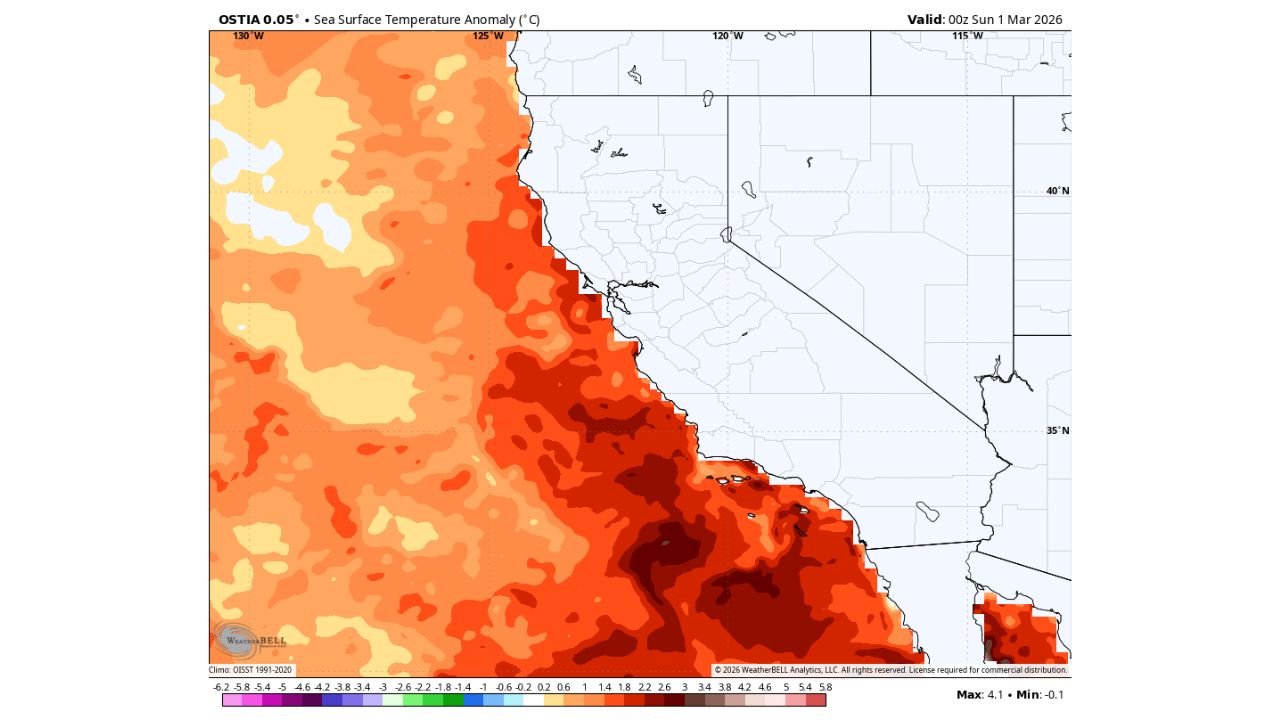
CALIFORNIA — A strong to locally severe marine heatwave is intensifying just offshore, with sea surface temperatures running dramatically above normal from San Diego County north through Central and Northern California.
Data shows ocean temperature anomalies reaching as high as +4.1°C above average, an extraordinary signal for early March along the West Coast.
La Jolla Reaches Mid-June Ocean Temperatures
Waters off La Jolla in San Diego County surged to 67.1°F (19.4°C) — a reading typically associated with mid-June, not late winter.
For coastal Southern California, that is a striking departure from seasonal norms. Early March ocean temperatures are usually significantly cooler, making this spike particularly noteworthy.
Anomalies Stretch Along the Entire California Coast
Sea surface anomaly maps reveal a broad swath of above-normal water extending:
- From San Diego and Orange County
- Past Los Angeles and Ventura County
- Along the Central Coast near Santa Barbara and Monterey
- Up toward Northern California
The deepest red shading offshore indicates temperature departures exceeding 3–4°C above the 1991–2020 climate baseline.
This is not a localized warm pocket — it is a widespread marine event.
What a Marine Heatwave Means
A marine heatwave occurs when ocean temperatures remain significantly above average for an extended period. Strong events can:
- Disrupt marine ecosystems
- Alter fish migration patterns
- Increase harmful algal bloom risks
- Reduce nutrient upwelling along the coast
Southern and Central California are particularly sensitive to these events because the region relies on cooler, nutrient-rich waters driven by coastal upwelling.
When warm anomalies dominate, biological impacts can cascade through the food chain.
Why Is This Happening?
The anomaly pattern suggests:
- Persistent warm Pacific water offshore
- Limited cold upwelling events
- A broader large-scale atmospheric pattern favoring warmer sea surface conditions
The warm pool extends well offshore into the eastern Pacific, reinforcing that this is part of a larger oceanic signal rather than a brief coastal fluctuation.
Early-Season Implications
While beachgoers may welcome warmer water, marine heatwaves in late winter raise longer-term concerns:
- Potential early-season ecological stress
- Changes in coastal fog patterns
- Shifts in spring marine productivity cycles
If these anomalies persist into spring, impacts could compound.
Bottom Line
Sea surface temperatures from San Diego through Central and Northern California are running up to 4°C above normal, with La Jolla waters already matching typical mid-June values.
This strong marine heatwave is unusual for early March and bears watching as California heads deeper into spring.
ChicagoMusicGuide.com will continue tracking major climate and ocean pattern shifts affecting the United States and beyond.