Illinois, Texas and California Rely on Natural Gas While Florida, Georgia and the Carolinas Run on Electricity — New Map Reveals Stark Heating Divide Across New York, Maine and New England
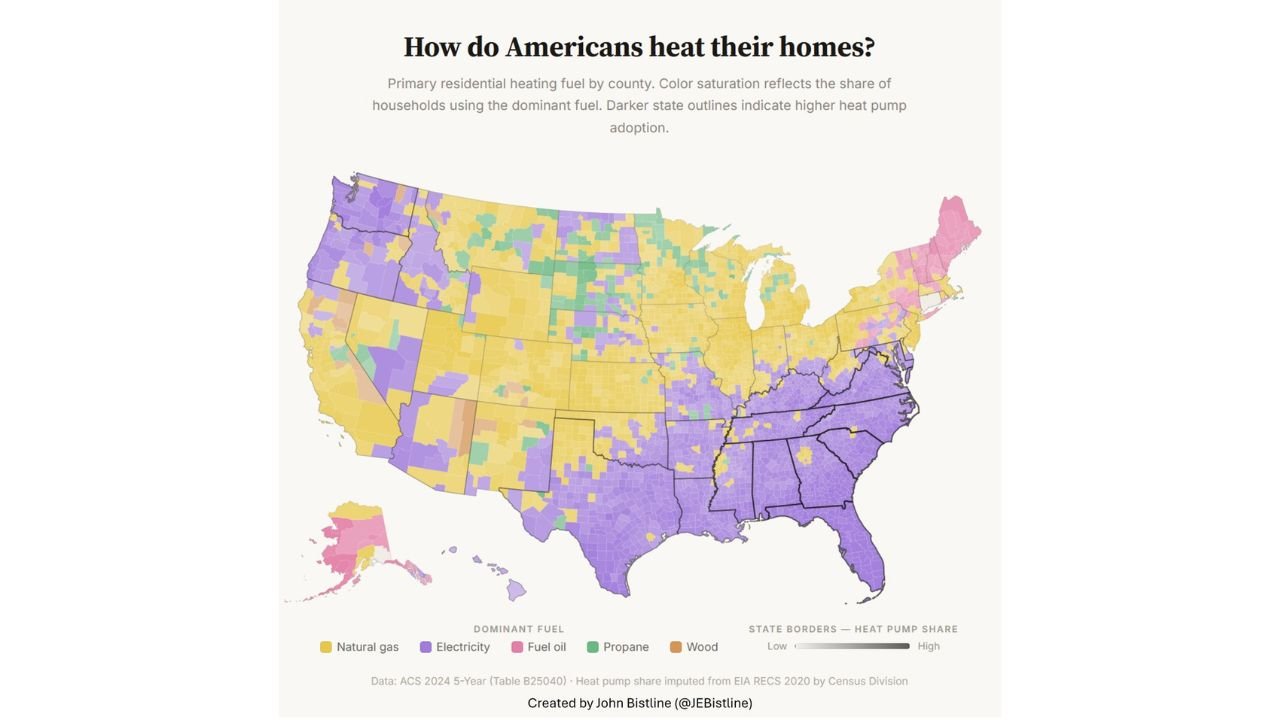
UNITED STATES — A newly released county-level map detailing how Americans heat their homes reveals a striking reality: the United States may be one country, but its home heating systems vary dramatically by region.
From natural gas dominance in Illinois and the Midwest, to electric heating across Florida and the Southeast, and fuel oil reliance in Maine and New York, the nation’s energy landscape is deeply regional — shaped by climate, infrastructure, and decades of policy and utility development.
Illinois and the Midwest: Natural Gas Rules
Across Illinois, Indiana, Ohio, Michigan, Wisconsin, Minnesota, Iowa, Missouri, Nebraska and Kansas, natural gas is overwhelmingly the dominant residential heating source.
The map shows nearly every county in Illinois shaded for natural gas usage, reflecting the region’s extensive pipeline infrastructure and long-standing investment in gas utilities.
This trend extends westward into Colorado and much of the Great Plains, and even into major western states such as California and parts of Nevada.
In cold-weather states like Minnesota and North Dakota, natural gas remains the backbone of winter heating — offering reliable high-BTU output for harsh conditions.
Florida, Georgia and the Southeast: Electricity Takes Over
In sharp contrast, the Southeast is overwhelmingly powered by electric heating.
States including:
- Florida
- Georgia
- South Carolina
- North Carolina
- Alabama
- Mississippi
- Tennessee
show widespread county-level dominance of electricity as the primary residential heating fuel.
Milder winters, widespread heat pump adoption, and limited natural gas expansion in rural counties have contributed to this pattern. Electric resistance and heat pump systems are more common in warmer climates where extreme cold is less frequent.
Even parts of Virginia and eastern Texas show strong electric heating usage.
New York, Maine and New England: Fuel Oil Still Prominent
Perhaps the most surprising regional divide appears in New England.
Counties across:
- Maine
- Vermont
- New Hampshire
- Massachusetts
- Portions of Connecticut
- Upstate New York
show significant reliance on fuel oil for home heating.
This legacy system dates back decades, when oil delivery infrastructure expanded more quickly than natural gas pipelines in the Northeast. Despite modernization efforts, oil heat remains deeply embedded in many rural and suburban communities.
Propane and Wood in Rural Western States
In more rural counties across:
- Montana
- Wyoming
- Idaho
- Parts of Colorado
- Northern New Mexico
propane and even wood heating appear more frequently.
Sparse population density and limited pipeline access make alternative fuels more practical in these areas.
Alaska: A Unique Energy Profile
The map also highlights Alaska as a distinct outlier, where fuel oil dominates in many areas due to remote infrastructure and limited grid connectivity.
Why This Regional Divide Matters
These differences influence:
- Household energy costs
- Winter storm vulnerability
- Power grid stress
- Climate policy debates
- Heat pump adoption rates
For example, a severe Arctic blast affects regions differently:
- In Illinois and the Midwest, natural gas demand spikes.
- In Florida and the Southeast, electric grids bear the heating load.
- In New England, fuel oil deliveries become critical.
The same cold wave can stress entirely different energy systems depending on geography.
One Country, Multiple Heating Economies
The data underscores a fundamental truth: America’s heating infrastructure is not uniform. It reflects climate realities, historical utility investments, and state-level policy choices.
From Chicago’s natural gas furnaces to Florida’s electric heat pumps and Maine’s oil tanks, the nation’s winter warmth comes from very different sources.
As extreme weather events become more frequent and energy transitions accelerate, understanding these regional heating patterns will be critical.
Stay with ChicagoMusicGuide.com for continued analysis on how weather, climate, and energy systems intersect across the United States.