Texas, Oklahoma and Arkansas Face High Risk of Flooding Rain April 10–11 as Storm System Expands Toward Illinois, Indiana and Great Lakes Through April 12
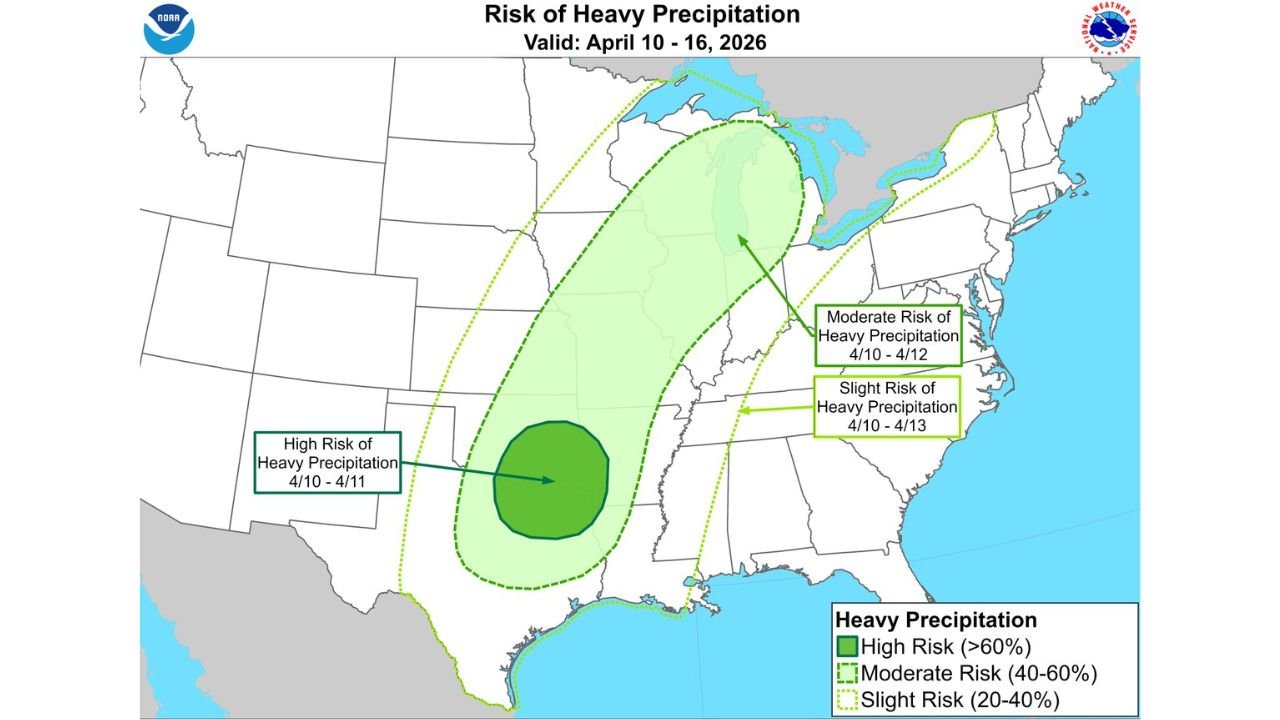
TEXAS — A major rainfall event is expected to unfold across the central United States, with a high risk of heavy precipitation across parts of Texas, Oklahoma, Arkansas, and northwest Louisiana from April 10 to April 11, followed by a broader zone of moderate rainfall risk extending into Illinois, Indiana, and the Great Lakes region through April 12. The setup raises growing concerns for flash flooding and rising river levels, especially in areas that have already seen recent rainfall.
High Risk Zone Centers on Texas, Oklahoma and Arkansas With Flooding Concerns
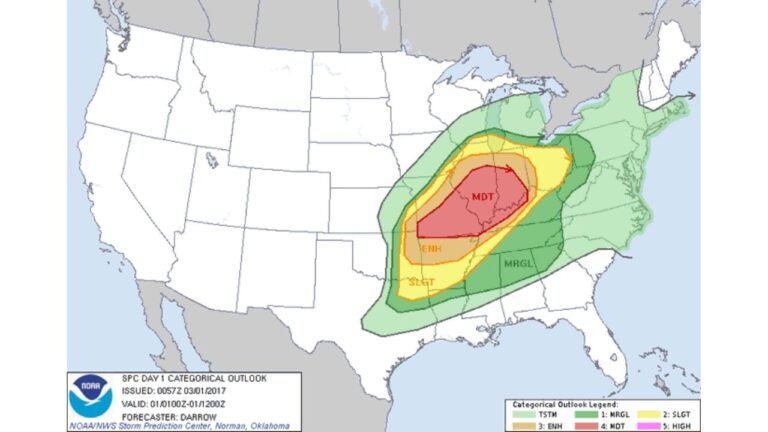
The most intense portion of this system is expected to focus on northeast Texas, southeastern Oklahoma, western Arkansas, and parts of northwest Louisiana, where a high risk (greater than 60%) of heavy precipitation has been identified.
This area is likely to experience prolonged and repeated rounds of rainfall, which could quickly overwhelm drainage systems and lead to flash flooding, especially in low-lying and urban areas. Cities and communities within this zone should prepare for rapid water rise, road flooding, and potential disruptions to travel and infrastructure.
Given that some of these regions have already experienced recent precipitation, the ground may be saturated, increasing the likelihood that additional rainfall will run off quickly rather than being absorbed.
Moderate Risk Expands From Southern Plains Into Midwest and Great Lakes
Surrounding the high-risk area is a broader region marked under a moderate risk (40–60%) for heavy precipitation, stretching from the Southern Plains northeastward into Illinois, Indiana, and the Great Lakes region.
This corridor includes major areas such as St. Louis, Chicago, Indianapolis, and Detroit, where rainfall totals could become significant enough to cause localized flooding issues and rising waterways.
While rainfall intensity in this zone may not reach the same levels as the core high-risk area, the wide geographic coverage and duration of the event increase the overall impact potential. Repeated rounds of rain could still lead to flood-prone conditions, particularly in areas with poor drainage or ongoing spring runoff.
Slight Risk Area Covers Broader Eastern United States
Beyond the moderate risk zone, a slight risk (20–40%) for heavy precipitation extends across a larger portion of the eastern United States, indicating that even areas farther from the core system could experience periods of heavy rain.
This includes regions across the Ohio Valley and parts of the Southeast, where rainfall may be less intense but still capable of causing localized issues, especially if storms track repeatedly over the same areas.
The expansive nature of this system highlights its potential to impact a large portion of the country over multiple days, rather than being confined to a single region.
Why This System Could Lead to Widespread Flooding Issues
The primary concern with this setup is not just the intensity of rainfall but also its duration and repetition. Systems that produce multiple rounds of storms over the same areas can lead to compounding impacts, where each round of rain increases the likelihood of flooding.
Rivers and streams across the Southern Plains and Midwest may begin to rise as runoff increases, potentially leading to river flooding in addition to flash flooding in urban and low-lying areas.
The timing of this event—spanning several days from April 10 through April 12 and beyond—means that impacts could build gradually before peaking, making it important for residents to remain aware even if conditions initially appear manageable.
What Residents Across Impacted Regions Should Prepare For
Residents across Texas, Oklahoma, Arkansas, Louisiana, Illinois, Indiana, and the Great Lakes region should begin preparing for heavy rainfall and possible flooding conditions. This includes monitoring forecasts, avoiding flood-prone roadways, and having a plan in place for rapidly changing conditions.
Communities in the highest risk areas should remain especially vigilant, as flash flooding can develop quickly with little warning, particularly during periods of intense rainfall.
Even areas in the moderate risk zone should not underestimate the threat, as prolonged rainfall can lead to significant impacts over time.
As this widespread rainfall event develops across the central and eastern United States, staying informed will be essential. For continued updates on flooding risks, storm developments, and regional weather coverage, visit ChicagoMusicGuide.com.