University of Chicago’s South Side Science Festival Returns Oct. 3 With 130 Hands-On Demos, Live Jellyfish, Liquid Nitrogen Fruit and Quantum Physics Fun for Families
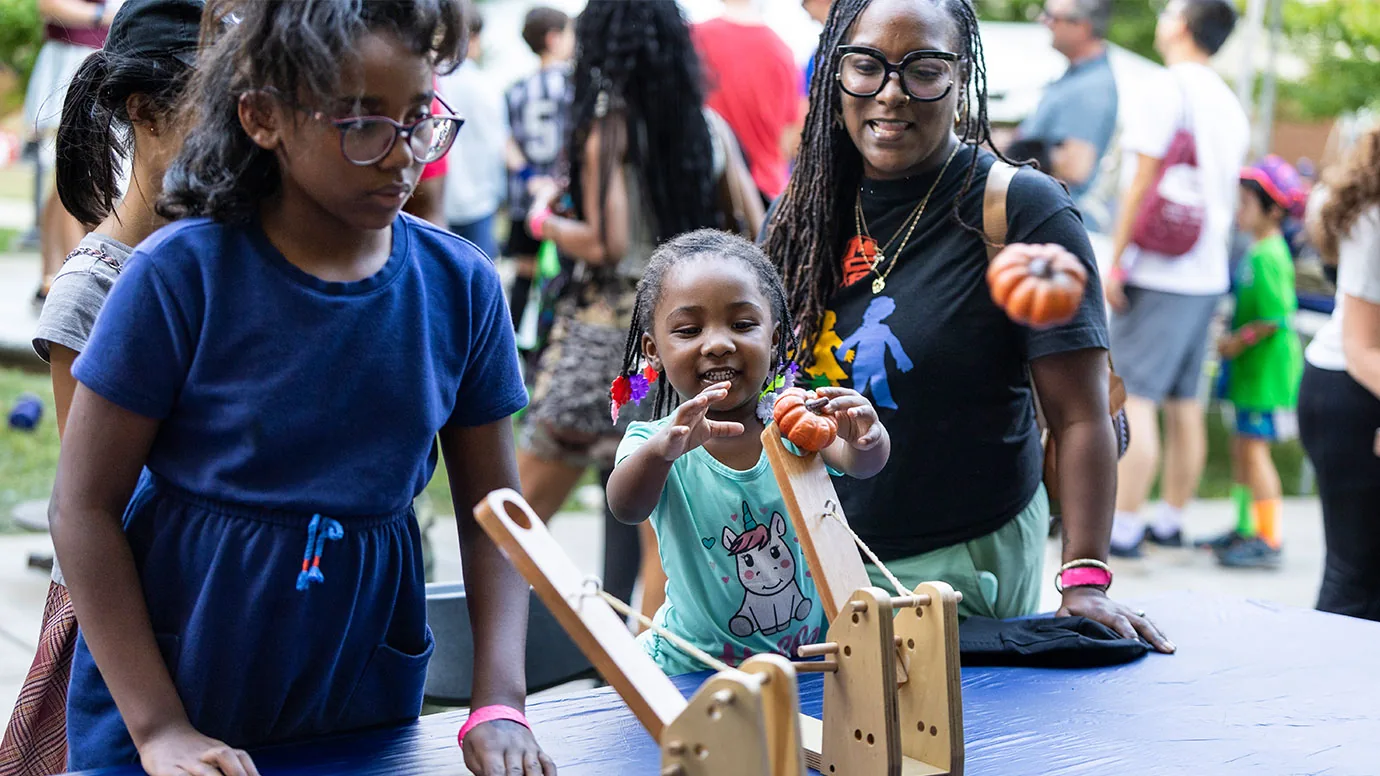
CHICAGO, IL — The fifth annual South Side Science Festival is set for Oct. 3 on the University of Chicago campus, bringing a full day of interactive science activities to local students, parents and neighbors. Organizers say the free event is meant to make science feel approachable, playful and open to everyone.
This year’s festival will feature more than 600 students, postdoctoral researchers, staff and faculty behind 130 demonstrations. The lineup is designed to let visitors try experiments, ask questions and see how research connects to everyday life.
For UChicago Pritzker School of Molecular Engineering graduate student Madhumitha Prakash, the appeal starts with surprises. Her demo shows children that yellow and blue do not always make green, a simple trick that introduces them to how fluids behave at the microfluidic scale.
Hands-on science will range from robots to jellyfish
The festival is built around eye-catching activities that mix engineering, biology and chemistry. Organizers say visitors will see robots dancing near replicas of early hominids, while live jellyfish appear beside fossils that are 300 million years old.
One of the more dramatic crowd-pleasers involves fruit frozen with liquid nitrogen, a signature demonstration from chemistry associate professor John Anderson, who is also known as “Dr. DiNitrogen.” Children will also get to paint with electrically conductive ink at arts-and-crafts tables.
The variety is intentional. Anderson said the goal is to create a welcoming, inclusive setting that works for people of different ages and levels of science experience.
Prakash’s demo turns a familiar color lesson upside down
Prakash has run her demonstration for children during the past three years, and she says the reaction is usually immediate. Most kids expect the two colors to blend into green, but the lesson instead shows how tiny-scale fluid interactions can behave in unexpected ways.
She explains that the science centers on laminar flow, where fluids move in neat layers rather than mixing in the way many people imagine. To create green, she said, the flow has to be changed with special geometries that make it more turbulent.
Prakash also brings a personal touch to the event. In recent years, she and her partner, another UChicago STEM graduate student, have built an extra interdisciplinary demo together that combines his lipid nanoparticle work with her microbiology background.
A first festival appearance will spotlight quantum physics
This year will be the first South Side Science Festival for UChicago Pritzker School of Molecular Engineering assistant professor Ruben Verresen. The theorist is building an interactive virtual demonstration to explain some of the strange features of quantum physics.
Verresen said he remembers being a child and feeling awe when he learned a new fact about the universe. He described that experience as almost mystical, especially when a principle seemed to apply everywhere in nature for reasons that were still mysterious.
His planned activity adds a theoretical side to a festival that otherwise leans heavily on tactile, visual and family-friendly demonstrations. That balance, organizers say, helps show that science can be both mind-bending and accessible.
Festival leaders say the event is about belonging as much as learning
Faculty organizer Maanasa Raghavan said the festival is meant to show that science belongs to everyone. She said the event gives families a chance to act like scientists through creative, hands-on activities tied to daily life.
Raghavan said she is especially looking forward to seeing families explore together and enjoy the lively atmosphere. For her, the festival works because it turns a university campus into something that feels like a neighborhood gathering.
UChicago PME assistant dean of education and outreach Laura Rico-Beck said the school uses a two-part approach to build that connection. On campus, it offers events like the festival, lab internships for Chicago high schoolers and the No Small Matter Molecular Engineering Fair.
Campus outreach and neighborhood partnerships extend the science mission
Rico-Beck said the other half of the strategy happens off campus, through partnerships that bring STEM programming to local schools, museums and community organizations. She said the goal is to show people that science is already woven into the places, questions and experiences that shape their lives.
That message, she said, is strengthened when scientists learn from the curiosity and questions of their neighbors. The festival becomes a shared celebration rather than a one-way presentation.
Interim dean Stuart Rowan said events like this highlight the creativity and curiosity found across the South Side and beyond. He said they offer a chance to gather, exchange ideas and experience the excitement of science and engineering together.
Chicago's music scene, one story at a time — Chicago Music Guide.