Arco E Tasto’s Once Heard, Long Forgotten Revives Emilie Mayer and Luise Adolpha Le Beau With a Navona Recording Shaped by Milwaukee Musicianship and Romantic Rediscovery
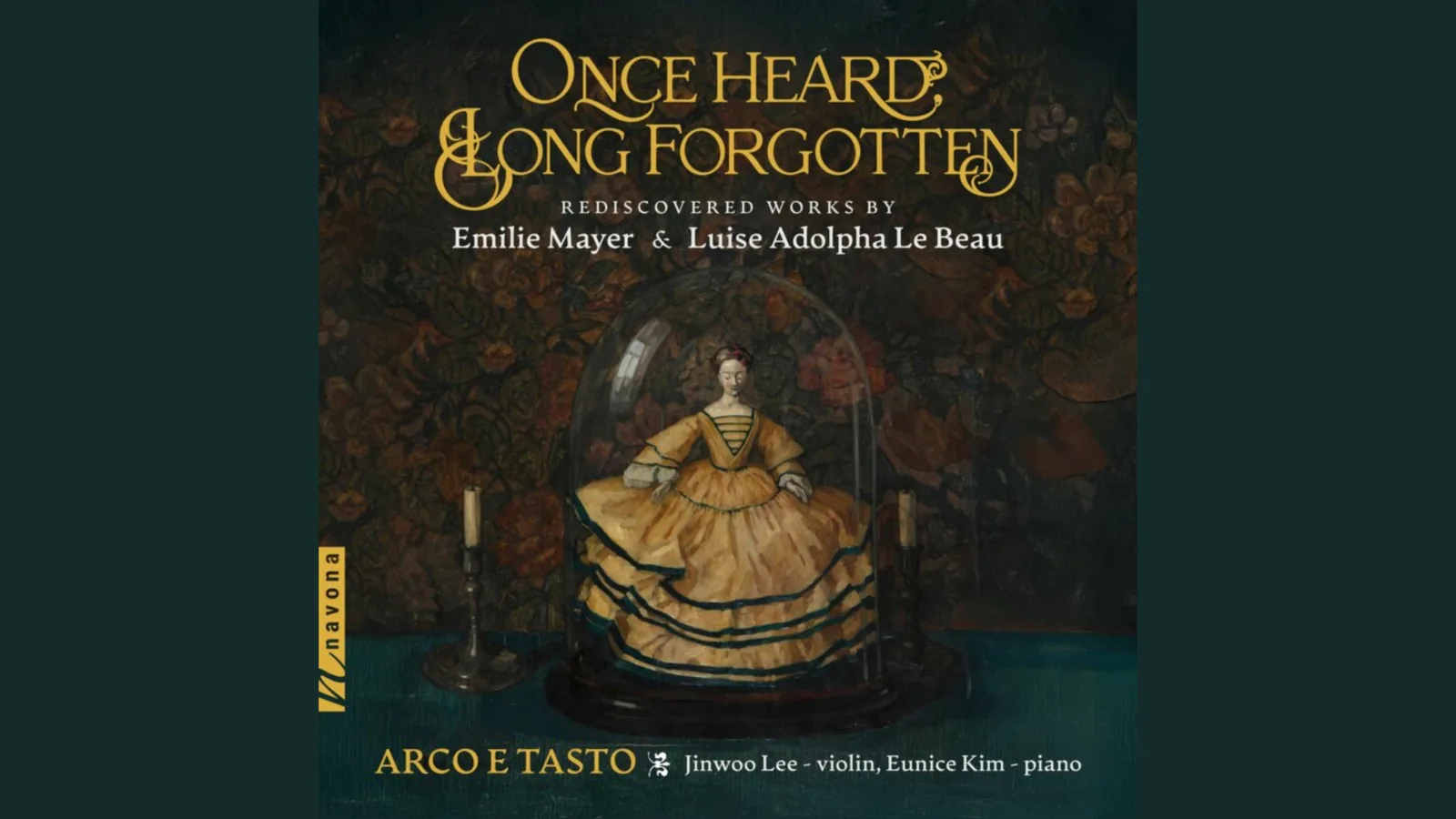
MILWAUKEE, WI — Milwaukee duo Arco e Tasto has released a new album, Once Heard, Long Forgotten, that gives two neglected 19th century German composers a fresh hearing. Violinist Jinwoo Lee and pianist Eunice Kim, who met at Juilliard School and have played together for 20 years, bring the project to Navona with a focus on music that asks listeners to rethink the Romantic era.
The pair are well known in Milwaukee’s classical scene. Lee became concertmaster of the Milwaukee Symphony Orchestra in 2023, and Kim has built a reputation as a collaborative pianist and chamber musician. Their new recording uses that shared experience to frame works by Emilie Mayer and Luise Adolpha Le Beau as more than historical curiosities.
How a 20-year partnership became Arco e Tasto
Kim described the duo’s history as a partnership that began in school and grew into something much larger. “We met at the Juilliard School where we both studied. It’s been 20 years,” she said, underscoring how long the musicians have been refining their ensemble approach.
Their name, Arco e Tasto, means “Bow and Fingerboard” in Italian, a fitting label for a violin-piano collaboration built on close listening. That chemistry matters on a program like this one, where the music depends on balance, color, and the kind of detail that can make unfamiliar repertoire feel immediate rather than academic.
Kim answered questions about the album by email, and her comments suggest a project driven as much by advocacy as by performance. The recording does not simply present rare works. It makes a case for why these composers deserve a place beside better-known names from the Romantic period.
Emilie Mayer’s violin sonatas and nocturne reveal a bold voice
Emilie Mayer, born in 1812, came from a non-musical family and began composing early. Her teacher reportedly pushed her toward composition after she proved too adventurous at the piano, and her catalog eventually grew far beyond the solo keyboard and art songs that women were often expected to write in her era.
This album includes Mayer’s Violin Sonata in E-flat major from the 1850s, her Violin Sonata in F major, op. 17, and the Notturno in D minor, op. 46. The E-flat major sonata was not published during her lifetime, which adds another layer to the album’s rediscovery theme.
Kim said the E-flat major sonata recalls Beethoven in its opening gestures and lyrical contrasts. The F major sonata has an unusual backstory too: it began as a cello and piano duet before Mayer revised and published it as a violin sonata in 1863, during a productive period in Berlin.
Le Beau’s chamber music shows a different Romantic path
Luise Adolpha Le Beau, born in Baden-Baden in 1850, followed a separate but equally determined course. She also came from a non-musical family, began composing at age eight, and developed a career that stretched into the early 1920s. In addition to chamber music, she wrote symphonic works, an opera, choral music, and vocal pieces.
Kim sees Brahms as a likely influence on Le Beau’s early works, including her cello sonata, first violin sonata, and piano trio. The album draws on that side of her output with Violin Sonata, op. 10, her first, and Romance, op. 35, along with the later Elegy, op. 44.
Le Beau wrote the Elegy in 1899 while mourning the death of her father, and Kim hears a greater emotional openness in the later music. That shift gives the album a wider range, moving from structural heft to a more direct and personal expressiveness.
Why Kim hears Beethoven in Mayer and Brahms in Le Beau
Kim’s comments give listeners a way into the album’s two compositional voices. Mayer’s music, she argues, can feel like a dialogue with Beethoven, especially in the E-flat major sonata’s triumphant opening, expressive second theme, and piano writing that often sounds almost cadenza-like.
At the same time, Mayer’s Notturno in D minor stands apart from the gentler mood often expected in a nocturne. Kim describes it as more intense and turbulent, with a coda that feels like a private farewell. That interpretation turns the piece into one of the album’s emotional focal points.
Le Beau, by contrast, seems to move from harmonic richness toward a more candid emotional language. Kim says her later compositions carry more depth, which helps explain why the album places early and later works together rather than treating her as a single stylistic snapshot.
A polished Navona release aims to restore two names to the repertoire
The album arrives as a carefully recorded and performed Navona release, and its success depends on more than novelty. Arco e Tasto’s playing is meant to draw out the craft, color, and tension in music that can easily disappear if it is handled like archival material instead of living repertoire.
Kim and Lee’s partnership gives the performances a sense of trust and momentum. Their musical chemistry is part of what allows the album to function as both a recital and a historical argument, showing how carefully built chamber music can survive periods of neglect.
By pairing Mayer and Le Beau on one disc, Once Heard, Long Forgotten makes a clear statement about Romantic-era women composers. The recording offers listeners a chance to hear works that were overlooked for generations and to decide, with the duo’s help, that they should not stay forgotten.
Chicago's music scene, one story at a time — Chicago Music Guide.