Chicago Labor Day Parade Returns to the East Side for the First Time Since 2022, Then Rolls Into Eddie Fest at Steelworkers Park
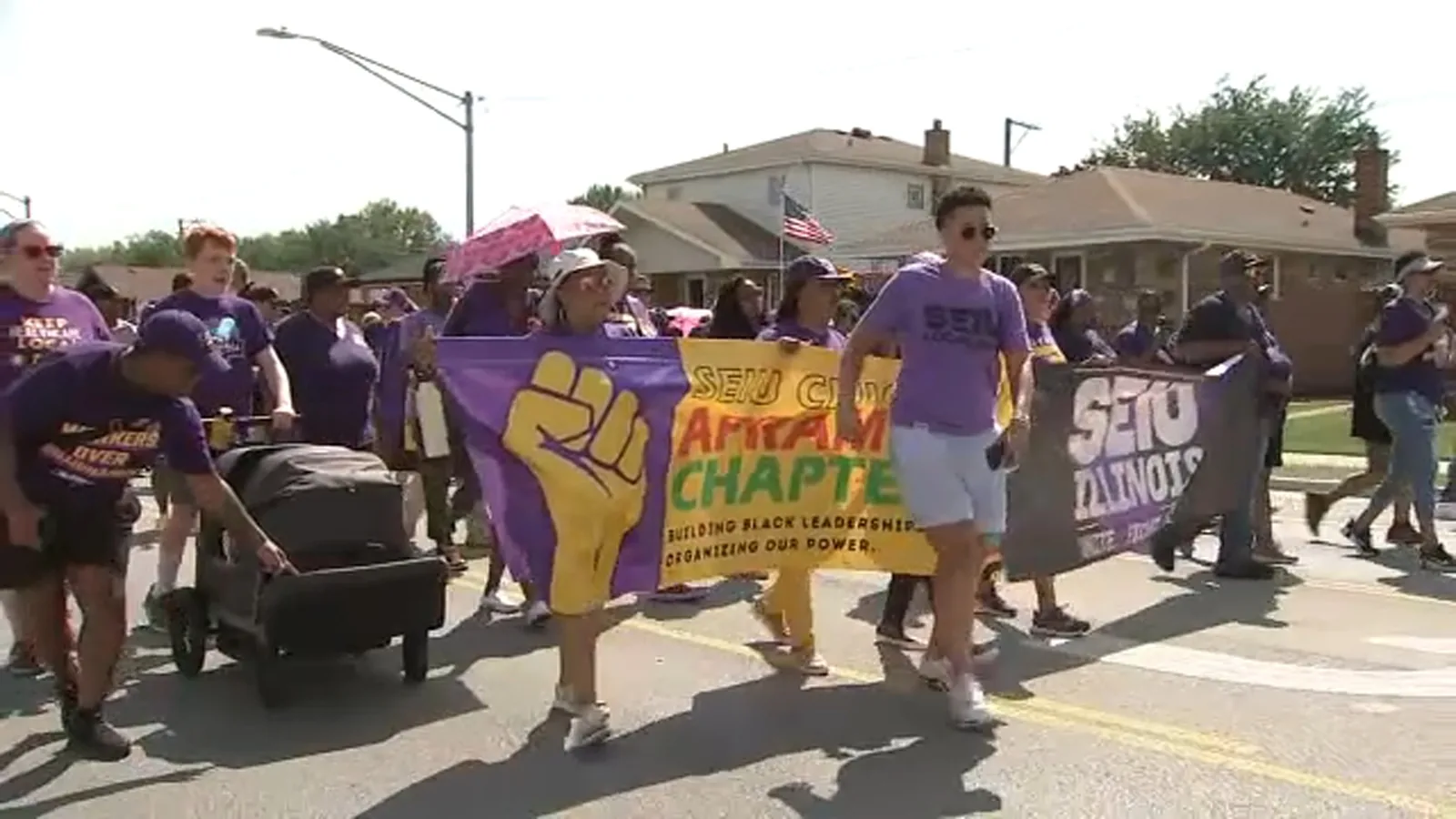
CHICAGO, IL — Chicago’s Labor Day Parade returned Saturday to the East Side neighborhood for the first time since 2022, bringing union members, retirees and labor advocates together on a holiday weekend built around workers’ rights. The parade honored the city’s labor movement and the people who helped shape it.
Dozens of unions took part, filling Ewing Avenue with colorful floats and a march that ended with a second gathering at Steelworkers Park. That post-parade celebration, Eddie Fest, is named for Edward Sadlowski and continues the focus on Chicago’s labor history while linking it to today’s workers.
Many attendees said the event still matters because it gives working people a public place to stand together. Their message was not just about tradition, but about the protections and organizing power they believe unions still provide.
Union leaders say the parade still shows why collective bargaining matters
For longtime labor supporters, the parade is more than a ceremonial march. Lorraine McCauley, a retired paramedic and paradegoer, pointed to Local 2 for Chicago firefighters and paramedics as one example of how organized labor changed working conditions. She said collective bargaining allowed firefighters and paramedics to negotiate contracts, work conditions and uniforms with the city together instead of as individuals.
Jackson Potter, vice president of the Chicago Teachers Union, said the point of the parade is solidarity. He described the gathering as a chance for workers to stand up for one another and for working families, especially at a time when many people feel pressure on the job.
Sharon Green, a steward with Amalgamated Transit Union Local 308, said the day highlighted workplace safety and labor protections. Green said the union works with the Chicago Transit Authority and continues to focus on safety and workers’ rights.
Eddie Fest keeps the celebration tied to Chicago labor history
After the parade, participants gathered at Steelworkers Park for Eddie Fest, a companion event that extends the Labor Day celebration beyond the street march. The festival is named for Edward Sadlowski, a figure closely associated with Chicago labor history, and the event was presented as a celebration of workers as well as the city’s broader labor movement.
The move from parade route to park gave the day a clear rhythm: public show of support first, then a more relaxed community gathering afterward. That pairing helps keep the holiday anchored in labor identity while also making space for music, conversation and fellowship among union supporters.
For attendees, the combination also underscored how labor culture in Chicago has long been built through both activism and community events. The result was a day that connected past struggles with present-day organizing in a visible, public way.
Labor disputes across Chicago gave the holiday extra urgency
This year’s parade came during a week already marked by labor activity in Chicago, including strikes involving hotel workers and nurses. That backdrop gave the holiday celebration added weight, since the issues on display at the parade were not confined to history or ceremony.
Supporters used the event to reinforce calls for workplace safety, fair treatment and the right to organize. The timing made those themes feel immediate, with local labor disputes reminding attendees that union activity remains active across the city.
The parade also gave union members a chance to show visible support for one another in public, something organizers and attendees clearly saw as important. For many, the holiday weekend was as much about present tensions as it was about remembering older victories.
Mayor Brandon Johnson joins union members and backs organized labor
Mayor Brandon Johnson joined union members at the parade and voiced support for organized labor. He said he fully supported workers who show up for Chicago and the country, and said workers deserve the right to unionize without intimidation.
Johnson also criticized corporate leaders who, in his view, place profit ahead of people’s interests. His remarks fit the parade’s central theme of collective action and reinforced the city’s public alignment with labor on a weekend already focused on worker identity.
The mayor’s appearance added another layer of visibility to the event, placing city leadership alongside the unions that turned out for the march. For many attendees, that presence signaled that labor is not only a workplace issue but also part of Chicago’s civic story.
Chicago's holiday weekend also features major cultural festivals and safety planning
The Labor Day weekend lineup extends well beyond the parade. Chicago’s annual celebration of African culture is underway at the historic Washington Park Sunken Garden, while other neighborhood events include the African Festival of the Arts, the Pilsen Mexican Independence Parade and Boricua Fest.
With festivals and concerts spread across the city, officials are also emphasizing public safety. Holiday weekends have historically brought significant spikes in water-related incidents, and leaders say extra attention is being paid to boating and swimming risks.
The U.S. Coast Guard plans safety checks and stepped-up patrols aimed at illegal charter operations. Chicago police are continuing crackdowns on drunk and reckless boating, while safety advocates are urging people to wear life jackets. City leaders say additional officers and other emergency resources will be deployed as agencies coordinate security throughout the weekend.
Chicago's music scene, one story at a time — Chicago Music Guide.