
Colorado and Kansas Face Elevated Fire Weather Risk Sunday as Dry Winds and Low Humidity Spread Across the Central Plains
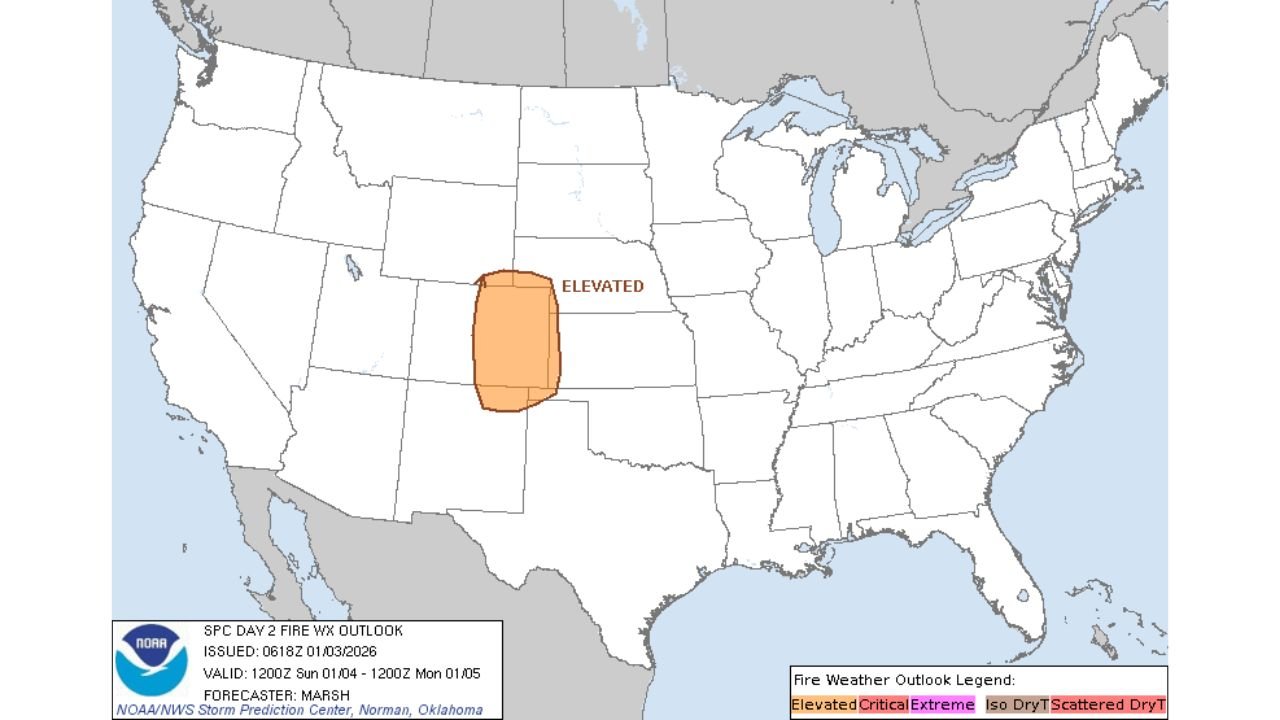
COLORADO — The National Weather Service’s Storm Prediction Center has issued a Day 2 Fire Weather Outlook highlighting an Elevated fire danger across parts of eastern Colorado and western Kansas on Sunday, January 4, as dry air, gusty winds, and low humidity combine to create conditions favorable for rapid wildfire spread.
According to the outlook, the highlighted region sits under an Elevated fire weather designation, indicating that while conditions may fall short of critical thresholds, any fires that start could spread quickly, especially in open grassland and rangeland areas common across the Central Plains.
Why Fire Weather Conditions Are Increasing
Meteorologists point to a dry post-frontal air mass moving across the region as the primary driver behind Sunday’s concern. Behind the system, relative humidity levels are expected to drop sharply, while surface winds increase, creating an environment where vegetation can ignite and spread fire more easily.
Even though winter is underway, cured grasses and dormant fuels remain highly receptive to ignition, particularly after recent stretches of limited precipitation.
Areas Most at Risk
The elevated fire weather zone covers:
- Eastern Colorado, including portions of the High Plains
- Western and central Kansas, where open terrain allows winds to accelerate
These areas are especially vulnerable due to flat landscapes, dry fuels, and limited natural fire breaks, meaning fires can grow rapidly before suppression efforts take hold.
What “Elevated” Fire Weather Means
An Elevated designation does not guarantee wildfires will occur, but it signals that:
- Fires can start more easily
- Flames may spread faster than normal
- Suppression efforts could become more difficult in windy conditions
Outdoor burning, sparks from equipment, and unattended ignition sources pose a higher-than-normal risk under these conditions.
Safety Precautions Urged
Officials advise residents, ranchers, and travelers across Colorado and Kansas to:
- Avoid open burning
- Secure chains on trailers to prevent sparks
- Use caution with machinery and vehicles on dry grass
- Immediately report any smoke or fire starts
Fire departments across the region are monitoring conditions closely as the elevated risk window develops.
Looking Ahead
The fire weather threat is expected to ease once winds weaken or moisture returns, but forecasters stress that short-term weather changes can rapidly increase risk again, especially during the winter transition season.
Residents are encouraged to stay weather-aware and monitor local updates as conditions evolve.
What do you think — are winter fire risks becoming more common across the Plains? Share your thoughts and keep following ChicagoMusicGuide.com for clear, up-to-date weather coverage across the U.S.