
Colorado, Texas, Oklahoma, Kansas, and Missouri Face Record-Breaking Christmas Heat Dome and Dangerous Fire Weather Threat
DENVER, CO — The National Weather Service and Storm Prediction Center are warning of an extremely dangerous fire weather event unfolding along Colorado’s Front Range on Friday, as destructive winds, critically low humidity, and record-breaking warmth combine to create conditions favorable for rapid wildfire spread, power outages, and property damage.
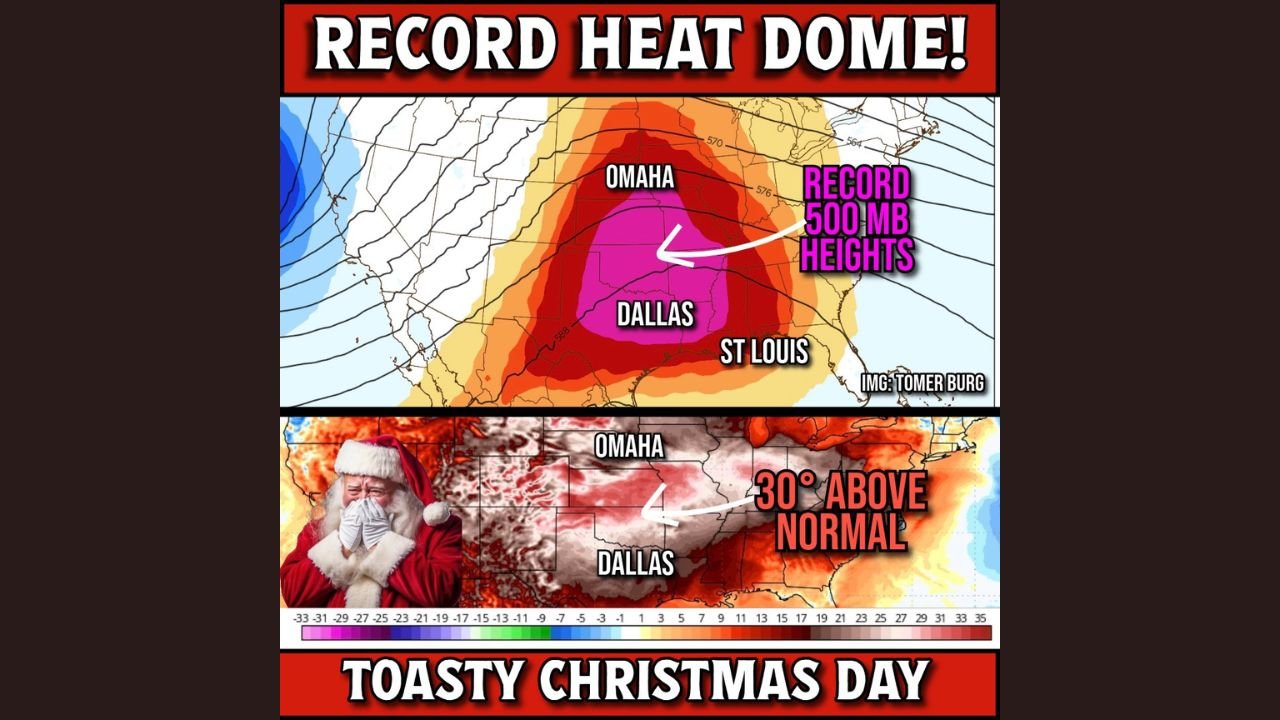
Meteorologists say this threat is being driven by a powerful and unusually strong heat dome centered over the central United States, which is also expected to bring record or near-record Christmas Eve and Christmas Day temperatures to large portions of Texas, Oklahoma, Kansas, Missouri, and neighboring states.
Colorado Front Range Under Extreme Fire Weather Risk
Forecast guidance shows 80–100 mph wind gusts possible from Boulder and Denver south through Colorado Springs, with the strongest winds focused along the eastern slopes of the Rockies. At the same time, dew points are expected to fall into the single digits, creating critically dry conditions.
Fire weather outlook maps highlight extreme to critical fire danger across much of northeastern and central Colorado.
“This is a setup where fires can ignite and spread explosively in minutes,” forecasters warned, noting that containment could be difficult or impossible under peak wind conditions.
Residents are urged to avoid any activities that could spark flames, including outdoor burning, welding, or dragging chains, as even a small ignition could turn into a fast-moving wildfire.
Destructive Winds May Cause Power Outages and Travel Issues
High-resolution wind models indicate a narrow but intense corridor of hurricane-force wind gusts along the Front Range foothills. These winds may lead to:
- Downed power lines
- Widespread power outages
- Hazardous travel for high-profile vehicles
- Structural damage, especially to weaker buildings and fences
Emergency managers are preparing for the possibility of extended utility disruptions, particularly in foothill communities west of Denver and Boulder.
Record Heat Dome Expands Across the Central United States
While Colorado deals with fire danger, the same atmospheric pattern is producing a historic heat dome across the Plains and Midwest. Forecast maps show 25 to 35 degrees above normal temperatures spreading from Texas northward through Oklahoma, Kansas, Missouri, and into parts of the Midwest.
Cities including Dallas, St. Louis, Omaha, and surrounding regions are expected to challenge or break daily temperature records during the Christmas holiday period.
“Hundreds of records could fall,” meteorologists said, pointing to record 500-millibar atmospheric heights, a strong signal of prolonged and unusual warmth.
Why This Pattern Is So Unusual for December
December typically brings cold air and increasing snowpack across the West and Midwest. Instead, recent data shows:
- One of the warmest Decembers on record for the western U.S.
- 15–20°F above normal temperatures across parts of the Pacific Northwest
- Historically low mid-December snowpack, especially in the Rockies
This lack of snow and persistent warmth has left vegetation exceptionally dry, worsening the fire risk in Colorado and neighboring states.
What Residents Should Do Now
Officials recommend the following safety steps:
- Secure outdoor items that could become airborne in strong winds
- Prepare for possible power outages
- Avoid outdoor flames or sparks of any kind
- Monitor local emergency alerts and weather warnings closely
Looking Ahead
The fire weather threat in Colorado is expected to peak Friday, while unseasonable warmth continues through Christmas Day across the central United States. Cooler air may eventually return late next week, but forecasters caution that the immediate risk remains high in the most impacted areas.
For live updates on weather conditions and how they may affect travel, events, and safety across the region, stay connected with ChicagoMusicGuide.com and share how this unusual Christmas weather is impacting your plans.