
Hummingbird Migration Begins Along Texas and Florida Gulf Coast, Spreading Across Southeast Through May
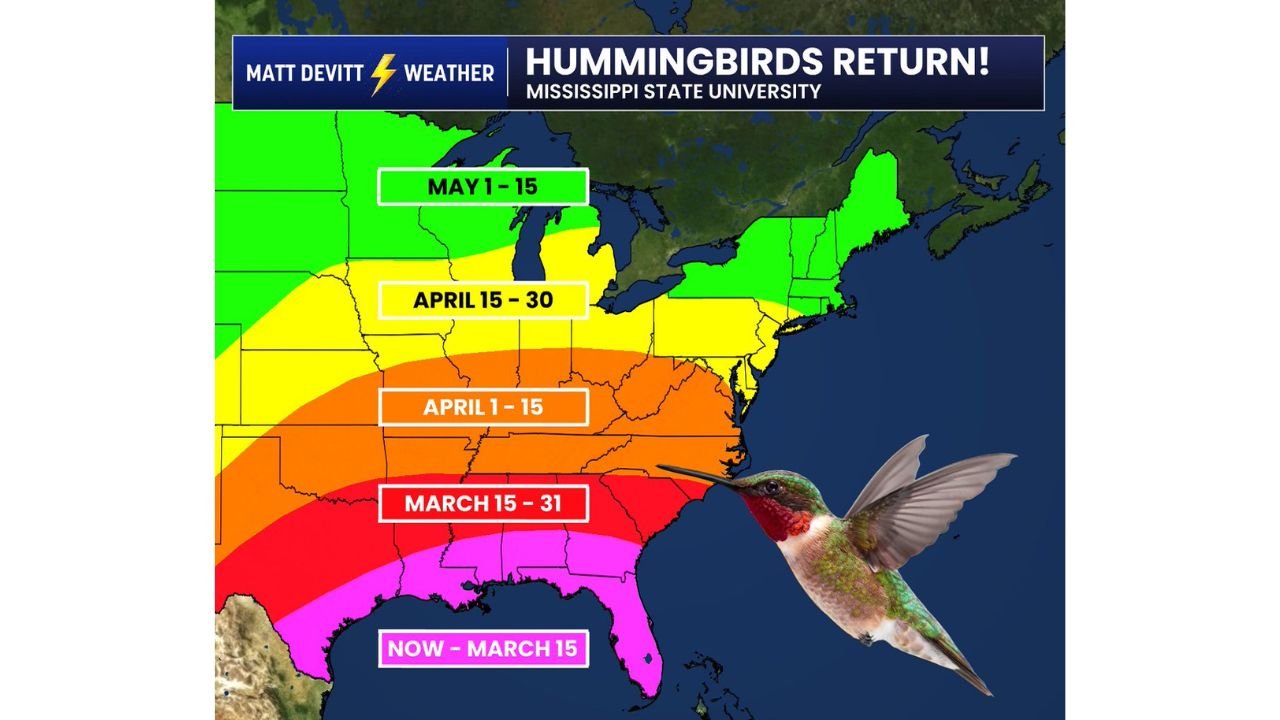
HOUSTON, TEXAS — The annual hummingbird migration is officially underway, with early sightings already reported along the Texas Gulf Coast and across Florida. According to migration tracking from Mississippi State University, the first wave has arrived in southern coastal states and will steadily push north through the Southeast, Midwest, and Northeast into May.
Bird enthusiasts across the southern United States are now being encouraged to put feeders out as the migration corridor expands.
Gulf Coast Sees First Arrivals Now Through Mid-March
The current migration zone, labeled “Now – March 15,” stretches across southern Texas, the Louisiana Gulf Coast, southern Mississippi, Alabama, and much of Florida. These areas are seeing the earliest returning hummingbirds after their wintering period farther south.
As temperatures gradually warm, the birds follow blooming flowers and increasing insect activity. The Gulf Coast region typically marks the first U.S. landfall point for spring migration.
Residents in Houston, Galveston, New Orleans, Mobile, Tampa, and Miami are among those most likely to report early sightings.
Expansion Across the Deep South by Late March
Between March 15 and March 31, the migration band pushes northward into Georgia, South Carolina, southern Alabama, Mississippi, and parts of northern Florida and the Florida Panhandle.
This second wave signals the beginning of broader Southeast migration activity. Backyard feeders become especially helpful during this transition, offering supplemental nectar as natural food sources continue developing.
States included in this late-March window:
- Georgia
- South Carolina
- Northern Florida
- Southern Alabama
- Mississippi
Early to Mid-April Brings Birds to the Mid-South and Mid-Atlantic
From April 1–15, hummingbirds are projected to spread into Tennessee, Arkansas, North Carolina, Kentucky, and parts of Virginia.
By April 15–30, the migration band reaches into the Midwest, including Illinois, Indiana, Ohio, Missouri, and southern portions of Pennsylvania and New Jersey.
For residents in Chicago, Illinois, sightings typically begin during the second half of April as warming temperatures stabilize and flowering plants emerge.
May Arrival Across the Northern United States
The final migration phase, marked May 1–15, shows hummingbirds reaching:
- Minnesota
- Wisconsin
- Michigan
- Upstate New York
- Vermont
- New Hampshire
- Maine
By early to mid-May, the birds complete their northward journey into the upper Midwest and Northeast.
Northern states often see peak activity shortly after arrival, as breeding season begins.
Why Timing Varies by Region
Hummingbird migration is driven by:
- Daylight length changes
- Temperature patterns
- Flower bloom cycles
- Insect availability
Weather systems, including late cold snaps or storm fronts, can briefly slow migration, but overall timing follows a predictable northward progression.
The Gulf Coast acts as the springboard, with gradual expansion north over roughly eight weeks.
What Bird Watchers Should Do Now
Residents in Texas, Louisiana, Mississippi, Alabama, and Florida should already have feeders available. Those in the Southeast and Mid-Atlantic should prepare for activity by mid to late March.
Experts recommend:
- Filling feeders with a 4:1 water-to-sugar nectar solution
- Avoiding red dye
- Cleaning feeders every few days in warm weather
For northern states including Illinois, Wisconsin, Michigan, New York, and Minnesota, late April into early May remains the key window.
As hummingbirds return to backyards across the United States, their migration offers a seasonal signal that spring is officially underway. From the Texas Gulf Coast to the forests of New England, the next two months will bring steady expansion northward. For more seasonal updates and migration tracking insights, visit ChicagoMusicGuide.com.