
Idaho Water Storage Climbs Well Above Normal as Persistent Fall and Winter Precipitation Offsets Low Snowfall
IDAHO — Despite below-average snowfall at lower and mid-elevations, water year data shows that Idaho is entering January with above-normal precipitation and reservoir storage, driven by consistent rainfall since Oct. 1. The latest basin maps and reservoir graphs indicate water levels in the Boise River system now resemble late-March conditions, an unusually strong position for early January.
Precipitation Has Outpaced Snowfall Across Much of Idaho
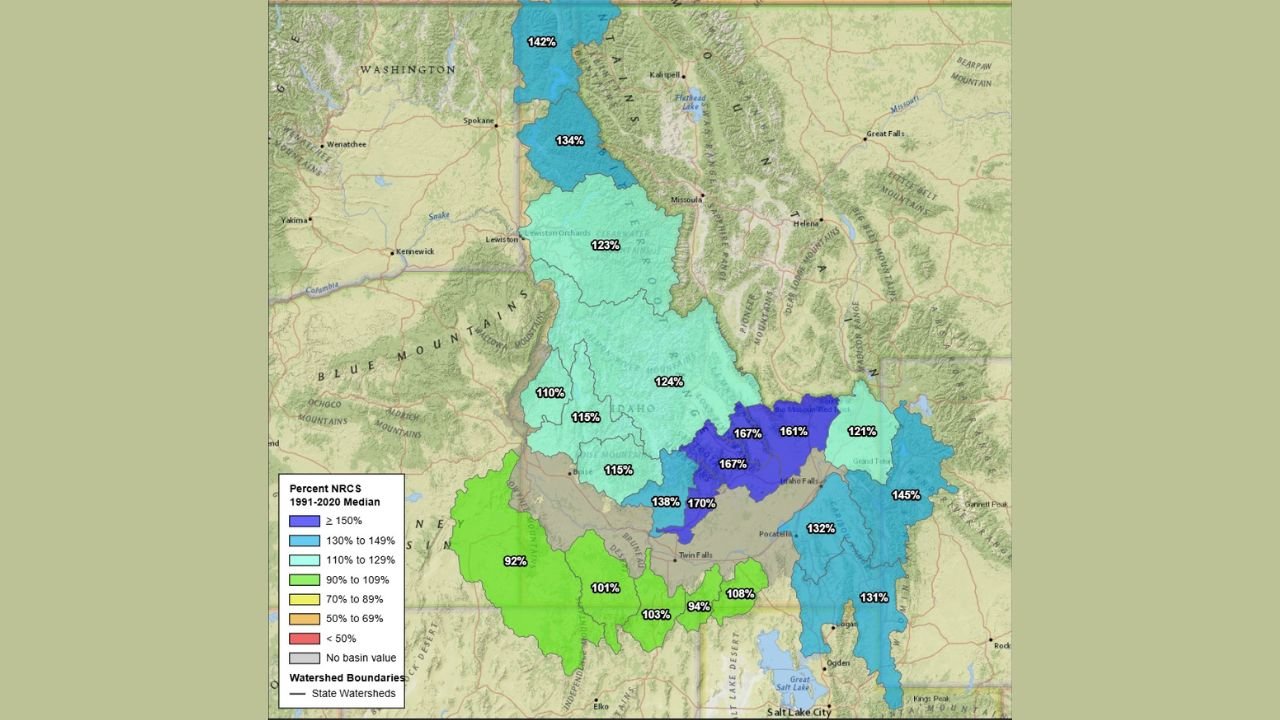
Data from the Oct. 1, 2025 through Jan. 3, 2026 water year period shows that large portions of Idaho are running well above the 1991–2020 median for precipitation, even as snow totals lag at lower elevations.
Key observations from the precipitation map include:
- Central and eastern Idaho basins measuring 150% to 170% of normal precipitation
- Upper Snake River and surrounding basins ranging from 130% to 145%
- Southern Idaho valleys closer to average, generally between 90% and 110%
- Northern Idaho basins also trending above normal, with pockets exceeding 140%
This pattern confirms that rainfall events and higher-elevation snow have compensated for weaker valley snowfall, keeping overall moisture levels elevated statewide.
Boise River Water Storage Already Near Late-March Levels
The water-year storage graph shows a sharp upward trend in reservoir levels since October, with the current storage curve running above both the long-term average and the previous year.
Most notably:
- Current Boise River storage mirrors levels typically seen in late March
- Storage is tracking ahead of seasonal norms, despite winter still underway
- The early-season rise suggests strong runoff potential once snowmelt begins
This early surplus significantly improves spring water supply confidence, especially for irrigation planning, municipal use, and flood management preparation.
Why Snowfall Isn’t Telling the Full Story This Winter
While snowfall totals have underperformed at lower elevations, the data highlights an important distinction:
- Water availability depends on total precipitation, not snowfall alone
- Rainfall and higher-elevation snowpack have kept soil moisture and reservoirs well supplied
- Early-season moisture increases runoff efficiency later in spring
This explains why Idaho’s hydrologic outlook remains strong, even with visible snow deficits in populated valleys.
What This Means Heading Into Spring 2026
If precipitation trends persist through late winter:
- Spring runoff could arrive earlier and stronger than average
- Reservoir managers may need to monitor storage levels closely to manage flood risk
- Agricultural and municipal water supplies are currently positioned favorably
However, forecasters caution that conditions can still change, particularly if February and March turn drier or warmer than expected.
Bottom Line
The data makes one thing clear:
Idaho’s water year is outperforming expectations, with above-normal precipitation and reservoir storage already reaching late-season benchmarks. Even with uneven snowfall distribution, the state enters the heart of winter in a stronger water position than many recent years.
As always, continued monitoring will be critical — but for now, Idaho’s water outlook is solidly positive.
What do you think — could this early surplus increase spring flood risks, or does it set Idaho up for a smoother water year? Share your thoughts and keep following ChicagoMusicGuide.com for data-driven weather and climate coverage.